Total Pageviews

Pages

Showing posts with label New Romantics. Show all posts

07 March 2015

New Romantics


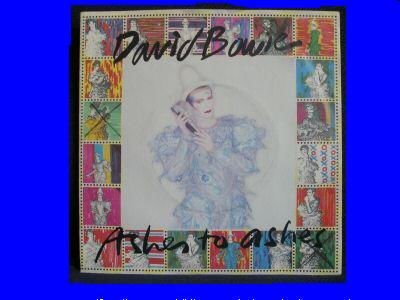
 August 1980 - the release of Ashes To Ashes, with its groundbreaking video, was a great moment for David Bowie - and propelled the Blitz Kids and others towards the pop scene to form the New Romantics, the first big 1980s music and fashion scene.

20th Century Words by John Ayto traces the term "New Romantic" to 1980. So, what was a New Romantic? Late 1980 saw the emergence of two acts - Adam And The Ants and Spandau Ballet - into the upper echelons of the pop charts. They gave us Ant Music and To Cut A Long Story Short, respectively, and although both songs were very different, the Ants and the Ballet blokes were both heavy on the face make-up and the dashing outfits of years long, long past.

And, suddenly, we were all talking of New Romantics.

1981 brought a flurry of them into our lives - including, of course, Duran Duran and Ultravox. Planet Earth, complete with video, was very typical of the scene - synths, futuristic setting, OTT dandy flounces, lashings of lippy, and bizarre hairdos. The movement crossed over to America and Kim Carnes sent us the divine Bette Davis Eyes

TV Times, June 1981. How would you feel if your son looked like Adam Ant? If he'd lived where I lived, he'd probably have got seriously punched. But although nobody I knew was brave enough to adopt the image, Adam And The Ants were immensely popular with us lads.

So, the first big new pop sensation of the fledgling 1980s. How did it all begin?

Well, that's not quite what it seems! Read up on it elsewhere and you'll find that it all seems to have originated from a club called The Blitz Club in London, whose patrons paid homage to David Bowie - apparently dubbing themselves "Blitz Kids". Or was it somewhere called Billy's? Or both? Or...

Anyway, it was a dressy night club scene - or a couple of dressy night club scenes - where men wore make up and/or flamboyant outfits

The UK press created the "New Romantics" tag when Adam and the Ants and Spandau Ballet first hit the pop charts in late 1980.

David Bowie, of course, had been exciting the pop scene since 1969, and was very heavy on image. Was he Ziggy Stardust? A Thin White Duke (goodness, I thought that particular image was bloody boring and so retro!), but whatever he was he attracted dedicated followers in droves and his music brought flashes of sheer brilliance. 

In 1980, David had another one of those flashes - with his Scary Monsters (and Super Creeps) album, and a single which would be included on this album, released in August 1980, although not officially classed as a New Romantic song, was what kick-started the scene. That song was, of course, Ashes To Ashes.

The video (or "promo" as we referred to them back then) was striking and hugely expensive, and featured Steve Strange, who wowed the pop charts in 1981 and 1982 with Visage hits like Fade To Grey and Mind Of A Toy.

But not all of those considered New Romantics in the early 1980s were part of The Blitz Club scene - Adam And The Ants for instance. 

And I can certainly state that I'd never heard of the Blitz and what attracted me to the New Romantic style was that I had simply had enough of the gobbiness and run-down seediness that had dominated the previous decade.

Several years before the New Romantics, as I lurched into my teens, I was yearning for something a bit more flash, a bit more stylish. I was depressed with the thick layer of mould up my bedroom wall, my threadbare "make do and mend", often hand-me-down clothes. 

I craved for glamour and excitement. I'm sure I was not alone! There was simply something in the air - many of us wanted a change. 

After the likes of Slade shouting their mouths off - as tacky as you please, the sleaziness of the Disco scene and the hopelessness (and, of course big gobbedness) of Punk, plus the oh-so-unoriginal 1970s revivals of 1950s style, 1960s mods and rockers (no thank you, Paul Weller!), plus the '60s ska scene and rockabilly, I was hungry to dress up, desperately hoping that the 1980s would be different.

And they were.

And probably the first manifestation of that was the emergence of the New Romantics in late 1980.

The wonderful Roxy Music, still going strong in the early 1980s, are considered to be an influence on the New Romantics, and I'm sure the group was, but the New Romantics, despite their precursors, were still startling and fresh at the time.

Boy George, of course, was part of the Blitz Club scene, he worked as a cloakroom attendant there, and he was an early New Romantic for sure -  but by the time he made his chart debut in 1982, the New Romantic thing, which had burned fiercely from late 1980 and throughout 1981, had fizzled as far as we the public were concerned. So, The Boy was, at the time, greeted as a stand alone newcomer, a unique individual, loved or loathed. Similarly, A Flock Of Seagulls, who had chart success in late 1982 with Wishing, whilst looking very New Romantic indeed, were not, at the time (as far as I remember!) labelled as such.

Let's hear it for the boy - Boy George, of course - before fame, pictured in the Daily Mirror in April 1981. Although an original New Romantic mover, shaker and trendsetter, by the time he arrived in the pop charts in 1982, the New Romantic scene was just about dead and buried. So, he was regarded simply as Boy George. And his own very personal sense of style inspired admiration, clones, and some homophobia. Soon-to-find-fame George (as seen in the newspaper picture), then simply referred to as George O'Dowd, 19, was wearing Chinese slippers (£3.99), old school trousers he'd tapered himself, and leg warmers. A 1920s dress (20p, Oxfam) was draped around his waist. The tassle belts, the long scarf, and Oxfam beads around his neck, cost him a few pence, the crimplene blouse came from his mum and the wooden cross from a friend. A black felt hat and assorted earrings completed his outfit.

Adam and the Ants.. well, Adam - AKA Stuart Goddard - has stated that his early '80s pop venture was not part of the New Romantic movement. I never knew at the time. Loved the band and saw it as very much part of the New Romantic thing way back then. Sorry, Adam! I still love you and the Ants - whatever you were!

Two groups which I was labelling "New Romantic" long after 1981 were Duran Duran and Spandau Ballet. They were always and forever "New Romantics" to me. I loved the way the Duranies dropped the frillies for those gorgeous brightly-coloured suits - and the 1982 Rio video marked a turning point in my own personal fashion statements. 

 A change of image for Duran Duran, seen here in 1981 and 1982. Loved the colourful suits with pushed up sleeves and large shoulders!

Even now, knocking on towards fifty, I still feel a stirring of youthful (if that's possible at my age!) excitement at the thought of the New Romantics and the blossoming synth pop scene of the early 1980s in general. Combined, these two factors were the first indication that 1980s music and fashion were going to be OK for me. And, as it turned out, brilliant!

16 September 2012

1980 - JR, Fred Housego, Our Tune, Yes Minister, Bad Manners, New Romantics, Metal Mickey, Baggy Trousers, the First Nudist Beach and "Walkies!"

The Rubik's Cube was released in May 1980 but did not arrive in England until just before Christmas. It was declared Toy of the Year by the British Association of Toy Retailers, but was in short supply until the spring of 1981. 
   -
Unemployment topped two million; the '70s hard times continued - not a Yuppie in sight. In December, John Lennon was shot and killed, sending his many fans into mourning. Ronald Reagan won a landslide victory to become President of the United States. The 1980s as we know them would never have happened without him.

Suddenly, just about everybody had the right to buy their council houses. Groan! But these were not the first council house sales. Council houses had been being flogged off for yonks.

Sales rose in the early 1970s with 46,000 dwellings sold in England and Wales in 1972 and 34,000 in 1973.

Before 1980, council house sales were discretionary. Councils which sold houses most actively were Conservative-controlled.

I lived in an area where council house sales were rampant back in the early 1970s. For more on this, see my 1970s blog here.

 -
The 1980 legislation introduced a higher discount rate and made the right to buy more universally available to tenants. 

-
The BBC launched Children In Need


The Ecover company, makers of ecologically sound cleaning products, was founded in a small cottage in a rural town in Belgium in 1980. In 1989, Ecover products finally appeared on supermarket shelves and became enormously popular in England. 
 
England's first nudist beach opened on the 1st of April - in Brighton, where else? 

 -
The newly named and manufactured Rubik's Cube trademark was registered here on the 7th of May, but stocks did not start arriving until just before Christmas. It still made Toy of the Year.  
 -
Space Invaders, first exhibited at a London trade show in 1979, were beginning to make their presence felt.

We were a breadline family, living in a breadline area, and it was no use pretending that the 1970s had been a feast of fun. They had been a time of recession, strikes and rampant inflation. I hadn't even set eyes on "Pong" until the Christmas 1979 episode of George & Mildred. It was one of Tristram's pressies. Mind you, I had better-off friends and none of them had Pong either.

Computers were for boffins,
Dr Who and making mistakes on utility bills as the 1980s began. It's amazing to look back on the way they've evolved since those days.


In 1980, just 5% of households in the UK had video recorders.

Trousers were trouble for many comp. school kids in 1979 and 1980. For years, we'd worn flares. Never questioned it. They'd been around since the hippie years of the 1960s and somehow got stuck. We didn't wear them because we were hippies - we regarded hippies as a '60s thing, and anybody calling us that would have got a mouthful - or worse. No, we wore flares simply because they "woz" fashion. And woe betide any kid who didn't wear them. There was a strong pack instinct on the council estate where I lived and you had to fit in. Or get picked on. 
-
But, towards the end of the 1970s, fashion decided enough was enough, and so we moved into straight trousers. Or at least we did when we could afford it. The recession bit deep and it was a slow transition. There were still a lot of flares around in 1980. 


The trouble was that in 1979 and 1980 whatever we boys wore in the way of trousers drew jeers from girlies smugly attired in skirts or dresses. If we wore flares it would be: "Flaredypops! Come on, pop pickers!" They had suddenly been relegated to the distant past. If we wore straights, there would be a sneered: "Ooh, I like your straights! Very fetching!" You couldn't win!

The
Ska revival tightened its grip, with the film Rude Boy, and hits like the Beat's Mirror In The Bathroom and Stand down Margaret, the Selecter's Missing Words and the Specials' Too Much Too Young. The Ska look was so in and those Rude Boys were everywhere. 


It was a golden year for Madness, which included several of their best-loved songs - Baggy Trousers amongst them. Oops Upside Your Head had us all doing the rowing thing down on the floor. The Nolans had a great year; Sheena Easton, Liquid Gold, Kelly Marie, the Cure, Adam And The Ants and Spandau Ballet all made their first chart appearances; David Bowie's Ashes To Ashes video was a New Romantic trailblazer; robotic dancing was increasingly popular. 
-
Sheena Easton, Kelly Marie and a few others helped advance the notion of colourful boiler suits as fashion. Some called them jump suits, others called them flying suits. Kelly called hers a "cat suit". 

 
Er, no, that famous 1960s garment was rather tighter-fitting!

Of course, the bravest animals in the land were Captain Beaky And His Band, and the Korgis informed us that Everybody's Got To Learn Sometime. Still sends shivers down my spine, that song. 

-
Buster Bloodvessel and Bad Manners were absolutely brilliant.

Disco had fallen victim to the "Disco Sucks" campaign in America in the late 70s, but over here we had no issues with it as the 80s began. The classic Let's Go Round Again and Stomp both charted, and we loved 'em.


In September, Ottawan gave us D.I.S.C.O.

Chas and Dave couldn't be described as disco by any stretch of the imagination, but in December they were very popular with Rabbit.


Splodgenessabounds requested Two Pints Of Lager And A Packet Of Crisps Please. Did that poor bloke ever get served?

Our Tune began on Radio One's Simon Bates Show. 


Also, over on Radio Two, the often controversial soap opera Waggoners' Walk, which had been on air since April 1969, was last broadcast in 1980 - all part of the BBC's cutbacks. More here

The saga of Ambridge continued in BBC Radio 4's everyday tale of farming folk, The Archers. Doris Archer died quietly in her armchair as actress Gwen Berryman was too unwell to continue in the role she had played since 1951.
 
Something called the Sony Stowaway crept into the country in 1980. In 1981 it would be patented here under its original name - Sony Walkman.

The number of illegal breakers swelled enormously in 1980 and a mass rally in London demanded the legalisation of
CB radio - although some model aircraft users were worried that it would interefere with their frequencies.

CB radio was invented by American Al Gross in the 1940s and has been in use in the USA since the 1950s
.

The Adventure Game began - green cheese rolls with Uncle the teapot on Planet Arg. Bliss. Yes Minister debuted and the pilot episode of
Hi-De-Hi was screened - all three shows were treats from the BBC.

Hart To Hart
first appeared here on ITV on January 27th. TV was more of an event in those days, with only three channels, and most of us looked forward to the first feature-length episode. Max, the Hart's friend and manservant, had the famous catchphrase "'Cos when they met it was murder!", spoken over the opening credits, but in the first series he said "I look after both of them which ain't easy - 'cos their hobby is murder". The better known version arrived later.

More about Hart To Hart
here.

The Dukes of Hazzard, first shown by the BBC in 1979, which was also the year they debuted in America, moved to their legendary Saturday tea time slot in 1980.

In late 1979, a series listed in the TV Times as The Minder, starring George Cole and Dennis Waterman, began on ITV.

The show (which was, of course, simply Minder) was not an immediate hit. The format was tweaked over the next year or two, and the comedy element was increased
(in fact, judging by a comment in a mid-1980s TV Times, the show's comic content was still on the increase then).

Read more about Minder here

-
Not The Nine O'Clock News had begun in late 1979, but the first series had slipped by virtually unnoticed. The original team consisted of Pamela Stephenson, Mel Smith, Rowan Atkinson and Chris Langham. It was felt that Chris wasn't quite right for the show and so, for the 1980 series, he was replaced by Griff Rhys Jones.

Not... had arrived. 

- 
Blankety Blank was in its second year and 321 in its third. Both were extremely popular with viewers.

Monkey, shown on BBC2 on Friday evenings since 1979, was becoming a cult.

Family Fortunes and Play Your Cards Right began, as did Arthur C Clarke's Mysterious World. In these programmes, Mr Clarke examined various mysteries of the world, usually ending by debunking them. "Do people really burst into flames for no reason? I don't think so." Well, that was a relief!

Juliet Bravo and The Gentle Touch began, flying the flag for England's female cops.

Ena Sharples made her last appearance in
Coronation Street in April. Actress Violet Carson had had several long absences from the programme in the 1970s, due to ill health, and this was supposed to be another break. Consequently, there was no big send off for Ena. As Ena bowed out and left our television screens for the last time, Metal Mickey bowed in. Was this progress?!

London cabbie Fred Housego won Mastermind and became a national folk hero.
Barbara Woodhouse was out for a "walkies". 

-
David Hunter was shot in Crossroads and JR Ewing in Dallas. The latter sparked huge interest and "I SHOT JR" and "WHO SHOT JR?" T-shirts, stetsons, car stickers and badges abounded.


See here for more.

And what about Dallas spin-off, Knots Landing - which told the tale of alcoholic Ewing brother Gary and his wife Valene, as they attempted to find happiness away from Southfork? The Knots pilot episode was shown in America on 27 December 1979, with a full first season of episodes to follow early in 1980. Here, we had our first opportunity to visit the Landing in 1980. It was never going to challenge its older sibling, but it was intriguing enough.

More American pot boilers were soon to follow...

19 August 2011

1980: David Bowie On Ashes To Ashes: "A 1980s Nursery Rhyme"...

1980 was a great year for David Bowie. Haunted by some Scary Monsters (and Super Creeps) he brought us the brilliant Ashes To Ashes and Fashion. The videos (or promo's or whatever we called them back then) for these songs were very excellent indeed and nudged us on towards the video age and the New Romantic era.

I was particularly startled by the Ashes To Ashes video and song. David returned to good old Major Tom from 1969's Space Oddity.

My mother said to get things done you'd better not mess with Major Tom...

What a difference just over a decade had made! The super cool, spaced-out hippie Major Tom of 1969 was a junkie in 1980.

The video, complete with inky black sea and oddball characters trailed by a JCB, was unlike anything I'd ever seen before.

As for exactly what the song and video mean, David Bowie has said an awful lot over the years, making me rather confused. However, his original explanation from 1980 is the one I find most interesting. Major Tom had been launched in 1969, the year Man landed on the Moon. The song became a hit in the July of that year. By the time Bowie returned to Major Tom, when work began on Scary Monsters in early 1980, more than ten years had passed and times and attitudes had changed.

Bowie said:

"When I was thinking of how I was going to place Major Tom in this, hence ten years later on, what would be the complete disillusion with the great dream that was being propounded when they shot him into space ten years ago, and had got such wonderful ideas. This great technology was capable of putting him up there, when he did get up there, he wasn't quite sure why he'd been put there and we left him there. But now we come to him ten years later and we find that the whole thing has soured because there was no reason for putting him up there. It was an ego, a technological ego which got him up there for no specific reason and just added more disaster because it was a potpourri of technical ideas, so the most disastrous thing I could think of is that he finds solace only in some kind of heroin type drug that the cosmic space itself is feeding him with, an addiction, and he wants now to return to the womb from whence he came.

"It's also a nursery rhyme. It's very much a 1980s nursery rhyme. I think 1980s nursery rhymes will have a lot to do with the 1880s/1890s nursery rhymes which were all rather horrid and had little boys with their ears being cut off and stuff like that. Well, I think we're getting round to that again. I think the idea of the Sesame Street nice nursery rhyme is possibly outdated - unfortunately."

Hmmm... but the 1980s child, the girls at least, were bombarded by the cutest of the cute, Cabbage Patch Dolls, Care Bears, My Little Pony, Keypers, Sylvanian Families - to name but a few... and I can't recall any new nursery rhymes at all. Well, apart from this one, obviously.

Probably best to simply enjoy the song for what it is - a flash of pure Bowie genius.

Hear the 1980 Bowie interview, in which he gives insights into the inspirations for various Scary Monsters tracks - including Ashes To Ashes, below.

31 March 2011

Duran Duran - Were YOU A Duranie?

Duran Duran - New Romantic moments in 1981 and 1982.

The pop group Duran Duran was formed by Nick Rhodes and John Taylor in 1978, however the classic line-up did not come together until 1980.

In early 1980, the owners of the Rum Runner Club, Birmingham, England - brothers Paul and Michael Berrow - took the band (at that point, after several changes in line-up, consisting of John Taylor, Roger Taylor and Nick Rhodes) under their wings, paying the lads to work as doormen, disc jockeys and glass collectors when they were not rehearsing, and providing them with rehearsal space.

In April 1980, Andy Taylor answered an ad for a "live wire guitarist" with Duran Duran.

In May 1980, Simon Le Bon met the band, introduced by his ex-girlfriend, Rum Runner barmaid Fiona Kemp, who recommended him as a potential vocalist. Apparently, Simon attended his audition clad in pink leopard print trousers.

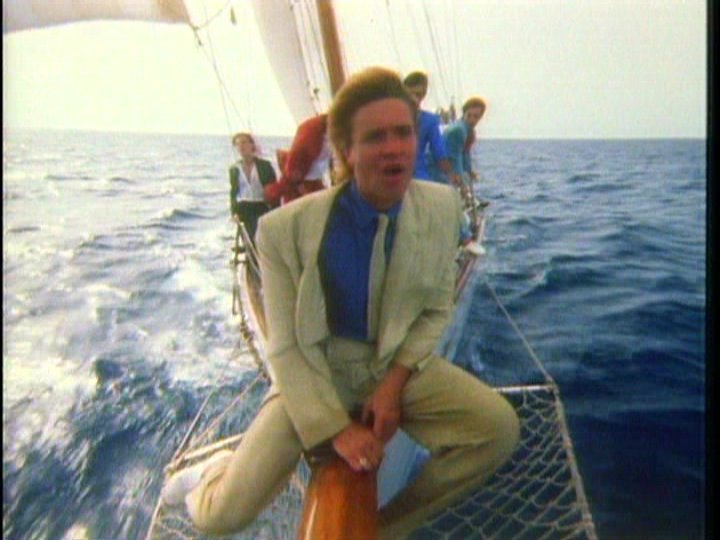
Duran Duran in the 1982 "Rio" video - note the prototype "Miami Vice" gear. Jacket sleeves had begun to be pushed up as a fashion trend around the turn of the decade - and the trend grew more and more prevalant as the decade got underway. Shoulder pads began to grow (courtesy of the likes of Joan Collins and, judging by this picture, John Taylor) and everyday men began to wear bright colours.

In June 1980, the Berrow brothers formed a company, Tritec Music. Duran Duran signed a production contract with Tritec and the Berrow brothers became the band's managers.

The band's classic line-up of
Simon Le Bon (vocals), John Taylor (bass), Roger Taylor (drums), Andy Taylor (guitar), and Nick Rhodes (synthesizers) played their first show together at the Rum Runner on July 9 1980.

In December 1980, Duran Duran landed a deal with EMI Records.

In 1981 the Durans were futuristic dandies (remember Planet Earth?), taking over the charts, their every movement eagerly followed by a growing band of dedicated Duranies.


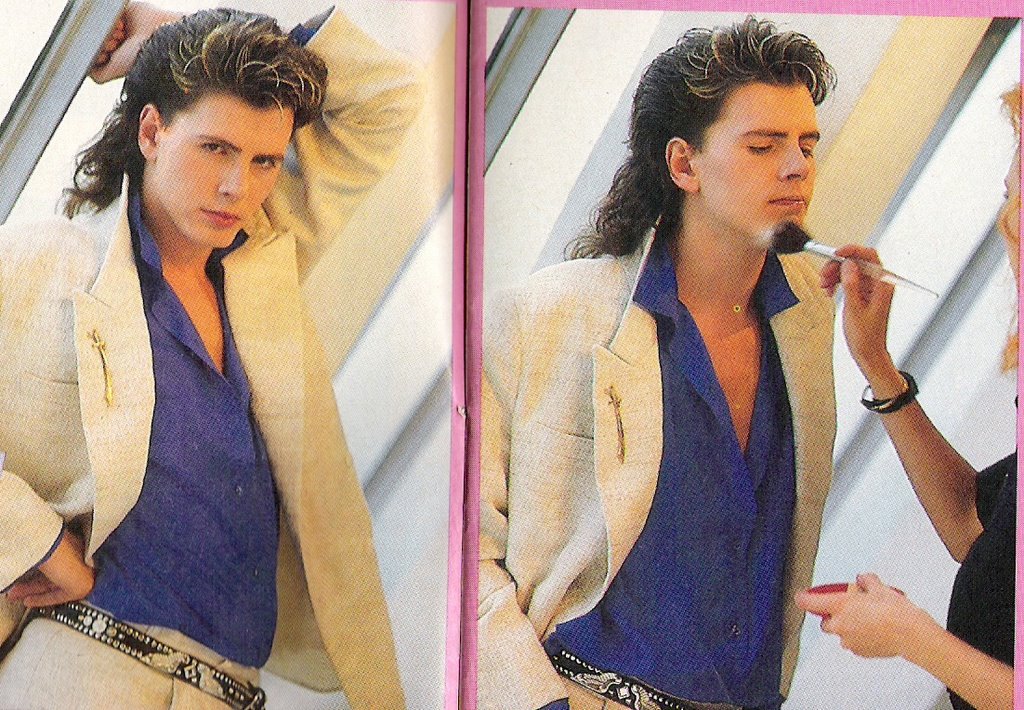
John Taylor gets touched up for a mid-80s photo shoot.

A 1984 book chronicling the history of the group. Cue hysterical Duranies: "Oh, Simon, Oh Simon, I love you, I love you!"

Duran Duran became one of THE pop groups of the 1980s. In 1981, they'd been New Romantics, flouncing around in out sized frillies, but they outlived that scene well and truly.

1982: all aboard - another "Rio" shot.

Influencing fashion, movers and shakers in the pop video market (remember Girls on Film?!), and purveyors of some highly distinctive and polished '80s pop music, Duran Duran became legends.

And as instantly evocative of the 1980s in the years since as Rubik's Cube, the ZX Spectrum and shoulder pads!

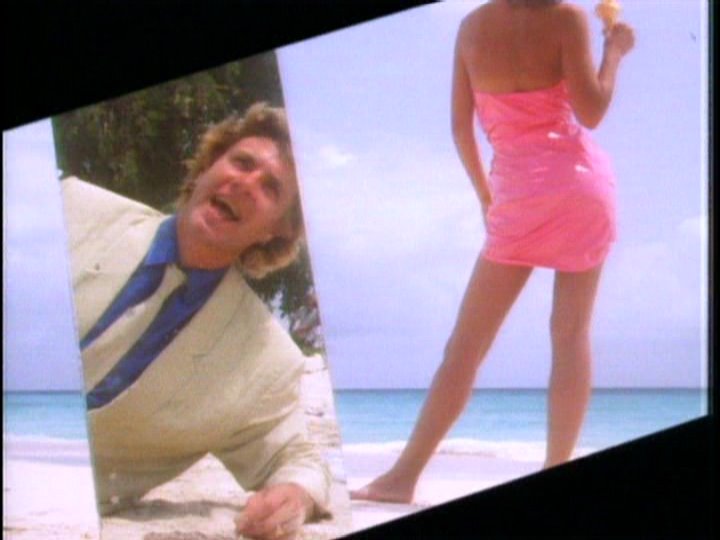
"Cherry ice cream smile..."

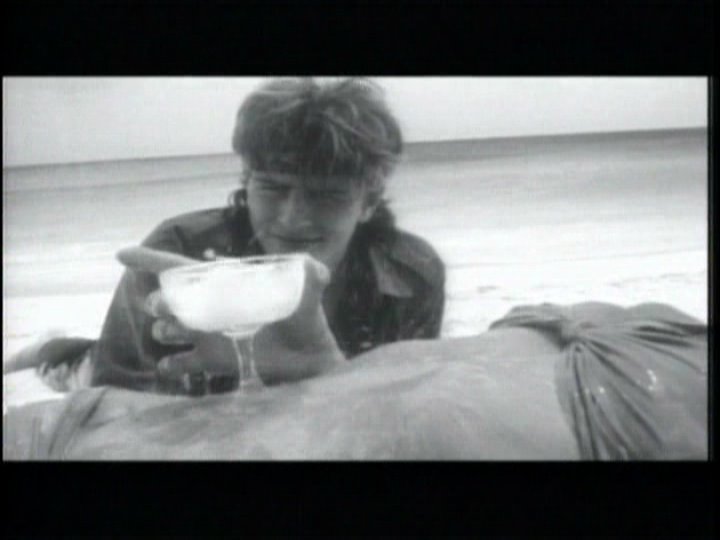
Heart throb John discovers something interesting on the beach.

These Duran Duran wrist bands were ideal for sport, or nipping out for a packet of ciggies.

12 December 2009

Adam And The Ants: "I'm The Dandy Highwayman..."


Adam Ant, AKA Stuart Goddard, emerged from the ashes of Punk and relaunched himself as the Dandy Highwayman of New Romantic pop. His image - hair ribbons, lip gloss, and the famous white line across the face, was stunning. Actually Adam has said he wasn't ever a New Romantic, but, whatever he was, he was fabulous.

Qua qua, fa diddily qua qua, fa diddily qua qua...

An Adam Ant mirror - Adam was King of the Wild Frontier AND 1980, 1981 and 1982. The mirror, which is dated 1980, hangs in my hall to this day and brings back fond memories of youth.

In the mid-1990s, my mate Pete, bored with the "we can do a better Beatles than you can" squabble between Blur and Oasis, asked mournfully: "Andy, whatever happened to all the GOOD music? Whatever happened to Adam and the Ants?"

What indeed!


How would you feel if your son looked like this? asks this TV Times from June 1981. On the housing estate where I lived, no bloke would have DARED to look like that!


An interesting article from the Daily Mirror, June 1981:

A film scene showing pop idol Adam Ant being hanged was chopped from TV's Top of the Pops last night.

The three minute film promoting Adam's latest hit Stand And Deliver was shown on the programme a few weeks ago.

But a BBC spokesman said last night: "It was decided to cut the scene from future shows because we don't want to encourage younger viewers to copy Adam's antics."


Film maker Mike Mansfield said: "It was just a piece of fancy dress fun - and, anyway, Adam does not die."

Sensitivities were obviously very different back then - think about what today's children view! Note the way the article's writer refers to the video as a "film". "Films" or "promo's" for songs actually stretch back many years. The "video" tag took off during the 1980s, greatly influenced by MTV.

Adam And The Ants starring on the cover of "Look-In", October 1981


IT'S DIANA THE POP CHARMER,

Daily Mirror, 10/9/1981:

There's another new girl in the life of lady killer Adam Ant. It's Diana Dors, who was a sex symbol before he even knew about such things.

The odd couple have teamed up for a TV film that will be shown on "Top of the Pops" tonight to plug Adam's new single, "Prince Charming".

Diana appears as a fairy godmother who turns Adam from a pauper into a prince.

Prince Charming is one of Adam's best-known "TV films", and his fabulous co-star was once described as "the English Marilyn Monroe". 

See a slightly later 1980s pop star with some fab make-up ideas here.

03 December 2007

Boy George And Culture Club

3D Pop Stickers - "Join The Craze". If only I'd known! By 1984 Boy George was one of our best known pop stars - his image in great demand. But back in 1981 things had been very different indeed...

This young unknown was George O'Dowd, appearing in a Daily Mirror article on New Romantic fashion in April 1981. In Paris, New Romantic-style clobber by the likes of Gaultier was wowing people at the fashion shows, and fetching large sums of money once in production. In England, Vivienne Westwood was promoting the new look at World's End, her London shop, and youngsters were looking at cheap ways to achieve New Romantic style. Soon-to-find-fame George, then 19, was wearing Chinese slippers (£3.99), old school trousers he'd tapered himself, and leg warmers. A 1920s dress (20p, Oxfam) was draped around his waist. The tassle belts, the long scarf, and Oxfam beads around his neck, cost him a few pence, the crimplene blouse came from his mum and the wooden cross from a friend. A black felt hat and assorted earrings completed his outfit. 

Original? Well, when you think about it, the Boy was not, of course. He'd been a cloak room attendant at the Blitz Club in London and they all wore old fogey clothes, tried to look 'outrageous' and took more than a bit of their lead from David Bowie. And investing everything in image seems bizarre to me. It's simply... weird...

Of course, from 1982 onwards, George O'Dowd was better known to the world as Boy George. The Boy, with his band, Culture Club, first hit the singles chart on 25 September 1982 with Do You Really Want To Hurt Me? I mean YUCK! 

Awful old cobblers, and as somebody said in the early 1980s, the Boy was just a modern version of Danny La Ru. But he had a caustic wit and there was more to it all than that.

Mad about the Boy! George's fan base spanned school kids to elderly people.

Culture Club's drummer Jon Moss - he and George had a relationship.

Mikey Craig - bass guitarist.

Roy Hay - guitarist.

From the Daily Mirror, February 9, 1983.
-
One is a girl called Alf. The other is Boy George, looking as much like a girl as ever.
-
But there was no mistaking their winning smiles last night as they celebrated triumph in the British Rock and Pop Awards.
-
Boy George, from Culture Club, walked off with the "Daily Mirror" Readers' Award for the Outstanding Music Personality at London's Lyceum Ballroom.
-
Culture Club finished second in the Best Group section...
-
Of course, 20th Century men had worn make-up and feminine outfits before Boy George - just look at the likes of Danny La Rue and David Bowie. But image wasn’t what made the Boy stand out for many of us.

Boy George light heartedly declared himself to be "bisexual" and "a poof with muscles" in an edition of Titbits in late 1983 and, although at first he seemed to dodge the question of his sexuality, it was soon clear to even the slowest amongst us that heterosexual he certainly was not.

Several gay friends of mine believe that Boy George is under appreciated. They say that he helped kick-start the whole openly gay pop star thing, at a time when the first rumblings of AIDS were being heard in the distance, and that George also helped to humanise gays to the heterosexual audience at a time when the risk of a backlash because of the supposed “gay plague” was growing.
-
They also cite the work of other 1980s openly gay pop stars like Bronski Beat and the Pet Shop Boys as major forces for good during that turbulent era.
None of my gay friends believed that the cutesy “Do you really want to hurt me?” image projected by Boy George in his early days of pop stardom was real, but some believe that it was very helpful indeed as far as appealing to the finer instincts of heterosexual audiences was concerned.

I have always felt that the 1980s were a complicated time, much as some people would like to dismiss the decade as small “c” conservative, and I think that much progress was made by the gay community, despite - and perhaps partly because of - hugely adverse - but unifying - factors like Clause 28!
For heterosexuals, this was the time of the sensitive 80s man (or New Man as they were also known) and much more freedom in the way everyday men dressed, the colours they wore. Things were changing for men, regardless of sexuality.

The arrival of regular gay male characters in English soap operas and Channel Four’s gay magazine show Out complemented the high gay content of the pop charts.

In 1980, I recall reading in a Sunday tabloid that a well-known pop star was probably bisexual. My parents were absolutely shocked - my stepfather was particularly vehement in his disapproval. Yet, in the mid-1980s, my little sister had pictures of openly gay Boy George on her bedroom wall and slept with a Boy George doll - with the complete approval of my parents!

Nope, small “c” conservative does not describe the 1980s. The decade was confusing, endlessly multi-faceted.
-
Personally, I loved a lot of the ’80s gay music, apart from George's, and was fascinated by the likes of Colin and Barry in EastEnders. I found my own inbuilt anti-gay prejudices thawing rapidly during the decade and, before its end, I was having a great time with newly acquired gay friends.

But only on the dance floor, of course. Know wot I mean, mate?!
-
Let's take a look at Boy George as he appeared in the Press in the early to mid 1980s - a frequent, colourful and often controversial presence...
-
Daily Mirror, 23/7/1983:

LARGER than life singer Helen Terry has just been elected a permanent member of Culture Club. Helen sang backing vocals on the band’s last hit, “Church of the Poison Mind”.

- Boy George, who has a soft spot for big women, says: “Once we used a number of session singers like Captain Crucial. This move to a fixed member is part of our musical direction to delegate ideas and make our music more diverse.”

Helen is very prominent on their next album, “Colour By Numbers”, which they finished recording yesterday. It should be in the shops by October.

Daily Mirror, 30/7/1983:
-
Pretty pop star Boy George left Britain yesterday. And his parting words were pretty rude.
-
He shouted at photographers at Heathrow Airport: "F- off. F-ing well leave me alone and stop f-ing well harassing me!"
-
But his mood had softened by the time he arrived by Concorde in Washington.
-
He explained sadly: "I'm sick of feeling like Princess Di."
-
And he explained the reason for his earlier outburst.
-
"Do you know, I was up half the night sewing sequins on my band's costume.
-
"I was very tired when I arrived at Heathrow. I'd been up since six o'clock.
-
"People think I just sit around on my backside all day eating grapes. But I've worked very hard for what I've got and I value my privacy."
-
Naughty Boy George's amazing shouting match came as he left London for an American tour with his band Culture Club.
-
His dress for the £1,226 flight consisted of black kaftan, green socks - and just a dab of make-up.
-
He glared at a group of forty fans, some of whom had brought parting gifts, and said loudly:
-
"Go away. You lot make me sick.
-
"All you want is my fame. I rode to fame on my voice."
-
Then he shook his handbag at waiting photographers and shouted: "There is no way you vultures are going to get my picture today!"
-
In Washington it was a different story. He said plaintively:
-
"My remarks were aimed at all the photographers who were bothering me. Being photographed all the time is boring, boring, boring.
-
"How many times can you be photographed in a paper for just catching a plane? It's ridiculous.
-
"The same thing applies to Princess Di... it gets you down to keep getting photographed for doing nothing that's newsworthy. I know how she must feel.
-
"But any suggestion I insulted my fans is totally untrue. I think the world of those kids and they know I'd never insult them. It was the photographers I wanted to be rude to.
-
"But, who knows, I'll probably be charming to them when I fly back. I have moods, you know."
-
Karma Chameleon - this was number one in the pop charts on my 18th birthday! And on my 21st? Every Loser Wins by Nick Berry!! The main problem with George was his bloody awful cutesy music - so unoriginal. And Every Loser Wins? PURLEASE!!!

Daily Mirror, 22/2/84...
-
BOY GEORGE won the “Daily Mirror” readers’ top music personality of the year award again last night. And his group Culture Club also took the prize for best single of the year with “Karma Chameleon” at the glittering Rock and Pop awards.

The Sun, 31/5/84:

BELT UP, MARGARET! GEORGE IS NO TART!

He wins "Sun" poll

Princess Margaret got a rollicking from angry “Sun” readers yesterday for calling their pop hero Boy George “an over made-up tart.”

And by a two-to-one majority they decided that the Princess deserves a raspberry for her tarty jibe.

The row started when she refused to be photographed with the Culture Club singer at an awards ceremony, saying: “I don’t know who he is but he looks like an over made-up tart.”
The “Sun” asked: “Do you agree - is Boy George a tart?" And an astonishing 3,269 people jammed our special lines, manned by Audience Selection, to have their say.

Some 2,112 readers aged from seven to seventy chorused “Boy George, we love you” while 1,157 rang to support the 53-year-old Princess’s view.

One 66-year-old granny said she believed the 22-year-old singer was a delicious strawberry tart… while the Princess was more of a gooseberry one.

The pro-George readers’ comments included:

He puts a lot of money back into this country and this goes towards paying for her luxury.

George should give Margaret make-up lessons because her age is beginning to show.

Her ancestors used to walk around in wigs and make-up, so why should she criticise George?

He’s the best thing to happen to this country since Winston Churchill.

I’d like to hear her talk to Danny La Rue like that, George is just a younger version.

He’s so beautiful I just sit and draw his portraits.

I’m a 78-year-old polio sufferer and people like him keep me alive.

Yesterday Boy George stood up for himself by saying: “If Princess Margaret is representing the country she should behave better.

“I bring more money into the country than she does.

“I think she’s very unhappy.”

The Princess’ supporters countered:

Good job the British Army hasn’t got any of his sort - the Russians would be here tomorrow.

He’s done for pop music what Arthur Scargill has done for the miners - nothing.

If ever she earned her money she earned it then.

He’s a disgrace to British manhood. The world will think we are a nation of poofs. -

George was a 1980s hair-o!

The Sun June 14 1984:

Pop star Boy George was sitting pretty yesterday with his dummy double at Madame Tussaud’s. Delighted George - 23 today - waxed lyrical as he said: “I love it, but it’s not as pretty as the real me.”

George’s spitting image will rub shoulders with pop “greats” like Elvis and David Bowie.

A soundtrack with the model tells visitors: “I prefer a nice cup of tea to sex - and if you believe that you’ll believe anything.”
-
On the cover of a 1984 TV Times, with another likeness. Boy George dolls were highly popular. Quite a lot of people actually dressed up like the Boy, too - George clones were in the news.

The Sun, 6/2/1985:

George said of Simon Le Bon: “He’s just another pop star. The music business hasn’t got any personalities apart from me.”

Of his Recording Artist of the Year award, George said: “I deserve it. Having a big mouth pays off in the end!”

He added: “Now I suppose everyone will want to sleep with me.”