Total Pageviews

Pages

17 January 2011

The Human League

The Human League arrived - first hitting the Top 40 in May 1981 with Sound of the Crowd.

The original Human League had formed in 1977, and there were several changes in line-up before the vast majority of us discovered a rather different version of the group which came together in 1980.

The pivotal moments in the band's '80s history came when vocalist Phil Oakey asked Susan Ann Sulley and Joanne Catherall (then school girls aged 17 and 18) to join, having spotted them dancing at The Crazy Daisy Nightclub, Sheffield, in October 1980.


Oakey was faced with the highly difficult task of recruiting new band members within a matter of days for a European tour. The original group was in tatters after two founding members (Ian Craig Marsh and Martyn Ware, who later formed Heaven 17) had suddenly left, but a European tour had been arranged before this and now Oakey was faced with honouring it, or being sued by the promoters. He was looking out for a female vocalist when he spotted Susan Ann and Joanne dancing.

The girls were originally recruited as "guests" to the group, to dance and provide incidental vocals on the European tour. Many fans of the obscure original Human League group were disgruntled to see the dancing girls, expecting the original all-male line-up. Legend has it that thrown beer cans and some heckling were the result.

But, despite this, on returning to England in December 1980, the girls were made full members of The Human League.

The band gave us a distinctly unseasonal Christmas Number One in 1981 - Don't You Want Me.


Classic.

I love the Human League. If I hear one of their early-to-mid 1980s hits, I'm transported back... I can smell the hair gel, see that jumbled Rubik's Cube sitting smugly on the settee, hear the Space Invaders and Pac-Man machines burbling, feel the tensions of O' Levels and job hunting and the happiness of becoming a wage earner...

It's not just nostalgia. I think that The Human League are brilliant - then, now, forever.

16 January 2011

The 1980s TV Revolution

From the "Daily Mirror", December 19, 1980

Back in 1980, things were very different on the TV front. We had three TV channels - ITV and BBC's 1 and 2.

BBC 2 was definitely "minority taste" as far as working class oiks like me were concerned.

Video technology had been around for yonks, but domestic video recorders for only a few years. They were hugely expensive, only 5% of UK homes had them in 1980. TV games, a more recent arrival, were also the province of the fortunate few.

As the Mirror article tells us:

The only big change in the 70s was that more families bought colour sets.


In my family's home in the early 1980s, there was a black and white TV with the horizontal hold so "gone" people on screen looked like eggs on legs. The plastic wood effect was peeling from the outer casing. We had rented a colour set around 1978 (colour had arrived in 1967, on BBC 2), but couldn't afford to keep feeding the meter.

Nobody I knew had a TV in the kitchen or the bedroom.

The 1980s saw a real revolution in our homes as far as TV was concerned. In 1980, the IBA's latest franchise allocations for the ITV companies led to the disappearance of familiar regional companies Southern and Westward and the arrival of TVS and TSW.
Sir Lew Grade's ATV acquired a new board and Central took over in the Midlands. The changes took effect in 1982.

The Mirror articles featured here, all from 19 December 1980, buzz with excitement over future telly-related pleasures - and paint a fascinating picture of the franchise allocations procedures, Lady Plowden and the IBA.

The bosses battle for your TV...


FUTURE

Video, computers and satellites

However much secrecy surrounds the battle for new ITV franchises, one thing is certain. They will all have to take part in a great technological leap-forward in the 1980s.

The only big change in the 70s was that more families bought colour sets.

Now there are video games and computers, video-text and video cassette recorders which can be plugged into home TV sets.

Within five years programmes will be beamed worldwide from satellites.

Pay TV, video disc-players, as well as the new ITV Channel Four and breakfast viewing will all be with us.

Some experts predict that most homes will have two TVs and some three. The family will split up to see different programmes in separate rooms.

With so many new things about to happen in the TV world it is not surprising that one company, which is in danger of losing its franchise, says it will refuse to hand over its studios and know-how to its successors.

They plan to make and market programmes for the new channels and other outlets the big TV technological revolution is expected to produce.
-
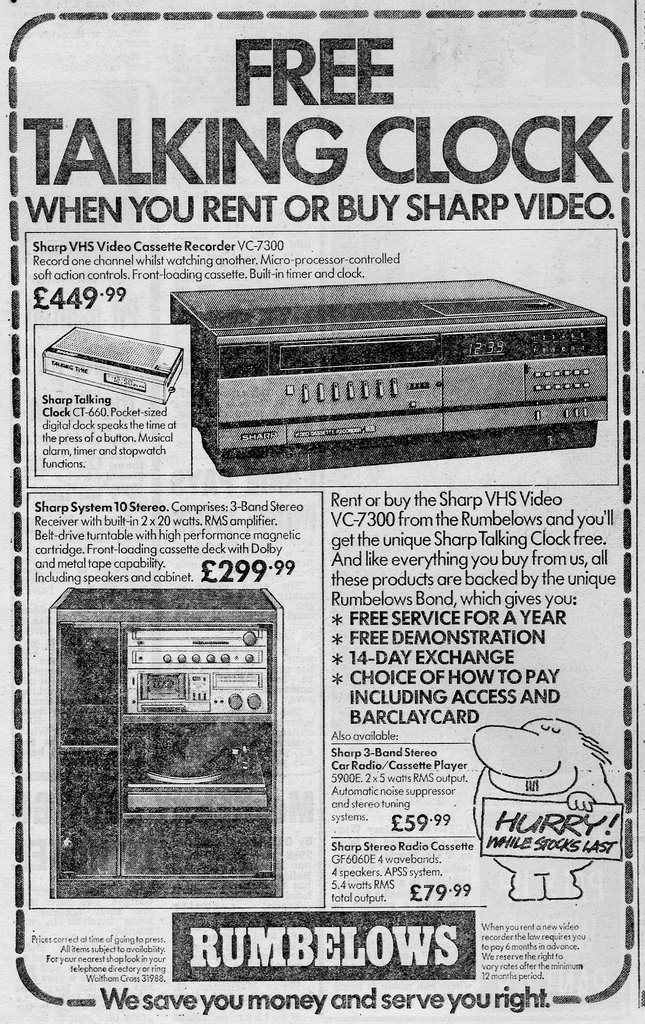
With only 5% of UK households having video recorders in 1980, we find Rumbelows offering an incentive to buy one in this newspaper advertisement from December that year.

By 1980 standards £449.99 was a lot of dosh - and not many people could afford it. Similarly, a lot of people were not keen to make the financial commitment to rent a video. There was a recession on.

The 1981 Royal Wedding caused an upsurge in video sales and rentals. My family rented one in 1983.

And we thought we were very posh.

Anyone Can Fall In Love: EastEnders Stars In The Pop Charts - Part 1...

Remember Anyone Can Fall In Love, sung by Anita Dobson, AKA Angie Watts, the flower of Albert Square? Remember those lyrics?

Anyone can fall in love
That’s the easy part you must keep it going

Anyone can fall in love
Over the years it has to keep growing
Sun and rain
Joy and pain
There’s highs - there’s lows
We’ve no way of knowing
Anyone can fall in love
That’s not hard to do it isn’t so clever

Anyone can fall in love
But you must make the love last forever…
Who can say
Love will stay?
It’s up to you
Don’t hide what needs showing

Anyone can fall in love
That’s the easy part you must keep it going
Everyone can fall in love
But you must make the love last forever more.
How do you keep the music from dying?
Love falls asleep unless you keep trying

Anyone can fall in love
Life’s more than that, it’s pulling together
Everyone can share the love
Where we come from friends never say never
Side by side
Satisfied
To stay right here in one square forever

Anyone can fall in love
That’s not hard to do it isn’t so clever
Anyone can fall in love
But you must make the love last forever more.

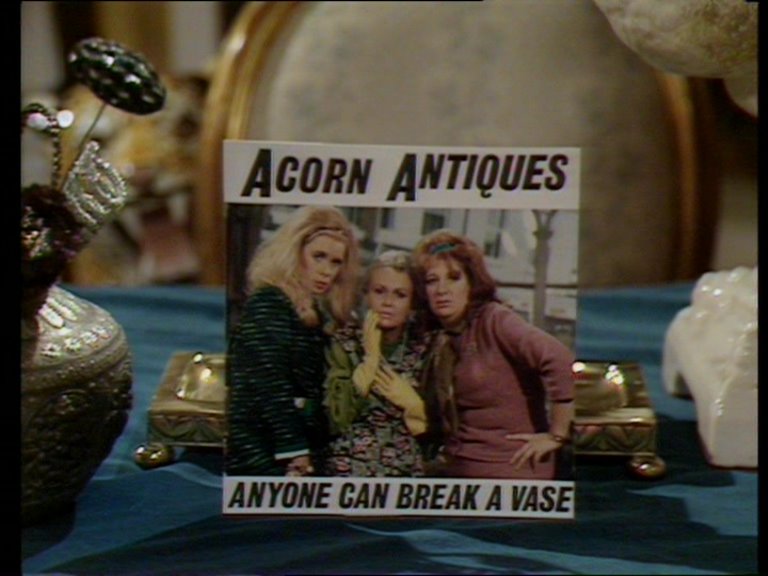
Acorn Antiques, the excellent Victoria Wood - As Seen On TV skit on Crossroads, also drew inspiration from EastEnders. The show's theme tune was released on vinyl (sadly, only in fiction!) - with Miss Babs warbling a song called Anyone Can Break A Vase over it.

I found the Anita Dobson-related article below whilst browsing through my local newspaper archive!

Ange - A Public Appearance...

The Time: August 1986

The Town: Cambridge


The Venue: A Bingo Hall


"EastEnders" star Anita Dobson planted kisses on a score of faint-hearted admirers last night and told them: "Don't wash for a week!"

The famous landlandy of the TV show's "Vic" pub proved a powerful pulling attraction at the Coral Social Club in Cambridge, where some 400 bingo fans gathered to see her in the flesh.


"EastEnders" addicts cheered and queued for autographs when the 37-year-old arrived at the Hobson Street club.


Dressed in a smart emerald coloured suit, Anita, 5ft 3 1/2 inches of true born and bred cockney said: "There's not any man in my life except my dad - mainly because I haven't the time."

She called the show's "Dirty Den" "a rat" but said: "We have a very good on-screen relationship. I'm going to string him up at Christmas. The real Den is a lovely, nice person."

On Andy O'Brien (Ross Davidson), who in the last episode of "EastEnders" was hit by a lorry, she was giving no secrets away, but said: "It was a pretty nasty accident. It looks pretty bad - I can't say officially."


Anita, who has just signed a new two-year contract for "EastEnders", said she had tried secretarial work and modelling before going to drama school.

She sang in various shows earlier in her acting career, so when she was asked to make a record, she agreed. Her song, "Anyone Can Fall In Love", to Simon May's "EastEnders" theme tune, is now number four in the pop charts and selling 20,000 copies a day.


Anita revealed she is one of the few cast members who can choose her own clothes - the other characters' costumes are bought by the BBC.

Her favourite "EastEnders" character is Angie's daughter, Sharon, played by Letitia Dean."She's a smasher," she said. "I love her to death. Willie the dog is my least favourite character because he smells."


When she's not working - and that's hardly ever - Anita likes listening to light opera, soul, rock and roll, Dire Straits, Queen and Billy Joel.


But hard work has brought money to a girl who started right at the bottom.


"I came from quite a hard background. I am just about to buy my parents their own house. Actually, my mother was so excited and so happy, she was sick."


Afterwards, Martyn Heasman, Coral's assistant manager, a smudge of the star's bright red lipstick on his cheek, said: "I think I'm in love. Someone ring and tell my mother."


The glamorous star made another man's night - Douglas "Curly" Nunn, of Cambridge, who celebrated his birthday with a stage embrace from Anita.


The successful night was a big publicity boost for Coral, who paid £300 for Anita's appearance. The date was planned as a lead-up to the club's £350,000 refurbishments for a relaunch as a cabaret club in November.

Coral had wanted Anita to sing her hit single and do two last bingo calls but the actress refused.

There was another EastEnder in the pop charts in 1986. Find out who here.

03 January 2011

The Archers: Nigel Pargetter - Graham Seed - A Fond Farewell...

Nigel Pargetter, played by Graham Seed, arrived in Ambridge in late 1983. The character hailed from a little way off, Lower Loxley House at Loxley Barrett, and was a completely unknown quantity in Ambridge.

But he wasted no time in making his presence felt, becoming romantically linked to Shula Archer ("Shulie") in 1983, bouncing around in a gorilla costume at the Hunt Ball, and driving Mrs Antrobus's Afghans wild with his Teddy Bears Picnic jingle as ice cream vendor Mr Snowy midway through the decade.

It came as a great surprise to this blogger to discover that the character has been killed off as part of The Archers 60th anniversary "celebrations". I find this trend in soaps - to feature a tragic story-line on such occasions - rather odd, and it's by no means as long-established a custom as some soap historians would have us believe.

A shame this trend has now reached The Archers.

Graham Seed was spotted by then Archers editor William Smethurst in a Birmingham rep production of Major Barbara in 1980. This led to Mr Seed getting his start in radio drama at Pebble Mill in several plays.

When the role of Nigel Pargetter was created in 1983, Mr Seed was asked to audition and won the part, which was originally intended to run for only a few weeks.

When the character was written out after two years (!), Nigel being sent abroad in 1985, a listeners' campaign was launched to bring him back. It was successful - Nigel returned after only a few weeks away. As William Smethurst wrote in 1987:

The Archers listener has always been a force to reckon with!


Actor Nigel Caliburn - now Carrington - briefly took over the role when Graham Seed took a break in the late 1980s.

Mr Seed was informed of Nigel's impending doom by Archers editor Vanessa Whitburn on 5 November 2010. Today, he issued an official statement:

It is with huge sadness that I leave The Archers after 27 years. Nigel Pargetter was a joy and a privilege to play, from 'Mr Snowy' to proud father. His enthusiasm, charm and love of life helped make Ambridge a happier place.

'On a personal note, I will sorely miss working with so many old friends and colleagues, especially Alison Dowling who plays Nigel's Lizzie.

'May I take this opportunity to thank all those listeners who endlessly communicated their loyalty, appreciation and affection towards Nigel and me. I'll miss him!'

Mr Seed further commented on the BBC's Archers blog:

It would be wrong of me to pretend that I was other than shocked when Vanessa [Whitburn, Archers editor] phoned with the news on a damp November 5th. Fireworks night - rather apt I thought! The hardest thing has been to keep it under wraps, not just from friends and family, but colleagues too. Now at least all is out in the open...

It's too soon to highlight memories. They go back to heady days in the '80s. William Smethurst created a wonderfully affectionate, vulnerable over-privileged young man causing havoc to the Archer household in scenes that were such fun to play.

Scenes of course with Jack May (Nelson) and Mary Wimbush (Julia), latterly with Richard Atlee (Kenton). But always Ali...

There was something of the Peter Pan in Nigel. He never really grew up.

Nigel was a charming character, of aristocratic background, naive, not terribly bright, but capable of great kindness and sensitivity.

Here's how the character was described in William Smethurst's 1987 book The Archers - The New Official Companion:

NIGEL PARGETTER is the only son of Gerald and Julia Pargetter of Lower Loxley House, Loxley Barrett, and in his day was a leading light of the Borchester Young Conservatives. In 1983 he fell in love with Shula but in the following year he was banned from Brookfield when, on the night of the Hunt Ball, he crept into Phil and Jill's bedroom having supposedly mistaken it for the bathroom. Later that year he was convicted of taking and driving away a sports car which he thought belonged to Tim Beecham (it didn't). Shula gave him the push and he started going out with Elizabeth. He got sacked from selling swimming pools and Elizabeth chucked him. His family sent him to an uncle in Zimbabwe and he returned after a few weeks.

In the summer of 1985 he was "Mr Snowy" and drove an ice-cream van, and in the autumn he sold toffee apples at Borchester Fair. In 1986 he went off to London to work for a City stockbroking firm.

Miss Elizabeth Archer and Mr Nigel Pargetter stroll the streets of Borchester in 1986.

In later years, Nigel married his dear "Lizzie" and they lived (mostly) happily at Lower Loxley Hall, with their two children, Lily and Freddie.

Nigel died in the episode transmitted on 2 January 2011. He fell from the roof of Lower Loxley House whilst trying to take down a New Year party banner. The last thing we heard from gentle, kind and whimsical Nigel was a terrible scream as he tumbled from the roof.

What has happened to our soaps?

Good luck to Mr Seed, and many thanks to him for years of happy listening. Nigel was usually very cheering to listen to.

I'll be tuning out of The Archers for the foreseeable future.

Modern day life is difficult enough.

Arriving in 1983, Nigel Pargetter was one of a number of new Archers characters introduced during the 1980s - others included Mrs Antrobus (Margot Boyd), Lynda Snell (Carole Boyd) and Ruth Archer (Felicity Finch).

20 December 2010

Yuppie!

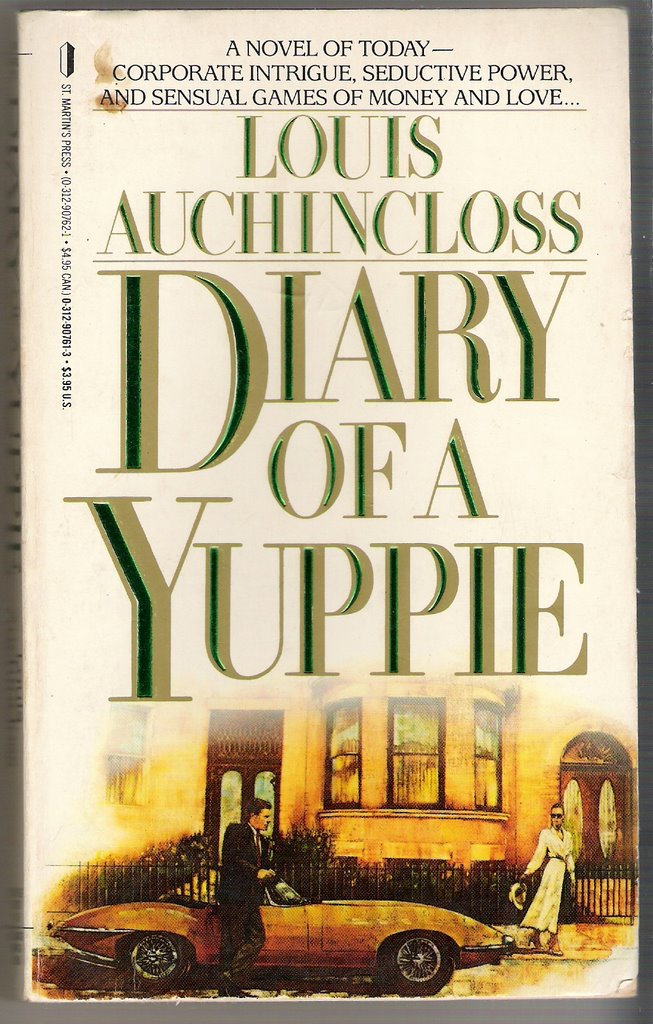
My wife recently bought this 1986 work of fiction in a charity shop, thinking it might bring back a few memories of the mid-'80s era to me.

Diary Of A Yuppie is about a yuppie who likes making money, and having boardroom meetings, and eating lots of posh food, and wearing lots of posh clothes.

At least I assume it is. The first few pages certainly indicate it is.


In 1986, I was having the time of my life, dancing to the Pet Shop Boys and Nu Shooz, and wearing shoulder-padded jackets over cerise mesh vests. And I didn't wear socks - it was Miami Vice trendy not to (stupid fool - I wore canvas shoes and they rubbed nearly all the skin off my feet).

I was also trying to grow designer stubble (it simply made me look dog rough), glutting on hair gel and mousse, and fancying myself with blonde streaks. On top of all that, I was boozing and bedding like there was no tomorrow.

But I wasn't a yuppie. I was working like a dog at... I'll call it Primrose Cottage, a Social Services home for the elderly, so the experiences related in the book don't meld with my own, arouse no nostalgia, and so I've stopped reading after page four.

Also, it's American and I'm English. Bog standard, financially poor-as-can-be English at that.

The book's cover makes an interesting "sign of the times" for the blog, though!

20th Century Words by John Ayto, traces the yuppie name back to 1982 and defines a yuppie thus:

a member of a socio-economic group comprising young professional people working in cities of a type thought of as typifying the ethos of the 1980s: ambitious, go-getting, newly affluent, young, class-free, owing no debt to the past. Originally US; a hybrid word coined probably by grafting an acronym based on "Young Urban Professional" (or "Young Upwardly mobile Professional") on to a basic model suggested by hippie.

Some people, of course, spell it "yuppy".

I have read on-line that the yuppie word was first coined in 1981, whilst 20th Century Words, as seen above, traces it to 1982.
 

The yuppie acronym probably comes from Chicago. An article by Dan Rottenberg in a May 1980 Chicago magazine called "About that urban renaissance.... there'll be a slight delay" (which I've seen on-line, not in original print), is the first ever found to mention "yuppies" - however the name was simply applied to the upwardly mobile set, gentrifying certain areas, and the associated problems, not the Reagan/Thatcher adoring huge money makers of later in the decade. Those type of yuppies, the ones the tag are now associated with, were prevalent in the mid-to-late decade, and the yuppie tag "took off" during the early Reagan years - the US President was elected in November 1980 and inaugurated in January 1981.

In the UK, I think we started to move into our "yuppie era" around 1984. I remember 1980, 1981 and 1982 as being financially-poor-as-church-mice years. In 1983, things perhaps began to alter a little... and I think 1984 was getting distinctly upwardly mobile. Funnily enough, although people now like to categorise the entire 1980s as being "excess unlimited", I only remember the years 1984 to 1987 as being truly like that. Black Monday in 1987 sent out huge shock waves throughout the financial world, and in 1988 Acid House was distorting the 1980s' "stylish" image more than somewhat.

And '80s "stylish" garb (which I loved) and yuppies were far from being the full story from 1984 to 1987, either. Who could ever forget the Miners' Strike? The Left were very vocal, and environmental concerns were on the rise. I always recall the 1980s as being uproar. And that includes the "height of yuppiedom" years.

I've been having a little delve into the world of yuppiedom, and discovered that as well as plain and simple yuppies there were buppies (black yuppies), Juppies (Japanese yuppies), guppies (gay yuppies), green yuppies (environmentally concerned yuppies - tree hugging dosh chasers - amazing!) and "yuppie puppies" - (upwardly mobile kids, under twenty or the offspring of yuppies).

A yuppie with a yuppie toy in the 1980s - a brick mobile phone. Yuppies also liked filofaxes and wine bars. Oh, yes, I almost forgot - and money.

"Hello, darling, it's me. Listen, I've got a meeting with the chairman of the board in twenty minutes, and my shoulder pads have gone all funny..."


18 December 2010

CB Radio

Legal Citizens Band radio? The "Daily Mirror", 8/5/1980. Cockney model and actress Lorraine Chase is also on the front page as she had just begun work on "The Other 'Arf", a new sitcom.

In 1980, CB radio, invented by American Al Gross in the 1940s and in use in the USA since the 1950s, was illegal in England. Illegal CB usage had been known in a very small way here since the mid-1960s according to information in one of my early 1980s CB magazines, but 1980 saw the number of breakers swell enormously.
 
The Daily Mirror article brought hopeful news:
 
Good news for Rubber Duck and his two-way chats

HELLO TO ROAD RADIO

Britain's outlawed Citizens' Band radio fans got a welcome message last night.
 
Home Secretary William Whitelaw announced that the Government is in favour of introducing a legal two-way radio system.
 
If plans go ahead, motorists and lorry drivers using call signs like Rubber Duck could be chatting on an approved system called Open Channel some time next year.
 
Mr Whitelaw made it plain to MPs that although the Government backs CB radio in principle, technical problems will have to be overcome.
 
He also wants to sound out public opinion before taking a final decision.
 
CB radio is already widely used in the United States and on the Continent.
 
Lorries and many private cars are fitted with special transceivers so that their drivers can chat over the air.
 
Using their own slang, drivers can warn that Smokey Bear (the police) has got black ice (a radar trap) ahead.
 
They have peculiar call signs like Snowman, woodpecker - and Rubber Duck, made famous by the hit record and film "Convoy".
 
CB radio fans who have been campaigning in Britain for five years claim that between 30,000 and 70,000 sets are already on the air here.
 
Their operators risk a £400 fine or six months in jail.
 
Critics object to CB because it operates on a frequency which could lead to interference with emergency services and aircraft.

Food for thought for William Whitelaw from MP Clement Freud in July 1980. 


Remember good old Sheila Tracy on BBC Radio Two's You and The Night and The Music? Sheila provided music and chat for "all you night owls out there", and was a lovely presence on night time radio.
 
In 1980, she began a slot for truckers' messages and requests and was soon riding the crest of the early '80s CB radio wave.

As mentioned elsewhere in this post, CB was up-and-running in the USA in the 1950s, but in England it was illegal. 
 
Nevethertheless, small numbers of people had been flirting with it here since the 1960s, and a couple of films (remember Convoy?!) and hit records (remember Convoy the song?!) created a more general interest in CB jargon (and truckers!) in the late 1970s.

Around 1979 a very small number of people were using illegally imported CB radios in this country. In 1980 the number of breakers rose sharply. Legalisation was now in the air, although this did not actually happen until 2 November 1981.

One of the things many people forget - or simply don't know - about the '80s CB radio craze is that it wasn't until the 1980s that even 50% of the UK population had a land-line phone (no mobiles until 1985 - the first 'bricks'). Being able to chat to people in your front room who weren't actually there with you was novel and exciting to many.

In March 1981, CB jargon (and illegal CB!) was going great guns with enthusiasts in this country, not least truckers, and Sheila Tracy was their heroine...

From the Sun, March 17, 1981:

The voice has those soothing "Family Favourite" tones that you expect to hear asking Bill Crozier what the weather is like in Cologne.

It brings to mind twin-sets, pearls and sensible shoes.


But the vocabulary comes straight from the American freeways.

"This is Tiger Tim, how am I hittin' you good buddies - wall-to-wall and tree-top-tall I hope."

Sheila Tracy, Britain's first and least likely truckers' deejay is on the air again. And all over the country night-drivers tune in to the ten-four and smokey-bear jargon that is sweeping Britain.

Once there was wireless and long-distance lorry drivers. Now, following American fashion of course, we have Citizens' Band radio and truckers. And Sheila. Just over a year ago, she started including a truckers' hour in her once-a-week, all-night record programme on Radio Two.

It has become such a runaway success that the BBC are now going to put it out five nights a week. And Sheila is frantically studying her CB dictionary.

As Tiger Tim - her handle as they call nicknames in the CB world - she plays truckin' songs, Country and western music and relays messages to the night traffic.


A driver who thumbed a lift and left his atlas behind. Wives sending love to their travelling husbands.

Drivers with names like Clog Dancer and Little Fat Man send cheerful and occasionally cheeky messages via Sheila.

"Tell Short Arms to get his hand in his pocket and buy the teas," she repeats faithfully.

And in transport cafes all over the country the drivers whoop with laughter.

It is not just lorry drivers either. Groups of schoolboys take it in turns to sit up and tape her show...


It has all left Sheila rather breathless. She is 46 and has been a BBC personality for years.

She was a television announcer for some time then moved to radio and was the first woman to read the radio news.

Before that she was a trombonist with the Ivy Benson All Girls' Band and worked as a variety artist in an act called the Tracy Sisters.

But none of this showbusiness pedigree prepared her for the impenetrable language of the truckers.

She first heard a truckers' programme in America, run by Big John Trimble, the truckers' deejay. And she decided to try a slot in her programme, "You, The Night And The Music".

A lorry driver sent her a copy of an American dictionary of CB truckers' language and now she speaks it like a native, even if she is not always sure what she is saying.

"Seventy-three and eighty-eight," she says, "and ten-ten till we do it again."

Whatever does it mean?


"I think it means love and kisses," she says, uncertainly, and has to check her dictionary to make sure.

Some of her fans have made her up an American-style number plate with the title "Tiger Tim - The Truckers' Friend," emblazoned on it. And she proudly displays it in the rear window of her car.

"But I haven't had a flash yet," she says.

Good heavens, I should think NOT.

No, Sheila explains patiently, a flash means a headlamp signal.

She has been caught out once or twice herself, though.

"Some of the blighters send me rude messages and I've read them out without realising," she says.

Several drivers sent messages to friends they described as bar-stewards. And it was only when she tried saying it quickly that she realised what they meant...

One of the fears about widespread use of CB, which had deterred previous attempts to legalise it, was the notion that it might interfere with other communications systems or electronic equipment. And not just remote controlled model aircraft. There certainly were times, as illegal CB usage rocketed in 1981, when those concerns appeared to be justified...


HOSPITAL HEART MACHINES HIT BY CB CALLS
 
Sun, 12/8/1981
 
Citizen band radio users were warned last night that their broadcasts can interfere with heart monitoring machines in hospitals.

The disturbing discovery was made by Torbay Hospital in South Devon, who said that electrocardiograph machines cut out when CBs are used nearby.


Hospital administrator Ken Dainton said: "We are particularly prone to it here because enthusiasts use their sets to warn others about holiday traffic jams on the Torquay road.

"So far only monitoring machines are affected. But it could be devastating if these broadcasts affect other electronic machinery."

Mr Dainton said local CB clubs had observed a radio silence within a mile of the hospital.

Another CB danger was revealed yesterday by fire chiefs in Greater Manchester.

They are trying to track down a chatterbox housewife whose broadcasts are blocking the wavebands of emergency services.

The woman's equipment is faulty and her chats about dogs, cats and birds "fan" out into the frequency used if there was a major train or air disaster.

 
Other reports of CB complications had a delicious touch of comedy as the illegal CB craze went into overdrive in the run-up to legalisation...  

CB FROM ON HIGH

Daily Mirror, 5/10/1981

Citizens Band fans are being received loud and clear on the Rev. Roger Hall's church microphone. One voice even broke in while Mr Hall was conducting his daughter Beverley's wedding.

As the couple took their solemn vows, it said: "OK - time for a tea break." Mr Hall, of Coventry, said: "It was just like the voice of the Almighty."

From the Sun, October 23, 1981:

Citizens' Band radio fans who break the new laws on their two-way sets could rapidly find Smokey Bear on their trail, they were warned yesterday.

Smokey - CB slang for the police - will crack down on people using unauthorised wavelengths when the craze becomes legal on November 2. Licenses will cost £10.

Home Office Minister Timothy Raison said there will be heavy fines for illegal operators.

Newspaper article from November 2, 1981.

2 November 1981 duly arrived and shops immediately sold out of the first British models as the public went CB crazy. As seen in the newspaper article reproduced above, CB's inventor, American Al Gross, made the first legal CB call in England from a Rolls Royce parked in Trafalgar Square - his "handle" was "CB'er No 1".

Do you remember these CB slang phrases?
Brown bottles = beer

Reading the mail = listening

Home 20 = CB'er's home town

Negatory = no

Handle = CB'er's slang name

In a short = soon

Wrapper = colour of car

Wall to wall = strong signal
Smokey = the police
Flip-flop = return trip

Eyeball = meet face to face

Remember the Rumbelows - "We save you money and serve you right"? The advertisement above is from the Daily Mirror, 16/12/1981. With CB radio now legal, many people could look forward to a very CB Christmas.

There had been some moans and organised protests about the allotted frequencies for legal Citizens Band radio and one or two other quibbles, but on the whole CB fans were pleased by legalisation...

The editor of What CB wrote:
 
There's little in the Home Office Legal CB announcement to give existing users much cause for celebration. Unless they convert their rigs to FM - or, of course, buy a new legal specification set - they stay outside the law. There will be no amnesty, nor a period of grace, which was probably only to be expected. But no one should forget that without the widespread use of illegal AM equipment, it is highly unlikely that a legal CB system would have been introduced.

Apart from this, however, it's tremendously exciting that CB can now be used without the fear of the knock on the door or the flashing blue light in the rear view mirror. As well as the vast number of breakers using the illegal frequencies (probably one-and-a-half million), there are just as many who have been waiting for a legal system to arrive. From November 2nd, a legal rig, a legal aerial and, of course, that £10 licence means you can natter away to your heart's content. 
 
One of the first British CB rigs, the 1981 Amstrad 901. All together now: "Breaker, break!" "Fancy an eyeball?" etc, etc...

Two more 1981 magazines for CB fans - "CB Radio" ("The first, the original, the most informative and the most copied") and "Breaker".


A specimen CB radio licence as featured in "Breaker" magazine.

Above and below: "Breaker" magazine, November 1981 - a CB rig guide.

"The CB market is going to make sliced bread look silly..."


It was all happening in the world of CB in 1981... 

Get kitted out here!


Early '80s sew-on patches. Now, how about that eyeball? 
 
Customised pottery from Devon featuring a CB flash, plus your "handle" on tankards and mugs if required.

"The Big Dummy's Guide To British C.B Radio" - essential for learning the lingo and getting started. 
 
Nobody had any excuse not to get turned on. To the world of CB radio. 


"The model M2.40 Channel-27 FM. - to meet full U.K. Government Specifications."

CB radio Smurf, dated 1981.   

The CB craze peaked in 1982 and 1983 - even becoming the subject of story-lines in popular telly shows Terry and June and Coronation Street in '82. In the former, Terry joined the craze and ended up stuck in his car in the back of a lorry; in the latter, Eddie Yeats (handle: "Slim Jim") met the love of his life, Marion Willis (handle: "Stardust Lil"), over the airwaves. Even Eddie's landlady, Hilda Ogden, was doing the "breaker, break" (well, briefly!) as "Shady Lady"!

The craze also influenced children's television with the introduction of a new magazine show on ITV called CB-TV. The idea behind this was that the presenters had commandeered the airwaves and the show was citizens band TV. Nonsense, of course, but a fun scenario. 

The highest number of CB radio UK licence holders was recorded in 1983 - 300,000.  

By 1984, enthusiasm for CB radio had waned a little, but it was still hugely popular. My mate Pete had a rig in his car and a speaker under the bonnet. "Kill that cat. Would you please kill that cat?" we requested over this brilliant PA system, and nearly wet ourselves laughing as puzzled pedestrians tried to locate the source of the message.

CB was fun, could be used for making pals and even meeting prospective partners, but there could be aggro. One evening, Pete was chatting to a breaker who became increasingly hostile.

Not known for backing down from confrontations (despite the white legwarmers he often wore), Pete got pretty steamed up, too. "Yeah? Well come on, I'm in the car park opposite St George's Church. Get down 'ere - I'll take you on!"

Mr Not-So-Good-Buddy assured us, in no uncertain terms, that he was on his way. By the sound of him, he wouldn't stop at an eyeball - he'd tear us limb from limb. 

Oower, Missis! 

Pete sat silently behind the steering wheel, face grim and set, staring at the entrance to the car park.

"See you, Pete!" I firmly believed (and still do) that discretion is the better part of valour, and prepared to get out of the car.

Pete grinned at me, delighted that he'd made me sweat: "Where'd ya think you're goin'? You didn't think I was serious, did you?" and he started the car and away we went. Phew! Curious though I was to see if the breaker was as fierce as his voice, I could live with it!

Despite this (and knuckle-dragging CB idiots were few and far between in my experience), I remember CB radio very fondly. With all the changes since - the World Wide Web and so on - it seems like a lifetime ago... good times...
1
My local branch of Tandy was offering the Realistic TRC 1001 hand held 40 channel 4 watt C.B, introduced by Tandy on November 26 1981 at a price of £119.95, for the bargain price of £69.95 in August 1982. 

"One-Nine For Santa"... a treat for Christmas 1981 from "Tiswas" star Fogwell Flax and the Ankle Biters from Freehold Junior School.
1
Breaking with Terry - "Terry and June", 1982.

Listen to Sheila Tracy and the first instalment of her five-nights-a-week BBC Radio 2 Truckers' Hour from May 1981 here.

Power Showers....

Power, darling - don't you just love the idea? And Power Dressing, didn't you just love that, too?

20th Century Words by John Ayto - published in 1999 - defines Power Dressing thus:

noun (1980) a style of dressing for work and business intended to convey an impression of efficiency and confidence. Applied particularly to clothing adopted by some women to fit in with the ruthless business ethic of the 1980s, characterised by the use of shoulder-pads to create a more masculine-looking outline.

Of course, looking back at the 1980s from our current vantage point, we can see that the shoulder-padded look was also part of lots of 1980s fun fashion - and that many men employed it, too.

I did. I thought it so stylish. And the choice of colours for jackets back then, together with the patterned material inside that you could roll up your sleeves to reveal and contrast, was a wow.

Power dressing was followed by a range of "power" prefixes - you could have a power walk, power nap, power breakfast, power washes and, of course, a power shower...

There's nothing like a Power Shower - to pamper, to soothe, to invigorate, to leave you tingling-fresh.

And now they start at an even better price.

For less than £300 inc. VAT, you can have, installed - a shower with an adjustable head that puts you in control, to choose the spray that suits your mood.

A shower with a powerful pump which, when added to your gas central heating, keeps the luxurious water flow constant, and maintains the temperature you choose.

And a shower that can still cost less to take than a bath. Even more of a bargain when you remember that heating your water by gas is your cheapest option - 24 hrs a day.

The Power Shower. Saving you money all-round.

See them and other energy saving gas appliances at British Gas showrooms now.

British Gas - ENERGY IS OUR BUSINESS

I do love the black tiles with red grouting effect featured in the ad photograph. Very '80s indeed!

08 December 2010

Coronation Street 1980s - Part 4

Coronation Street is celebrating its 50th anniversary - half a century on-screen - and as a salute to the show, we've been taking a look at the Street in the 1980s, with a little help from our sister Blog, Back On The Street.

This week, we take a look at some of the events of 1987, when quite a lot of the drama centred around Corner Shop keeper Alf Roberts (Bryan Mosley). I was saddened by the demolition of the shop, the setting for the show's very first scene in 1960, during the 50th anniversary tram crash story-line. When I was a kid, I fantasised about owning the Corner Shop! Anyway, the shop survived the 1980s, and 1987 in Weatherfield saw no structural damage whatsoever!

Let's take a little trip back...

1987! This was the climactic year when the 1980s sealed their fate as being a one Prime Minister decade by electing Margaret Thatcher for a third term, and in Coronation Street the subject of women in politics was also on the agenda...

Ken Barlow (William Roache) had hoped to stand for the local council, but his position on The Weatherfield Recorder put paid to that when his boss raised objections. Ken contemplated chucking the job in and going ahead anyway, but decided he must back down, being a man with responsibilities.

Deirdre (Anne Kirkbride) had already fallen out with Alf Roberts, the existing local Independent councillor, and her boss at the Corner Shop, over matters political. This had resulted in her walking out on the job as Alf's assistant at the shop, which she had held since 1980.

And the idea was then born... if Ken couldn't stand for the local council, why shouldn't Deirdre?

And so she did.

Enlisting the help of Emily Bishop (Eileen Derbyshire), Sally Webster (Sally Dynevor) and Susan Baldwin (Wendy Jane Walker), Deirdre sallied boldly forth.

Sally dropped out when she stepped into Deirdre's shoes at the Corner Shop. She couldn't very well campaign against her new boss. Deirdre totally approved.

Mavis Riley (Thelma Barlow) complimented Sally on her approach to work at the shop, and Sally was thrilled.

Having heard there was a flat above the shop, Sally asked Alf if she and Kevin (Michael Le Vell) could rent it, but Alf said no - it was being used as a store room.

Sally sought the aid of her current landlady, Hilda Ogden (Jean Alexander), asking her to tell Alf that she and Kevin would shortly be moving away from the district. Alf, dreading finding a replacement during his busy campaigning period, gave in - and Kev and Sal moved into the shop flat.

When a local youngster was run over at a local accident black spot, where Deirdre was campaigning for a pedestrian crossing, her election campaign really took off. Ken used The Recorder to report the story, complete with a photograph of Deirdre and the unlucky youngster.

Deirdre won the election.

She celebrated her victory with a party at The Rovers, where she was hoisted by Ken and Pete Jackson (Ian Mercer) and paraded around the pub, whilst her supporters sang She's A Lassie From Lancashire around the piano.

Alf and Audrey (Sue Nicholls) had attended the party, at Audrey's insistence - she didn't want the neighbours thinking they were hiding away, crushed by defeat.

Alf, feeling unwell, left early.

And, alone at No 11, he collapsed with a heart attack.

Audrey found him on the floor when she returned from the party.

She was terrified. As Alf was stretchered into the ambulance, she said: "Please God let him be all right... just let him be all right..."

A crowd of onlookers had gathered in the dark street. Hilda was there, of course.

"What's happened?" asked Sally Webster.

"It's Alf Roberts," Hilda sucked in her breath. "It doesn't look good to me!"

"That's it, 'ilda, let's all look on the bright side, eh?!" said Betty Turpin (Betty Driver), scathingly.

Deidre was devastated - blaming herself for Alf's condition. If only she hadn't stood against him in the election.

With some changes to his diet and a decrease in stress levels, Alf was expected to make a full recovery, but Audrey still let Deirdre have it, both barrels, when she called at the Corner Shop to see if there was anything she could do to help:

"Getting 'im out so you could go in! Well, all I can say, lovey, is enjoy it while you can, because do you know life has a very funny way of comin' round - and one of these days somebody might just come along and do the same to you!"

When Audrey returned to the Street with Alf in a taxi, Deirdre was just leaving on her first official council function.

She greeted Alf warmly, and Alf returned the warmth, telling her he felt fine.

"You want to get 'im inside, he looks worn out!" said Percy Sugden (Bill Waddington) to Audrey.

Nobody could be more insensitive than well-meaning Percy, who then said of Deirdre and Ken:

"They're off to the mayor making, you know, where they elect the new mayor, then they decide who's going to be on various committees. Then they 'ave a slap-up lunch."

Talk about rubbing Alf's nose in it!

Alf's smile faded: "Yeah, well, I do know what a mayor making is. I've been to one or two in me time, Percy!"

Being at home at No 11, recuperating, got on Alf's nerves, particularly as Percy elected himself chief visitor. Deirdre also visited, and although Audrey was still frosty, Alf gave her advice about her position on the council and seemed to have accepted the situation.

But he wanted to get back to the Corner Shop. How he longed to get back to the Corner Shop! Audrey told him to stop worrying about the place, he'd be back there soon enough and anyway it would be there long after they'd both departed this mortal coil.