Total Pageviews

Pages

31 March 2011

Duran Duran - Were YOU A Duranie?

Duran Duran - New Romantic moments in 1981 and 1982.

The pop group Duran Duran was formed by Nick Rhodes and John Taylor in 1978, however the classic line-up did not come together until 1980.

In early 1980, the owners of the Rum Runner Club, Birmingham, England - brothers Paul and Michael Berrow - took the band (at that point, after several changes in line-up, consisting of John Taylor, Roger Taylor and Nick Rhodes) under their wings, paying the lads to work as doormen, disc jockeys and glass collectors when they were not rehearsing, and providing them with rehearsal space.

In April 1980, Andy Taylor answered an ad for a "live wire guitarist" with Duran Duran.

In May 1980, Simon Le Bon met the band, introduced by his ex-girlfriend, Rum Runner barmaid Fiona Kemp, who recommended him as a potential vocalist. Apparently, Simon attended his audition clad in pink leopard print trousers.

Duran Duran in the 1982 "Rio" video - note the prototype "Miami Vice" gear. Jacket sleeves had begun to be pushed up as a fashion trend around the turn of the decade - and the trend grew more and more prevalant as the decade got underway. Shoulder pads began to grow (courtesy of the likes of Joan Collins and, judging by this picture, John Taylor) and everyday men began to wear bright colours.

In June 1980, the Berrow brothers formed a company, Tritec Music. Duran Duran signed a production contract with Tritec and the Berrow brothers became the band's managers.

The band's classic line-up of
Simon Le Bon (vocals), John Taylor (bass), Roger Taylor (drums), Andy Taylor (guitar), and Nick Rhodes (synthesizers) played their first show together at the Rum Runner on July 9 1980.

In December 1980, Duran Duran landed a deal with EMI Records.

In 1981 the Durans were futuristic dandies (remember Planet Earth?), taking over the charts, their every movement eagerly followed by a growing band of dedicated Duranies.
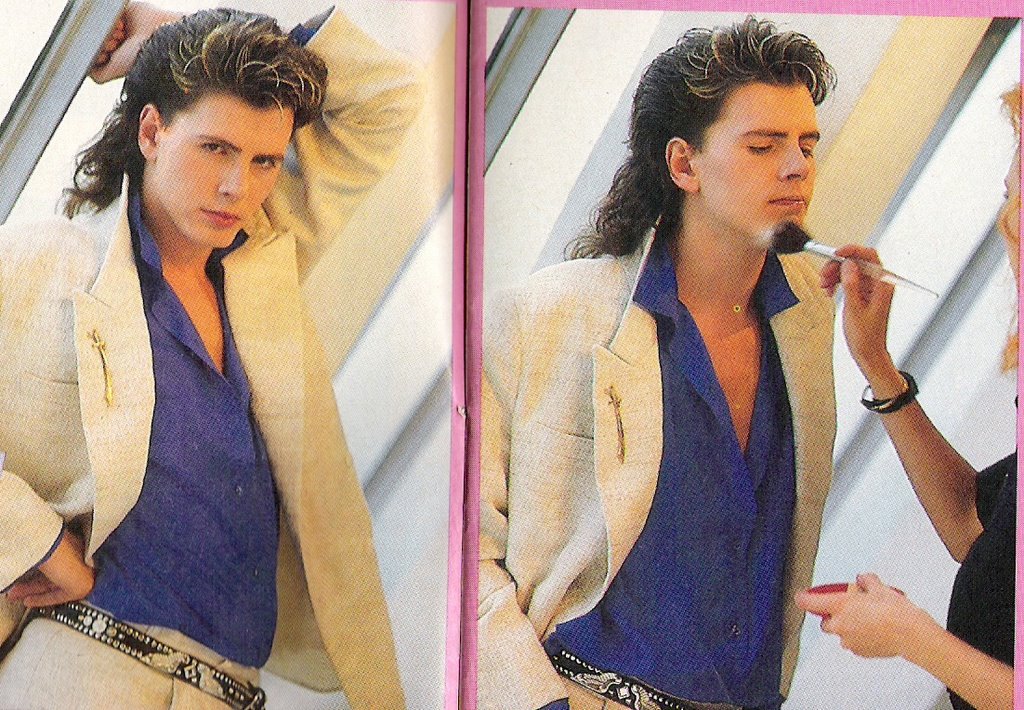

John Taylor gets touched up for a mid-80s photo shoot.

A 1984 book chronicling the history of the group. Cue hysterical Duranies: "Oh, Simon, Oh Simon, I love you, I love you!"

Duran Duran became one of THE pop groups of the 1980s. In 1981, they'd been New Romantics, flouncing around in out sized frillies, but they outlived that scene well and truly.
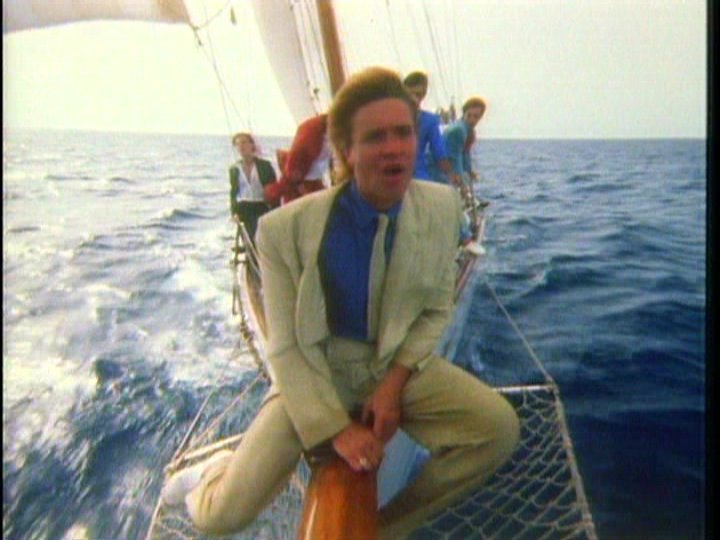
1982: all aboard - another "Rio" shot.

Influencing fashion, movers and shakers in the pop video market (remember Girls on Film?!), and purveyors of some highly distinctive and polished '80s pop music, Duran Duran became legends.

And as instantly evocative of the 1980s in the years since as Rubik's Cube, the ZX Spectrum and shoulder pads!
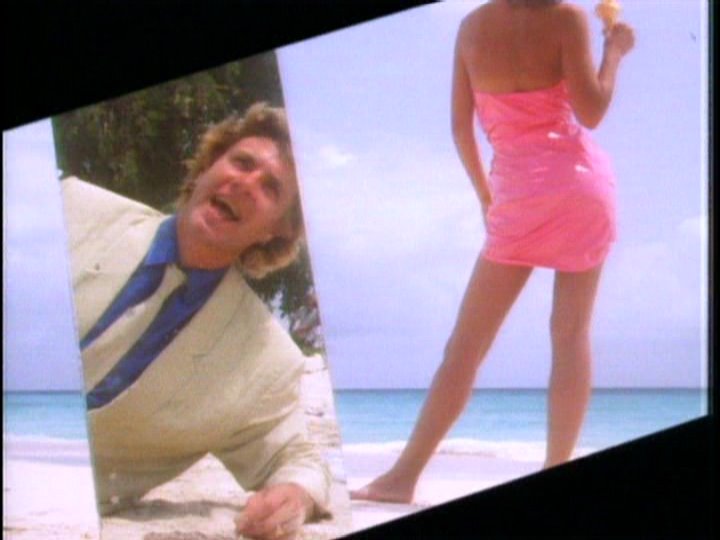
"Cherry ice cream smile..."

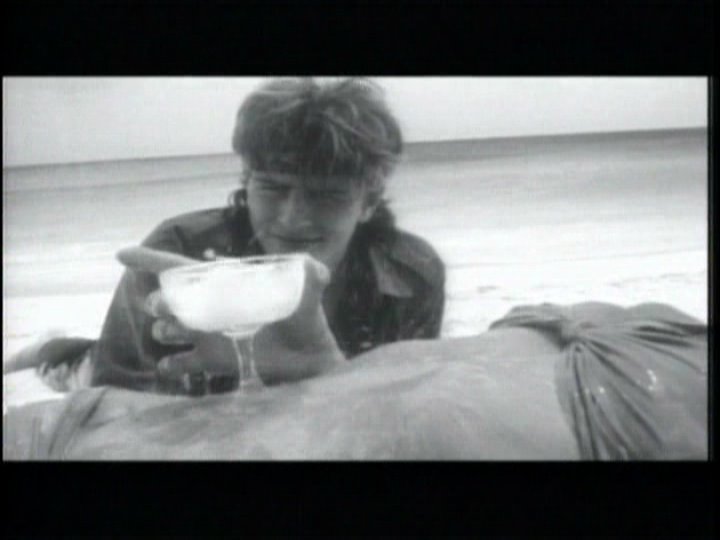
Heart throb John discovers something interesting on the beach.

These Duran Duran wrist bands were ideal for sport, or nipping out for a packet of ciggies.

30 March 2011

EastEnders: Colin and Barry - Gays In Albert Square - And The First Gay Kiss In UK Soaps...

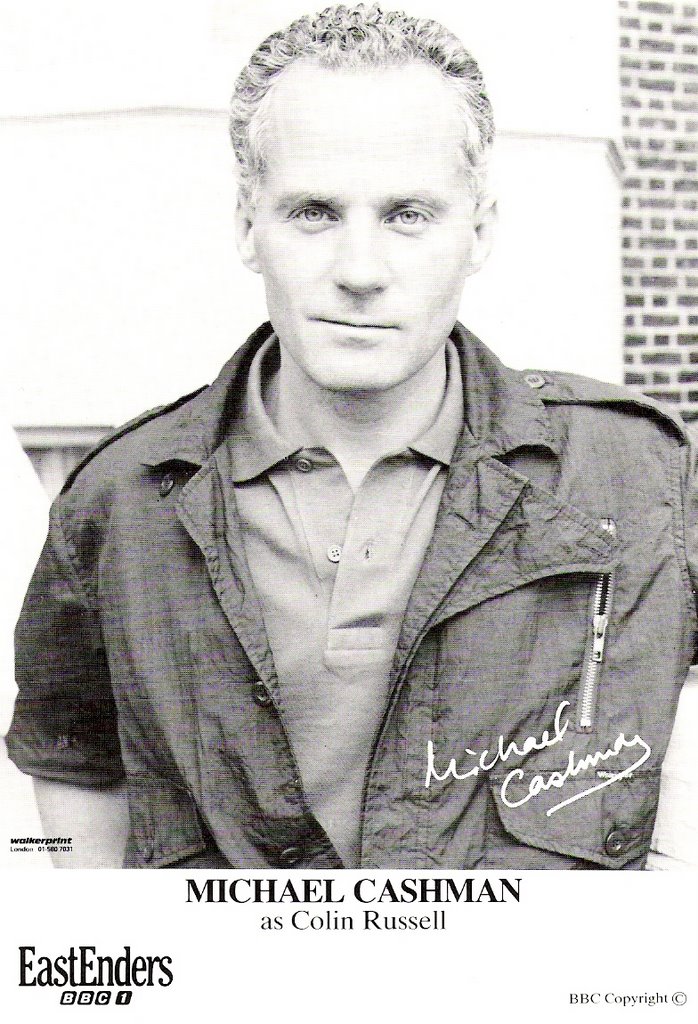
In 1986, EastEnders introduced Colin Russell, a gay man, into the Albert Square mob.

Neat in his ways, armed with a Filofax and one of those trendy keyrings which beeped if you whistled for them, Colin was still subjected to homophobic bigotry by other residents of the Square. That guardian of Walford morals Dot Cotton was shocked by the "goings on" at Colin's, especially when he took up with young east-end lad Barry Clark.

Back then, Barry was "under age" too - he was under 21!

Michael Cashman, himself a gay man, and Gary Hailes, were excellent as Colin and Barry.

And soon that now reformed homophobe Dot was a good pal of Colin's.

Why were gay men such an "issue"? Well, until 1967 in England and Wales, and the early 1980s in Scotland, homosexual acts between men - even in private - were illegal.

The 1980s saw several very significant steps forward in English soaps, which simply didn't "do" gays before then. Oh sure, there had been a shock confession of homosexuality from a character in BBC radio serial The Dales in the late 1960s, and its successor Waggoners' Walk flirted with the subject a couple of times. The first story-line featured a gay character who "reformed" and got married! Waggoners' second attempt - in 1980 - was more promising, but the BBC promptly axed the show.


Afternoon TV "drama series" (note: not soap!) Together (1980-1981) introduced a gay storyline.

My memories of that are all very hazy, and the show, tucked away in the afternoon schedules, attracted little attention, only ran to two series, and soon disappeared - as did Southern TV, which produced it. Together had quite a cosy, traditional atmosphere on the whole.

Brookside was the first major early evening UK TV soap to feature a regular gay character when young Gordon Collins (Nigel Crowley/Mark Burgess) "came out" in the mid-1980s. But the discovery that Gordon was gay coincided with the original actor's departure from the show, and a recast version didn't appear until a year or two later.

For me, Colin and Barry were special. They made me think a bit, opened my eyes a little.

With gay characters appearing in two of the TV soap operas, and many openly gay pop stars flitting through the pop charts, it was an interesting era.

AIDS was being touted in some tabloids as a "gay plague", but work elsewhere in the media was ensuring that gays were getting a fairer deal, and making many of us question our attitudes to the gay community.

Colin and Barry were merely allowed a kiss on the forehead in 1987 - which caused outrage, but in January 1989 Colin and his next partner, Guido
Smith (Nicholas Donovan), shared the first mouth-to-mouth gay kiss in UK soap.

Steam was coming out of the ears of at least one tabloid newspaper.

The whole Colin/Barry/Guido story-line was absolutely groundbreaking. I shall always remember the 1980s EastEnders gay characters.

They contributed to the phrase "woolly-woofter" dropping out of my vocabulary - forever.

Power Dressing For Men...

My, what big shoulders you have, Mr Robinson. Sorry, I mean Donovan. 


Shoulder pads were part of the "Power Dressing" image. The phrase was first recorded in 1980, according to the Twentieth Century Book of Words by John Ayto (Oxford, 1999). Back then, it meant a smart, efficient look for executive women. But as the 1980s continued the shoulders grew and grew. And some men (like me) got in on the act. The pads had to be large. We wanted BIG, BIG shoulders.

Us men who got the padded look thought we looked great - and our gigantic shoulders made our beer bellies (not that Jason Donovan had one!) look much smaller.

Bliss.
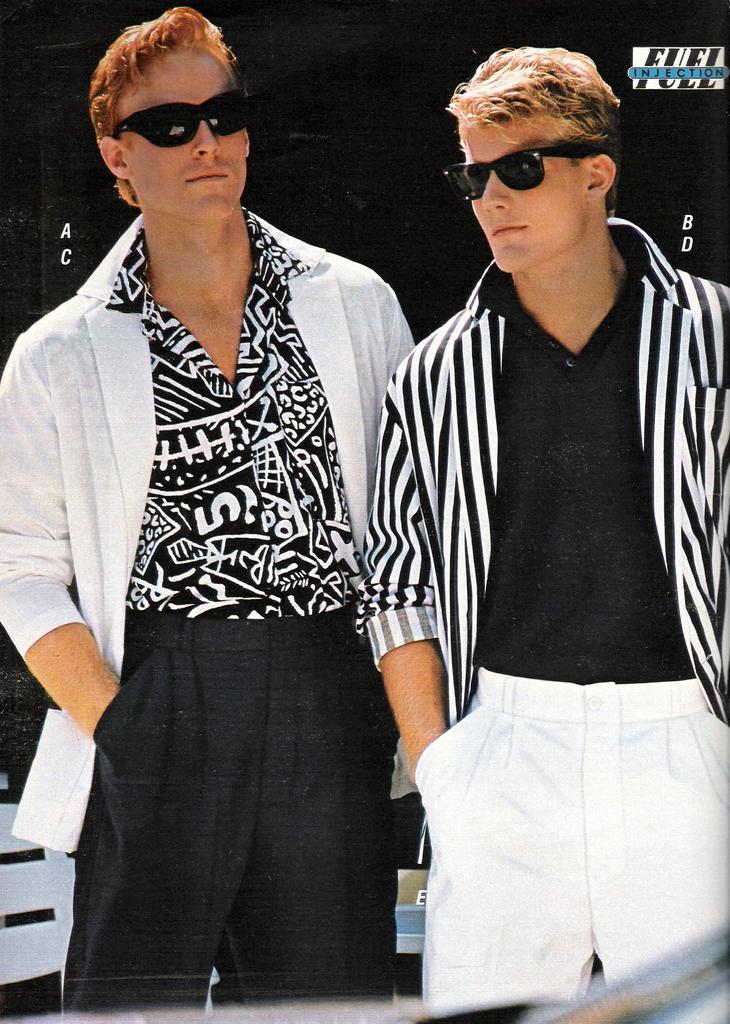
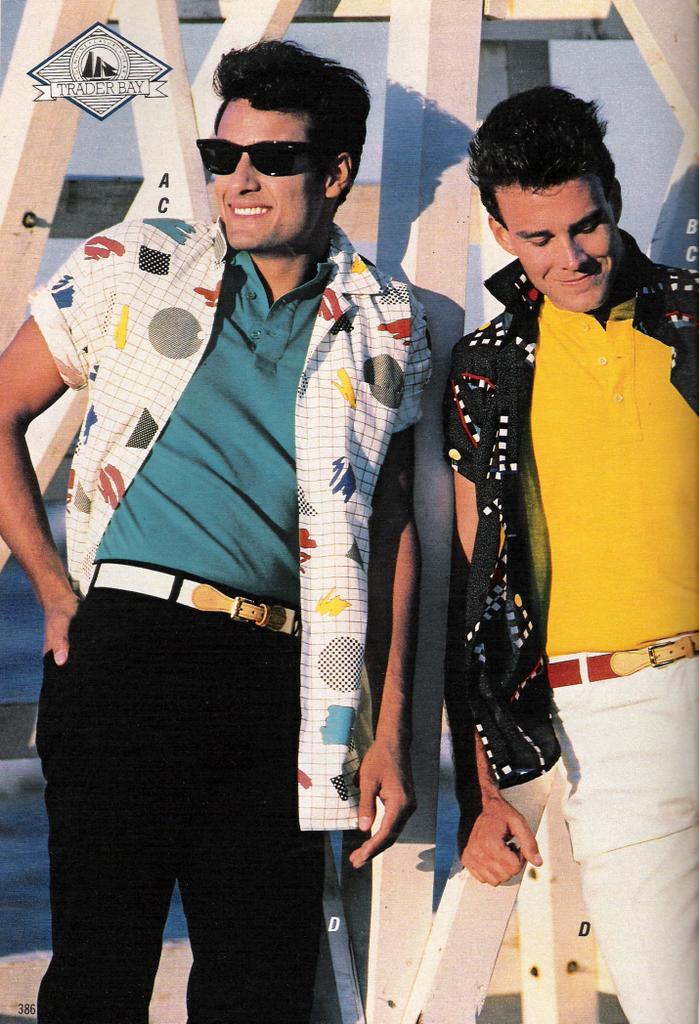
Men's fashion as featured in a 1987 advertisement... I loved it all... why are you laughing?!
- More absolutely gorgeous 1987 clobber!

1984: Minder - A Nice Little Earner...

Terry McCann (Dennis Waterman) tells Arfur Daley (George Cole) where to get off at The Winchester Club. Dave (Glynn Edwards) looks on. Launched towards the end of 1979, Minder was not initially a success. Given a nice new coat of humour in the early 1980s, Minder soon hit the big time.

Ah, Minder...

I could be so good for you...

The show was created by Leon Griffiths.

Launched on October 29 1979, after the infamous ITV strike, the series was not initially a success.

TV critic Hilary Kingsley wrote in 1989:

The first [series] went out straight after the ITV strike and should perhaps have been called "Mindless" - it couldn't make up its mind what it was. Audiences were still confused by Dennis Waterman looking and sounding like the tough cop in 'The Sweeney' but playing the thick thug Terry here. Should they laugh? and where was John Thaw?

Brian Cowgill, managing director of Thames Television, was in there rooting for the show to continue.

And so it did.

The non-successful series of October 1979 to January 1980 soon evolved into one of the "must see" shows for millions of viewers throughout the 1980s as the violence decreased and the humour increased.

And what a beautifully written show it became.

Dennis Waterman took I Could Be So Good For You, the Minder theme tune, into the pop charts in November 1980, and the show itself first appeared in the monthly Top Twenty TV ratings (at No 20) in December 1980.

Arthur Daley, sorry, Arfur Daley, and "Minder" Terry McCann (usually wondering just what his boss was up to) became much-loved regulars on the 1980s TV scene.

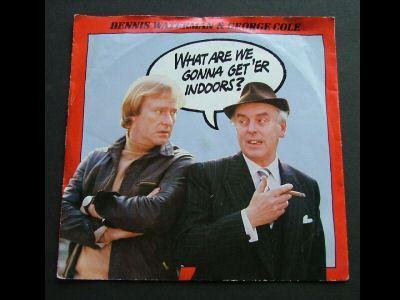
As did Arfur's "Mrs" - 'Er Indoors - although we never saw her. She did, however, become the subject of a 1983 Christmas novelty record - What Are We Gonna Get For 'Er Indoors? by Arfur and Terry - AKA George Cole and Dennis Waterman, of course.

A vexing question for Christmas 1983...

George Cole had played spivs long before his debut as Arthur Daley - ever seen him as "Flash Harry", in the 1950s film The Belles Of St Trinian's? As Minder continued and the comedy element was upped (indeed, a mid-1980s TV Times I recently acquired suggests that the comedy element was still on the rise), George Cole was clearly a man in his element.

People loved Minder.

People adored Minder.

People copied Minder.

"People COPIED Minder?!" you cry.

Oh, yes, I reply...

From the Daily Mirror, October 1, 1984:

Conmen are doing a roaring trade with a ruse they pinched from the TV series Minder.

They are posing as council workmen authorised to tow away vehicles which are illegally parked or apparently abandoned.

And that's exactly what happened in an episode of Minder two weeks ago.

A car mechanic posed as a council official to steal a parked car. Terry - alias actor Dennis Waterman - was his unwitting accomplice and the racket was financed by Arthur Daley, played by George Cole.

As usual, Arfur's idea of a nice little earner didn't come off. But the thieves who have copied it are making a small fortune in the Collier Row area of Romford, Essex.

They have used the ruse each time in a spate of thefts. Police have now warned residents to keep tabs on each others cars and to watch out for the conmen.

Meanwhile, Thames Television, who make Minder, are insisting: "Don't blame Arfur."

A spokeswoman said yesterday: "Arfur and Terry can't really be held responsible for what's happened in Romford.

"Every Minder story could be carbon-copied, but they are totally fictitious stories.

"Life can sometimes be stranger than fiction."

Would you Adam and Eve it? Better not try it nowadays though. The 1980s, home to Arthur and Terry, were a different planet. Nowadays, with CCTV cameras and DNA Databases sprouting everywhere, you could end up right up the creek without a paddle.

Mind you, I've got a few dozen original 1980s deelyboppers if you're interested...

Only one careful owner.

Bound to sell.

Guaranteed to go "boing boing" when you pop them on your bonce.

Well... at least till you get them home...


19 March 2011

The Beiderbecke Trilogy - Jill Swinburne And Trevor Chaplin - Where Are They Now?

Trevor (James Bolam), Jill (Barbara Flynn) and First Born (Thomas McGlingly) - 1980s TV heaven!

Thomas has written:


I adored the 1980s TV series The Beiderbecke Trilogy and was saddened to hear of the death of the writer, Alan Plater. I connected with Jill, Trevor, Big Al, Little Norm, and the series was sheer brilliance. The 1980s setting was very important, because the show was very topical in its own distinctive way, but did Alan Plater write any more about Jill and Trevor? Have we any idea what happened to them next? This is keeping me awake nights!

I know what you mean, I think, Thomas!

I grew very fond of Jill, Trevor and company and I missed them - and their unique outlook on life - when the final series ended. Over the years since, I have often wondered how they are coping.

It would be so good to phone them up or drop them a line!

I've often been saddened by the ending of an enjoyable TV series and bemoaned the loss of weekly visits to favourite fictional characters via the little screen, but none more so than Jill and Trevor.

I watch the Trilogy every few years, never tire of it, always delighting in old acquaintance and fresh observations. But I always put off watching the final episode because I find the characters leaving my life again very upsetting - this is true every time - and I must have watched the series about ten times since the 1980s!

"Look Not Upon The Blondes When They Are Platinum..."

I have scouted around the web, and found a 2003 interview with Alan Plater, in which he reveals that he was keeping up-to-date with our old friends in the moonstruck outer limits of Leeds at that time:


For the record, I know exactly what's going on in Beiderbecke-land. Jill is the recently appointed head of San Quentin High, which has just finished bottom of every league table in the land. Trevor has retired and spends his days playing dominoes in the bowls pavilion with Big Al and Little Norm. Hobson has made a sideways career move out of the police force and is now a highly paid consultant in some byway of the New Labour Project. The heart of the matter is subversion. If the Scorsese gospel says we all have the capacity for violence, the Beiderbecke equivalent says we all have the capacity for deadpan daftness when confronted by men wearing suits.

Read the full interview here.

I too was sorry to read of Alan Plater's death - and, of course, we are now cut off from Beiderbecke land forever.

In the 2003 Guardian article, Alan Plater, pondering on the hold the series continued to have on its audience eighteen years after the original Beiderbecke Affair series began in 1985, wrote:

The last words belong to Jill, Trevor and great-uncle Bix.

In the Tapes, Jill says:

"Beiderbecke? The first great white jazz musician. Drank himself to death. His playing sounded like bullets shot from a bell."

"How do you know that?" says Trevor.

"You gave me a two-hour lecture about it in bed one night. In lieu of the cigarette."

"I didn't know you listened when I talked."

Maybe that's the answer. I didn't realise people were listening when I wrote.

We were, Mr Plater, oh we were!

Read our original tribute to the Beiderbecke Trilogy here.

Graduate policeman Detective Sergeant Hobson: "It is my view that the major challenge to the police force in the 1980s lies not with so-called major crime, but in the behaviour of people who, while outwardly respectable, show signs of social abnormality."


11 March 2011

Listen To Sheila Tracy And A May 1981 Truckers' Hour...

The Sun, March 17, 1981 - Sheila Tracy was riding high on the early 1980s CB radio craze.

Many thanks to Andy Walmsley, who e-mailed me recently with an internet link to an instalment of the legendary Sheila Tracy's Truckers' Hour. This was actually the first nightly edition, broadcast in May 1981, on BBC Radio 2.

Thank you so much, Andy! The memories came flooding back. It was so nice to hear this after all those years... and yet it doesn't really seem that long ago!

Sheila's report from Jarrell's Truck Plaza, USA, makes fascinating listening.

And were you one of the UK truckers keeping a wary eye out for Smokey in May 1981? Did you ever get a mention on the Truckers' Hour?

The news bulletin after the Truckers' Hour, and the brief blast of Abba's 1980 hit Super Trouper heightens the nostalgic element.

Listen to it below and then relive more '80s CB memories via our main CB radio article here.


10 March 2011

The Tandy Realistic TRC-1001

Graham has written:

Hope I'm hitting you tree-top tall, good buddy!

I love your article on the CB radio craze, and note it includes a newspaper ad for the Tandy Realistic TRC-1001.

Do you have any idea when this became available, as I have one stashed away in the back of my wardrobe and it's got me feeling nostalgic for the '80s citizens' band days, and curious to date it!

I can help you, Graham! The newspaper ad above, from the Daily Mirror, Nov 5, 1981, records that the Tandy Realistic was going on sale from November 26th, but orders were being taken NOW.

What a shame we can't pop back to those days...

My main CB radio article, which includes lots about the wonderful Sheila Tracy and her BBC radio show the Truckers' Hour, is here.

And to return to CB radio lingo - I'm down and I'm gone!

04 February 2011

Marchlands - 1987 Fashions And Decor Spot On!

Marchlands - a room in a house in three different decades - the 1980s, are of course, in the middle!

Christine has written:

I've just seen the first episode of the new ITV1 series Marchlands, a ghost story set in three separate decades, the 1960s, 1980s and 2010 and I must say I was bowled over by the 1987 family, particularly the parents - Helen and Eddie Maynard, played by Alex Kingston and Dean Andrews - and their fashions and house decor. Fashions came and went rapidly in the 1980s and yet the designers on Marchlands really seem to have got 1987 absolutely right - from the mother's hair - so Beverly Grice from Crossroads or Carly from Home & Away - to the colour of the bedroom sheets - so mid-to-late 1980s. Have you seen it? I was bowled over!

I did see some and yes, a brief moment of the 1980s seems to have been captured rather well. As you so rightly say, fashion changed so quickly and 1987 dress sense was very different from the donkey jackets, deelyboppers and New Romantic styles of the early decade.

The Marchlands 1987 sequences do seem very close indeed to the actual time style-wise, and as I usually give "set in the '80s" series a thumbs down for getting the fashions of individual years wrong, having just surfaced from looking at a mountain of 1987 mail order catalogues and TV ads, it's a pleasure to give Marchlands the thumbs-up for getting it right!

26 January 2011

Haysi Fantayzee

From the Daily Mirror, August 14, 1982:

Don't underestimate the hand-me-down appearance of Kate Garner and Jeremiah Healy, singers with rock group Haysi Fantayzee.

For it's their junk shop look that attracted the record companies when the group made their own promotional video.

And it led to a record contract and their current top twenty hit, John Wayne Is Big Leggy.

Jeremiah fondly remembers the video which the group put together for £150.

"I had a bass guitar on the end of an elastic strap."

I spent the whole time bouncing it up and down, just to show that I couldn't really play."

Both Kate and Jeremiah buy their clothes at second-hand shops and wear their hair in West Indian dreadlocks - a million miles away from the clean-cut, all-American style of John Wayne, the subject of their record.

But the group are keen to point out that despite the title, the hit isn't a tribute to him.

"People think because we've written a song with the name John Wayne in the title that we actually like him, but we don't," says the band's keyboard player Paul Caplin.

Kate says that none of the band have any real-life heroes.

"I used to have a few heroes until I met one at a party and suddenly discovered he wasn't very nice."

The kind of characters that the band look up to are fictional ones like Huckleberry Finn and many of Walt Disney's cartoon figures.

Jeremiah said: "People say we look like cartoon characters and we don't mind putting that kind of image across. We like to say serious things but in a cartoon-like way.

"We didn't set out to play cartoon music - it just turned out that way."

'80s Actual On Haysi Fantayzee - The Facts...

Jeremy Healy (or is it really Jeremiah?!) was a former Blitz Kid, and ex-schoolmate of Boy George. In 1981, aged 19, he joined forces with model and fashion photographer Kate Garner and her musician boyfriend Paul Caplin to form the weird and rather wonderful Haysi Fantayzee.

Paul had studied maths at Imperial College from 1975-1978. He had some musical success with New Romantic synth band Animal Magnet in 1981 (Welcome To The Monkey House - remember "I, I, Me, Me, Grab, Grab, Grab!!"?), then left to help set up and become a founder member of Haysi Fantayzee.


The Face
magazine helped Haysi on its way in 1981. Says Jeremy:


"I had begun sprouting dreadlocks, which strangely enough was an excellent career move. It got my mostly imaginary group an article in The Face, and from that we blagged some demo time at EMI. Then we had to write something to record. At this time I was living in West Hampstead with Kate Garner and Paul Caplin in a flat he owned. I was the messiest person in the world with two feet of clothes covering the entire floor. Luckily the look was this Dickensian Rasta hybrid, so it didn't really matter that I was so raggedly turned out.

"Anyway it was here in this chaos that I found a little diamond. I wrote the lyrics for a silly song called 'John Wayne is Big Leggy'. It was an allergy for treatment of which the white settlers used, but on the Native American Indians. However, I wrote it like John Wayne having anal sex with a squaw. I thought this was hilarious! I've often been accused of having a childish sense of humour; I woke up everyone in the flat and announced I'd written our first hit record. We made our demos and shopped them around, and somehow, with our deranged songs and our strange looks, we landed our first record deal on my twentieth birthday."

Kate and Jeremy were the singers and front people of the band; Paul was mostly out of vision, writing songs and playing some instruments.

Quirky from the start, Haysi had traded on their distinctive fashion sense (dreadlocks meets hillbilly, meets circus master meets...) and sent out copies of Shiny Shiny as a low budget video and loads of publicity photographs to record companies. This was probably one of the first bands to win a recording contract largely on the strength of its visual image.

John Wayne Is Big Leggy charted in the UK in August 1982, and reached No 11. Follow-up Shiny Shiny charted in February 1983 and peaked at No. 16. These are the two songs which still haunt me (in the nicest possible way) to this day. But were they simply nonsensical cartoon pop? No, apparently not - it is said that Shiny Shiny was about the aftermath of a nuclear apocalypse and John Wayne has some distinctly saucy and edgy lyrics!

The album Battle Hymns For Children Singing was released to a mixed reception, and finally in late 1983, Haysi split to pursue individual projects.

Jeremy would soon resurface on the popular music scene: in 1987, he and Boy George got into the newly emerging Acid House sensation. The result of this was the E-Zee Possee song Everything Starts With An 'E', released in 1989 and a chart hit in early 1990.

A great unofficial tribute site to Haysi Fantayzee can be found here.


25 January 2011

1985: England's First Mobile Phone Call...

"Pressing Towards New Horizons - British Telecom The Power Behind The Button", an advertisement which appeared in the Sunday People, June 24, 1984:

Take Your Telephone With You

This amazing new telephone system, which is being installed by British Telecom, has none of the traditional constraints of the telephone.

You will be able to dial direct from almost anywhere to anywhere - without wires, plugs, sockets or special equipment.

About the size of a paperback, the unit operates through Cellnet, the revolutionary cellular radio network. It's already under test and you'll be able to get one, starting in London, in early 1985.


Little Ern got on the blower, called Vodafone's headquarters at Newbury, and made a little bit of history.

On 1st January 1985, comedian Ernie Wise, he of the short, fat hairy legs, started a revolution. Standing in the middle of St Katherine's Dock, he made the first mobile phone call in England - in fact in the whole of Britain, and a little piece of history was made. Nice that Ernie was chosen to make it, particularly as he'd lost his long-standing comic routine partner, Eric Morecombe, the year before. Some of us were quite concerned about little Ern at the time.


In fact, it seems that Little Ern was not quite the first to make a mobile phone in England, because in recent years we've been told that in the early hours of New Year's Day 1985, Michael Harrison phoned his father Sir Ernest to wish him a happy new year. Sir Ernest was chairman of Racal Electronics and his son was in fact making the first-ever mobile phone call in England, using the network built by its newest investment, a company based round the corner from a curry house in Newbury, Berkshire.

And Ern made his call later the same day.

Never mind.

The famous 1980s hand-held brick phones, the first of which was unveiled by Motorola in 1983, began making an impact in England from 1985 onwards, but only the well-off could afford them and the rest of us had to content ourselves with the odd glimpse out on the streets.

And in the trendy wine bars and upwardly mobile boozahs.

We called them "yuppie toys".

Of course, they'd never catch on...

 
More on hand-helds here.

The 1980s: Coming To Your Home - A VCR! But Should It Be Betamax, Video 2000 or VHS?

Ah, the 1980s video revolution! Wasn't it thrilling? Well, yes, it was, but it was also slow moving and confusing. The newspaper ad above is from 1980, when only 5% of UK households had a VCR. Video technology had been around for yonks, but VCRs had not. And they were expensive - to buy or rent. So, hardly anybody had a VCR and nobody felt the lack because what they'd never had, they never missed.

But of course if you did rent one you need never miss another episode of Coronation Street again, as Chapman & Son of High Street, Haverhill, England, informed us.

The 1980s saw the arrival of various innovations - such as front-loading machines and ever fancier and more confusing timers.

VCRs moved into the ascendancy. In 1983, nearly 20% of UK households had a machine, and in early 1985 it was 25%. The sky was now the limit and it would not be long before a VCR in the home was regarded as essential by the majority of us. Most people I knew rented their first VCR.

However, another hurdle to surmount in the early-to-mid 1980s was the different formats available. Should you rent or buy Betamax, VHS or Video 2000?

From the Brian Mills Spring/Summer 1983 mail order catalogue:

VHS, Beta or 2000

THREE DIFFERENT VIDEO SYSTEMS

The features and performance are similar, but the three systems are not compatible, and video tapes are not interchangeable between them. Please check carefully that the tapes you have ordered are the correct type for your machine.

A 1982 newspaper ad for the Phillips Video 2000 "Fame" release. The 1980 film was now available to view in your own home.

From the Brian Mills Spring/Summer 1983 mail order catalogue - a Sharp VC9700 format de-luxe video cassette player and a Toshiba V87008 Beta format de-luxe video cassette recorder - £699.99 and £535.00 respectively. Pricey, weren't they? The cheapest models featured in the catalogue were two Beta models at £399.00 each. Mail order catalogues provided another option, apart from renting or buying outright, for people who wanted the VCR experience, as the cost could be spread over a number of months.

An aunt of mine bought a Beta model in about 1983, and lived to regret it when VHS won the sales battle. However, Auntie kept her Betamax machine for years, determined to get "value for money". Blank Betamax cassettes were, of course, still on sale for a while, and she used the machine to tape films and her favourite soap, Brookside!

Another 1980s technological marvel from the Brian Mills Spring/Summer 1983 mail order catalogue - a Pye 2023 "2000" system de-luxe video cassette recorder, priced £499.99. Probably pretty collectable these days!

I was really becoming aware of the video revolution by the mid-1980s. One of my favourite memories of those days is the 1985 Scotch video cassettes skeleton ad, featuring the voice of Deryck Guyler. "Re-record, not fade away..." Remember? See it here.

24 January 2011

1989 - Sky - The Satellite TV Revolution

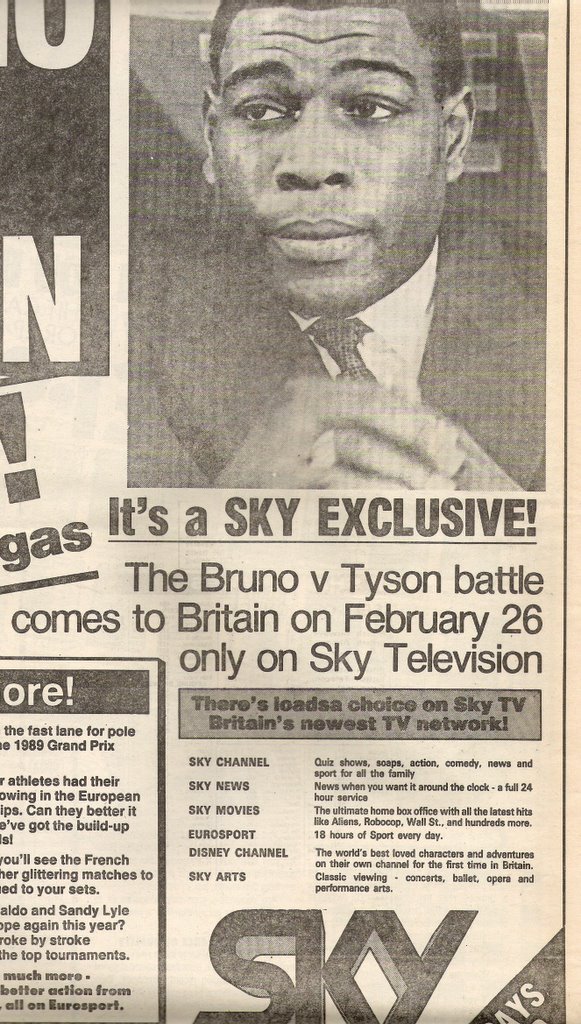
A newspaper advertisement - 10/1/1989. 26 DAYS TO GO, it promised and one of the first big attractions was to be the Bruno V Tyson fight, LIVE! from Las Vegas.

In the UK, we thought we were very lucky indeed to get Channel Four in 1982. Imagine - FOUR TV channels!

But, far more obscurely, this was also the year that another new UK-based TV channel was launched -
Europe's very first satellite and cable TV service. Wondrously beamed in from outer space and simply called "Satellite Television", it had begun a trial service in October 1981, and was launched on April 26, 1982 - beaming mainly UK programmes to Europe for two hours per night.

"Satellite Television" is not something that I, nor anybody else I know, remembers hearing about at the time. If me and my friends and family are anything to go by, Mr/Ms UK Average Person never even dreamt of having satellite TV back then.


But Channel Four, well that was something worth getting excited about - something for us!

As a related aside, whilst MTV had launched in America in 1981, quite frankly, I'd never heard of it in 1982. Nope, that old faithful 1960s innovation Top Of The Pops was still our weekly dose of TV pop heaven in 1982 here in the UK.

Rupert Murdoch's News International Group took control of the loss-making Satellite Television company in 1983 - according to modern internet sources for the grand sum of £1, plus outstanding debts - and renamed it Sky Channel in 1984.

It's Tuesday March 4, 1986 - the launch day of Eddie Shah's "Today" newspaper, the UK's first colour daily national newspaper, and the TV listings feature details of the cable and satellite broadcasts available. The Sky Channel features such delights as '80s Australian soap "A Country Practice" and the "Pat Sharp Show". As the vast majority of us didn't have satellite, we weren't bothered.

In 1986, BSB, British Satellite Broadcasting, won the Independent Broadcasting Authority's franchise and in 1988 Rupert Murdoch announced plans to relaunch Sky Channel as Sky Television.

And now the fun really began. In 1989, satellite TV was making waves in the UK as the brave new Sky era began.

Were we, the average punters, looking forward to Sky? Let's take a look at a local newspaper to get the vibe "down on the ground" in January 1989...

From the Cambridge Evening News, 6/1/1989

Satellite TV fans are making sure they are tuned into the right wavelength when the viewing revolution hits the screens next month, say city centre stores in Cambridge.

Scores of people have been popping into shops to find out more - and be first in their street to have a dish on their roof.

The first satellite station, Sky, owned by newspaper tycoon Mr Rupert Murdoch, will start broadcasting on February 5.

And most of Cambridge's stores expect to get their first stocks of dishes within the next few weeks to cash in on the revolution.

The manageress of Rumbelows in Petty Cury, Christine Nickson, said: "We have had a lot of inquiries and requests for brochures, but relatively few firm orders so far."

A spokesman for Dixon's in Lion Yard painted a similar picture. He said: "We are taking a few deposits at the moment, but we hope to install a working dish on the roof in two weeks and expect orders to really take off then."

The manageress of Radio Rentals in Lion Yard, Mrs Debbie Jamieson, also reported strong customer interest. She said: "A lot of people have been quite surprised at how small the dishes are."

The first of the new satellite stations comes onstream next month, when Rupert Murdoch launches his four-channel Sky TV. Sky programmes will be relayed from the European Astra satellite.

Three of Sky's channels will be specialist services, one each for news, films and sport. A fourth channel will offer a mixed bill of drama, quiz shows and comedy. Sky will be paid for by advertising and will be entirely free to the viewer.

Sky's main competitor is likely to be British Satellite Broadcasting (BSB), a consortium including Richard Branson's Virgin Group and Anglia TV, which will launch a rival service in the autumn.

Another group, headed by publisher Robert Maxwell, plans to launch six channels later in the year.

Experts predict four million British homes will be tuning into up to 50 satellite channels within five years.

Hmmm...

Apparently, there was "loadsa" choice on Sky TV, including Sky Channel - with quiz shows, soaps, action, comedy, news and sport for all the family; Sky Movies - the ultimate home box office; Eurosport, with 18 hours of sport every day and Sky Arts - concerts, ballet, opera and performance arts.

Hmmm again...

Sky TV listings from the "Sun", 1/5/1989. I'm not that impressed myself, but at least there was MTV... And it was early days...

1984: Boy George Is A Dummy (At Madame Tussaud's)

Does that nose look quite right to you (the one on the dummy, I mean)?

The Sun June 14 1984:

Pop star Boy George was sitting pretty yesterday with his dummy double at Madame Tussaud’s. Delighted George - 23 today - waxed lyrical as he said: “I love it, but it’s not as pretty as the real me.”

George’s spitting image will rub shoulders with pop “greats” like Elvis and David Bowie.

A soundtrack with the model tells visitors: “I prefer a nice cup of tea to sex - and if you believe that you’ll believe anything.”

Spitting Image

Peter Fluck and Roger Law met at the Cambridge School of Art many moons ago. As time went on, the pair began producing "sculpted caricatures" for outlets such as the New York Times Sunday Magazine.

The venture was not very profitable, but then, in 1981, Fluck and Law produced caricatures of Prince Charles and Lady Diana Spencer for the Not The Nine O'Clock News spoof book Not The Royal Wedding.

Infamy beckoned!

From the Sunday Mirror, June 28, 1981.

"We are not amused!" said the general public, unused to such "disgusting" disrespect.

I am amazed that these sadistic caricatures of Prince Charles and Lady Diana were allowed to appear in the Sunday Mirror.

Not only were they in atrociously bad taste but they were intensely cruel as well, since the Royal couple are unable to retaliate.

I have a sense of humour, but I wouldn't put this new book in my toilet.

I found the feature quite disgusting, especially the models by Fluck and Law. Would they want models of themselves to look like this? Nor do I agree that the Not The Nine O'Clock people are the BBC's top comedy team.

I think the BBC's "top comedy team" should be mentally examined.

1981 was also the year that Martin Lambie-Nairn invited Fluck and Law to lunch. A graphic designer at London Weekend Television, Lambie-Nairn thought a political TV programme which used puppets or animation would be a good investment. He offered to front Fluck and Law the capital for a pilot episode...

Some right Royal egg cups... from the Daily Mirror's Peter Tory column, June 11, 1982:

Making sport of Prince Charles' ears is enormous fun. But members of the Royal Family who come across these items on their friends' mantlepieces might be slightly alarmed by the figure in the middle.

What would happen if the mite, depicted here by Cambridge artists Peter Fluck and Roger Law, really turned out to look so gruesome? The poor thing would probably have to spend its days locked away in a dungeon at Glamis Castle.

Daily Mirror, December 31, 1983. Looking forward to 1984 - and the debut of Spitting Image. Said Jon Blair, producer: "We hope to have a Royal spot every week, with the Queen and Margaret Thatcher discussing world affairs.

"We scan the papers every day to keep our list of characters up to date."

From the Daily Mirror, June 16, 1984.

The Queen is not amused, but Prince Phillip jokes "This is me, not one of those puppets!"

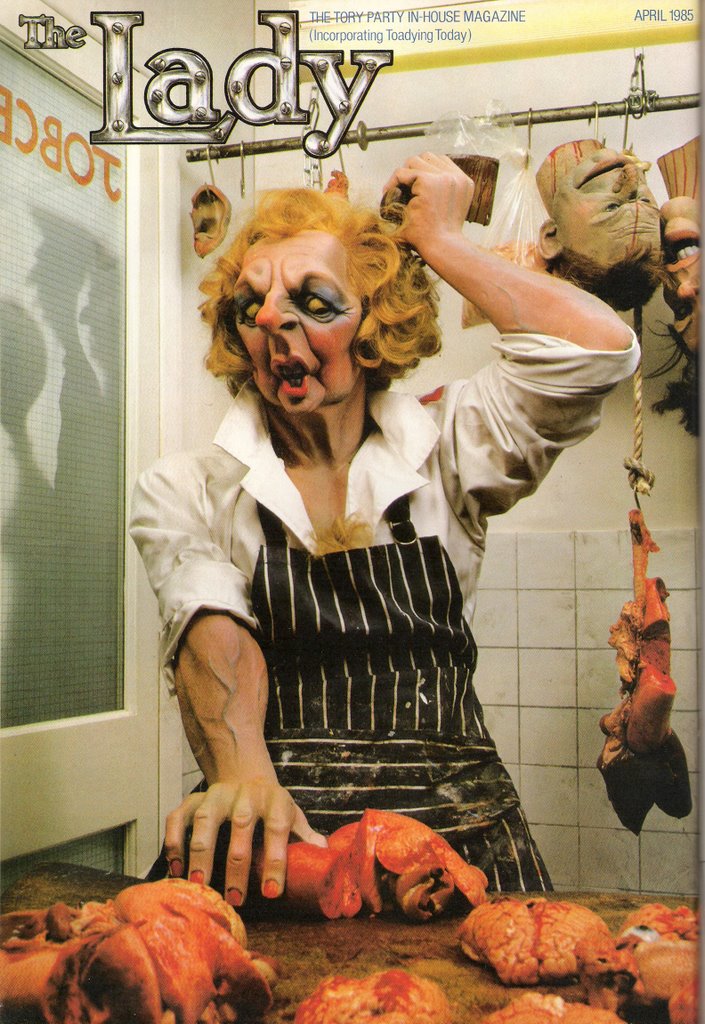
Spitting Image was incredibly anarchic by the standards of the 1980s - blood thirsty, brutal satire of a kind never seen before. It left audiences gasping with outrage - or delight. In a show filled with highlights in its heyday, Steve Nallon's voice of Mrs Thatcher still stands out in my mind. 1985 saw the publication of The Appallingly Disrespectful Spitting Image Book. On the cover, Norman Tebbit was getting a real eyeful...

Inside, Mrs Thatcher was getting to grips with the unemployment situation...

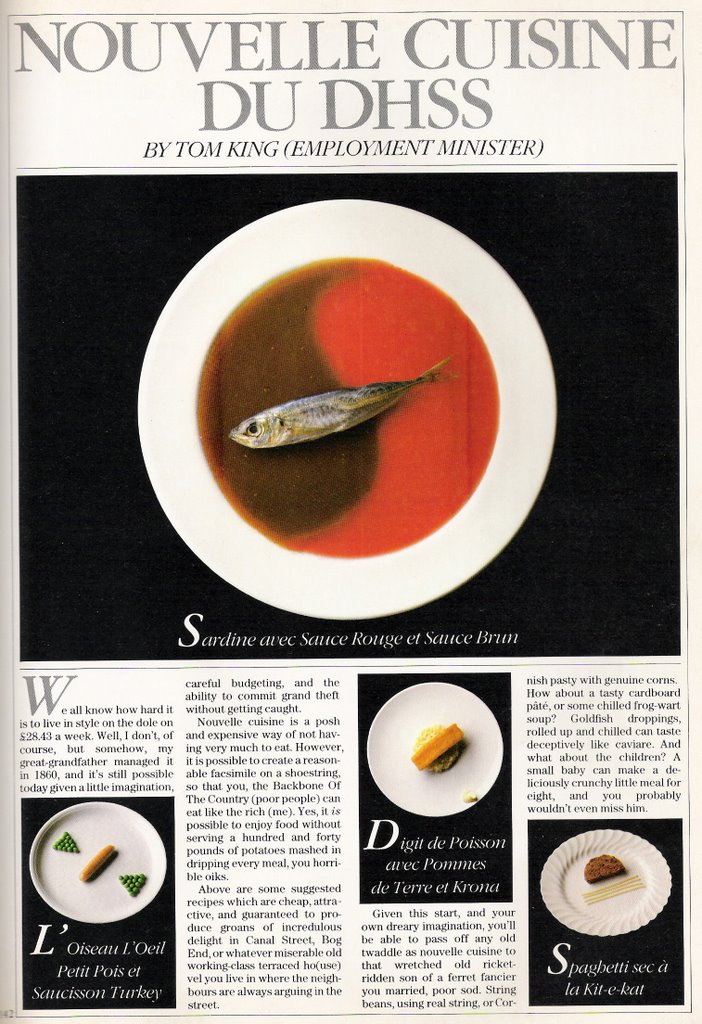
... and Nouvelle Cuisine for the disadvantaged was covered, courtesy of Tom King, Employment Minister - amongst many other delights.

The "Nouvelle Cuisine" concept had been around for a little while (although we commoners had never heard of it), and in the desperate-to-be-posh mid-80s, fancy restaurants up and down the land saw the chance to make a killing - serving up hardly anything for exorbitant prices.

The Spitting Image book puts it best:

Nouvelle cuisine is a posh and expensive way of not having very much to eat.

A rip off, pure and simple, if you ask me.

Some politicians and celebrities claimed to enjoy the "fame" of being selected to be caricatured on Spitting Image. Michael Heseltine offered to buy his puppet for £2,500 - and eventually upped his offer to £7,500. "To whom shall I may the cheque payable?" he asked.

"The Labour Party," came the reply.

Exit Mr Heseltine - in something of a strop.

17 January 2011

The Human League

The Human League arrived - first hitting the Top 40 in May 1981 with Sound of the Crowd.

The original Human League had formed in 1977, and there were several changes in line-up before the vast majority of us discovered a rather different version of the group which came together in 1980.

The pivotal moments in the band's '80s history came when vocalist Phil Oakey asked Susan Ann Sulley and Joanne Catherall (then school girls aged 17 and 18) to join, having spotted them dancing at The Crazy Daisy Nightclub, Sheffield, in October 1980.


Oakey was faced with the highly difficult task of recruiting new band members within a matter of days for a European tour. The original group was in tatters after two founding members (Ian Craig Marsh and Martyn Ware, who later formed Heaven 17) had suddenly left, but a European tour had been arranged before this and now Oakey was faced with honouring it, or being sued by the promoters. He was looking out for a female vocalist when he spotted Susan Ann and Joanne dancing.

The girls were originally recruited as "guests" to the group, to dance and provide incidental vocals on the European tour. Many fans of the obscure original Human League group were disgruntled to see the dancing girls, expecting the original all-male line-up. Legend has it that thrown beer cans and some heckling were the result.

But, despite this, on returning to England in December 1980, the girls were made full members of The Human League.

The band gave us a distinctly unseasonal Christmas Number One in 1981 - Don't You Want Me.


Classic.

I love the Human League. If I hear one of their early-to-mid 1980s hits, I'm transported back... I can smell the hair gel, see that jumbled Rubik's Cube sitting smugly on the settee, hear the Space Invaders and Pac-Man machines burbling, feel the tensions of O' Levels and job hunting and the happiness of becoming a wage earner...

It's not just nostalgia. I think that The Human League are brilliant - then, now, forever.

16 January 2011

The 1980s TV Revolution

From the "Daily Mirror", December 19, 1980

Back in 1980, things were very different on the TV front. We had three TV channels - ITV and BBC's 1 and 2.

BBC 2 was definitely "minority taste" as far as working class oiks like me were concerned.

Video technology had been around for yonks, but domestic video recorders for only a few years. They were hugely expensive, only 5% of UK homes had them in 1980. TV games, a more recent arrival, were also the province of the fortunate few.

As the Mirror article tells us:

The only big change in the 70s was that more families bought colour sets.


In my family's home in the early 1980s, there was a black and white TV with the horizontal hold so "gone" people on screen looked like eggs on legs. The plastic wood effect was peeling from the outer casing. We had rented a colour set around 1978 (colour had arrived in 1967, on BBC 2), but couldn't afford to keep feeding the meter.

Nobody I knew had a TV in the kitchen or the bedroom.

The 1980s saw a real revolution in our homes as far as TV was concerned. In 1980, the IBA's latest franchise allocations for the ITV companies led to the disappearance of familiar regional companies Southern and Westward and the arrival of TVS and TSW.
Sir Lew Grade's ATV acquired a new board and Central took over in the Midlands. The changes took effect in 1982.

The Mirror articles featured here, all from 19 December 1980, buzz with excitement over future telly-related pleasures - and paint a fascinating picture of the franchise allocations procedures, Lady Plowden and the IBA.

The bosses battle for your TV...


FUTURE

Video, computers and satellites

However much secrecy surrounds the battle for new ITV franchises, one thing is certain. They will all have to take part in a great technological leap-forward in the 1980s.

The only big change in the 70s was that more families bought colour sets.

Now there are video games and computers, video-text and video cassette recorders which can be plugged into home TV sets.

Within five years programmes will be beamed worldwide from satellites.

Pay TV, video disc-players, as well as the new ITV Channel Four and breakfast viewing will all be with us.

Some experts predict that most homes will have two TVs and some three. The family will split up to see different programmes in separate rooms.

With so many new things about to happen in the TV world it is not surprising that one company, which is in danger of losing its franchise, says it will refuse to hand over its studios and know-how to its successors.

They plan to make and market programmes for the new channels and other outlets the big TV technological revolution is expected to produce.
-
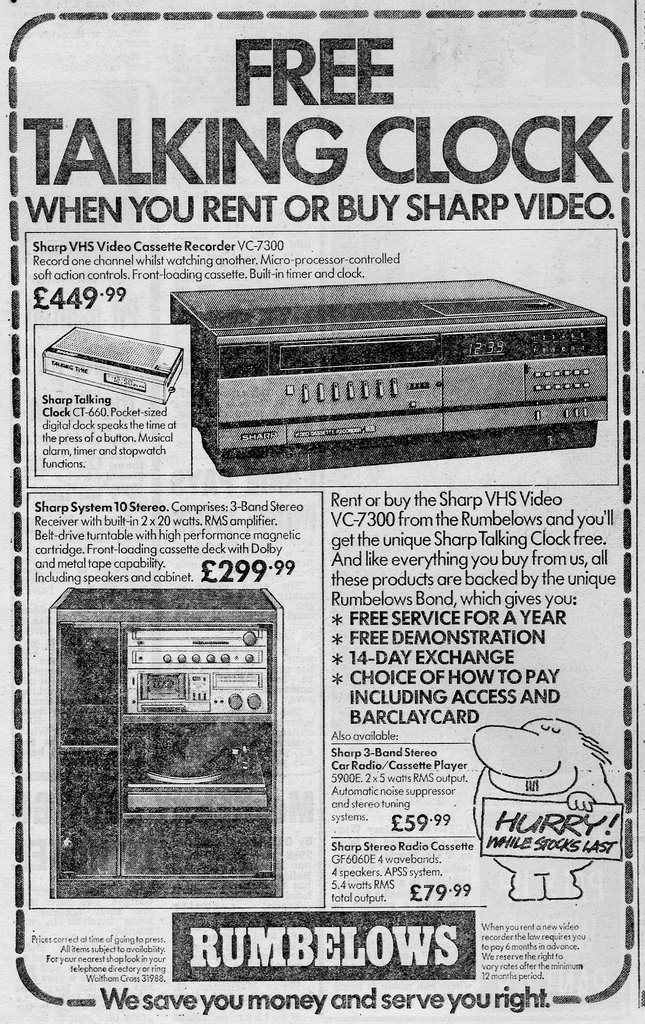
With only 5% of UK households having video recorders in 1980, we find Rumbelows offering an incentive to buy one in this newspaper advertisement from December that year.

By 1980 standards £449.99 was a lot of dosh - and not many people could afford it. Similarly, a lot of people were not keen to make the financial commitment to rent a video. There was a recession on.

The 1981 Royal Wedding caused an upsurge in video sales and rentals. My family rented one in 1983.

And we thought we were very posh.

Anyone Can Fall In Love: EastEnders Stars In The Pop Charts - Part 1...

Remember Anyone Can Fall In Love, sung by Anita Dobson, AKA Angie Watts, the flower of Albert Square? Remember those lyrics?

Anyone can fall in love
That’s the easy part you must keep it going

Anyone can fall in love
Over the years it has to keep growing
Sun and rain
Joy and pain
There’s highs - there’s lows
We’ve no way of knowing
Anyone can fall in love
That’s not hard to do it isn’t so clever

Anyone can fall in love
But you must make the love last forever…
Who can say
Love will stay?
It’s up to you
Don’t hide what needs showing

Anyone can fall in love
That’s the easy part you must keep it going
Everyone can fall in love
But you must make the love last forever more.
How do you keep the music from dying?
Love falls asleep unless you keep trying

Anyone can fall in love
Life’s more than that, it’s pulling together
Everyone can share the love
Where we come from friends never say never
Side by side
Satisfied
To stay right here in one square forever

Anyone can fall in love
That’s not hard to do it isn’t so clever
Anyone can fall in love
But you must make the love last forever more.

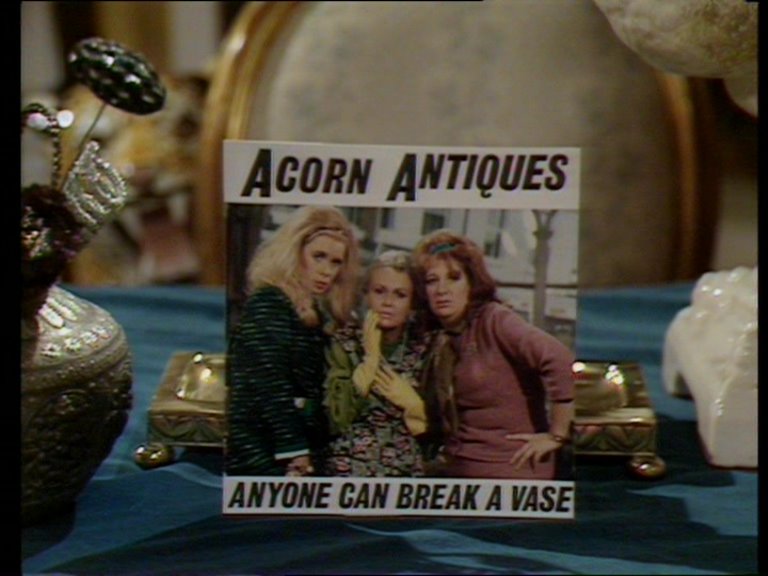
Acorn Antiques, the excellent Victoria Wood - As Seen On TV skit on Crossroads, also drew inspiration from EastEnders. The show's theme tune was released on vinyl (sadly, only in fiction!) - with Miss Babs warbling a song called Anyone Can Break A Vase over it.

I found the Anita Dobson-related article below whilst browsing through my local newspaper archive!

Ange - A Public Appearance...

The Time: August 1986

The Town: Cambridge


The Venue: A Bingo Hall


"EastEnders" star Anita Dobson planted kisses on a score of faint-hearted admirers last night and told them: "Don't wash for a week!"

The famous landlandy of the TV show's "Vic" pub proved a powerful pulling attraction at the Coral Social Club in Cambridge, where some 400 bingo fans gathered to see her in the flesh.


"EastEnders" addicts cheered and queued for autographs when the 37-year-old arrived at the Hobson Street club.


Dressed in a smart emerald coloured suit, Anita, 5ft 3 1/2 inches of true born and bred cockney said: "There's not any man in my life except my dad - mainly because I haven't the time."

She called the show's "Dirty Den" "a rat" but said: "We have a very good on-screen relationship. I'm going to string him up at Christmas. The real Den is a lovely, nice person."

On Andy O'Brien (Ross Davidson), who in the last episode of "EastEnders" was hit by a lorry, she was giving no secrets away, but said: "It was a pretty nasty accident. It looks pretty bad - I can't say officially."


Anita, who has just signed a new two-year contract for "EastEnders", said she had tried secretarial work and modelling before going to drama school.

She sang in various shows earlier in her acting career, so when she was asked to make a record, she agreed. Her song, "Anyone Can Fall In Love", to Simon May's "EastEnders" theme tune, is now number four in the pop charts and selling 20,000 copies a day.


Anita revealed she is one of the few cast members who can choose her own clothes - the other characters' costumes are bought by the BBC.

Her favourite "EastEnders" character is Angie's daughter, Sharon, played by Letitia Dean."She's a smasher," she said. "I love her to death. Willie the dog is my least favourite character because he smells."


When she's not working - and that's hardly ever - Anita likes listening to light opera, soul, rock and roll, Dire Straits, Queen and Billy Joel.


But hard work has brought money to a girl who started right at the bottom.


"I came from quite a hard background. I am just about to buy my parents their own house. Actually, my mother was so excited and so happy, she was sick."


Afterwards, Martyn Heasman, Coral's assistant manager, a smudge of the star's bright red lipstick on his cheek, said: "I think I'm in love. Someone ring and tell my mother."


The glamorous star made another man's night - Douglas "Curly" Nunn, of Cambridge, who celebrated his birthday with a stage embrace from Anita.


The successful night was a big publicity boost for Coral, who paid £300 for Anita's appearance. The date was planned as a lead-up to the club's £350,000 refurbishments for a relaunch as a cabaret club in November.

Coral had wanted Anita to sing her hit single and do two last bingo calls but the actress refused.

There was another EastEnder in the pop charts in 1986. Find out who here.