Total Pageviews

Pages

Showing posts with label Ronald Reagan. Show all posts

11 May 2026

1989: The True End Of The Cold War


Faye asks:

Did the Cold War end in 1989 or 1991?


There seem to be differing views on this and I'd value yours!

I'll give you the view of Mikhail Gorbachev, who became Soviet President in March 1985, interviewed by Katrina vanden Heuval and Stephen F Cohen of The Nation Magazine in November 2008, Faye!

Mikhail Gorbachev: 

... If President Ronald Reagan and I had not succeeded in signing disarmament agreements and normalizing our relations in 1985-88, the later developments would have been unimaginable. But what happened between Reagan and me would also have been unimaginable if earlier we had not begun perestroika in the Soviet Union. Without perestroika, the cold war simply would not have ended. But the world could not continue developing as it had, with the stark menace of nuclear war ever present. 

Sometimes people ask me why I began perestroika. Were the causes basically domestic or foreign? The domestic reasons were undoubtedly the main ones, but the danger of nuclear war was so serious that it was a no less significant factor. Something had to be done before we destroyed each other. Therefore the big changes that occurred with me and Reagan had tremendous importance. But also that George H.W. Bush, who succeeded Reagan, decided to continue the process. And in December 1989, at our meeting in Malta, Bush and I declared that we were no longer enemies or adversaries.

KVH/SFC:

So the cold war ended in December 1989?

MG:

I think so.

KVH/SFC:

Many people disagree, including some American historians.

MG:

Let historians think what they want. But without what I have described, nothing would have resulted.

When you consider that after Reagan and Gorbachev first met in 1985, Reagan declared: "Gorbachev is a diehard Bolshevik!" and Gorbachev stated that Reagan was "A real dinosaur!" it seems amazing just how their relationship thawed. The dramatic events of 1989 certainly left us agreeing with Mikhail Gorbachev and President Bush that the Cold War had ended. Things no longer felt "Cold" - hadn't felt that "Cold" for a few years in fact - and there seemed no prospect of a "War".

Why this tendency persists to state that the Cold War ended in 1991 with the formal dissolution of the Soviet Union, I don't know. Nothing 'signed' in 1989? The Cold War was never signed into being in the first place. I suspect though that many of the "great and good", including many highly respected historians, have a hard time allowing the limelight to fall on the 1980s, a decade many of them like to scapegoat and revile.

So they gabble things like: "and in 1989 the Berlin Wall fell. In 1991 a whole new era began as the Cold War ended and the world looked on stunned as the dissolution of the Soviet Union took place before their very eyes..."

So, America being the only superpower was the only way the Cold War could end? Even though it had been declared over by the Leaders in 1989?

1989 - the year the Cold War ended? I'm sure that sticks in more than a few priggish gullets! It is not up to historians to revise and dictate history. I'd much rather listen to Gorbachev.


16 June 2018

1988: The End Of The Reagan Era...

On 9th November 1988, American Vice President George Bush beat Democrat Michael Dukakis to become President of the United States. Over here, Channel Four marked the end of the Reagan era by showing four of his films - Bedtime For Bonzo, Desperate Journey and Dark Victory.

Click on the TV Times listing above for more details.

From the Sun, November 18, 1988:

Ronald Reagan danced the last waltz with Mrs Thatcher at an emotional farewell at the Whitehouse.

The world leaders brought down the curtain on their eight-year partnership by sweeping around the ballroom to the sounds of "Hello Dolly".

Husband Denis followed with First Lady Nancy Reagan, applauded by a galaxy of political, literary and showbiz stars.

Mrs Thatcher was visibly moved as President Reagan paid her yet another tribute in the after-dinner toasts.

"We love her," he said.

Nancy confessed: "I was feeling very sentimental and nostalgic and got a little teary during Mrs Thatcher's toast to my husband."

Mrs Thatcher said afterwards: "It was a very emotional moment."

The President yesterday backed incoming President George Bush, who takes over in January, and urged America to give him time to slash the nation's £150 billion budget deficit.

26 October 2015

The History Of The Yuppie Word


A couple of English mid-1980s yuppies in London. They had the big hair. They had the brains. They had the looks. They made lots of money.

Jeanne has written to ask me about how the yuppie word - an acronym pasted onto a model suggested by "hippie" came about.

Well, Jeanne, the term first arrived in print in a May 1980 Chicago Magazine article by Dan Rottenberg, and at that point simply referred to young urban professionals who were buying up houses and apartments in former working class areas and rather destroying the feel of these places in Chicago - with trendy shops and theatres opening to service their needs where once had been old family concerns, etc. Poorer folk who had traditionally lived in those areas were being priced out.

At that point, President Carter was still in charge at the White House, and the booming busting part of the 1980s was not in sight. So, we seem to have quite an innocent local word, not an approval word by any means, but lacking the vehement condemnation and international infamy which would later follow.

After the inauguration of President Ronald Reagan in 1981 (he was elected in November 1980) this began to change. The term "yuppie" caught fire and was applied to the type of person who flocked to the stock exchange and lived a highly excessive lifestyle, taking full advantage of the new political regime.

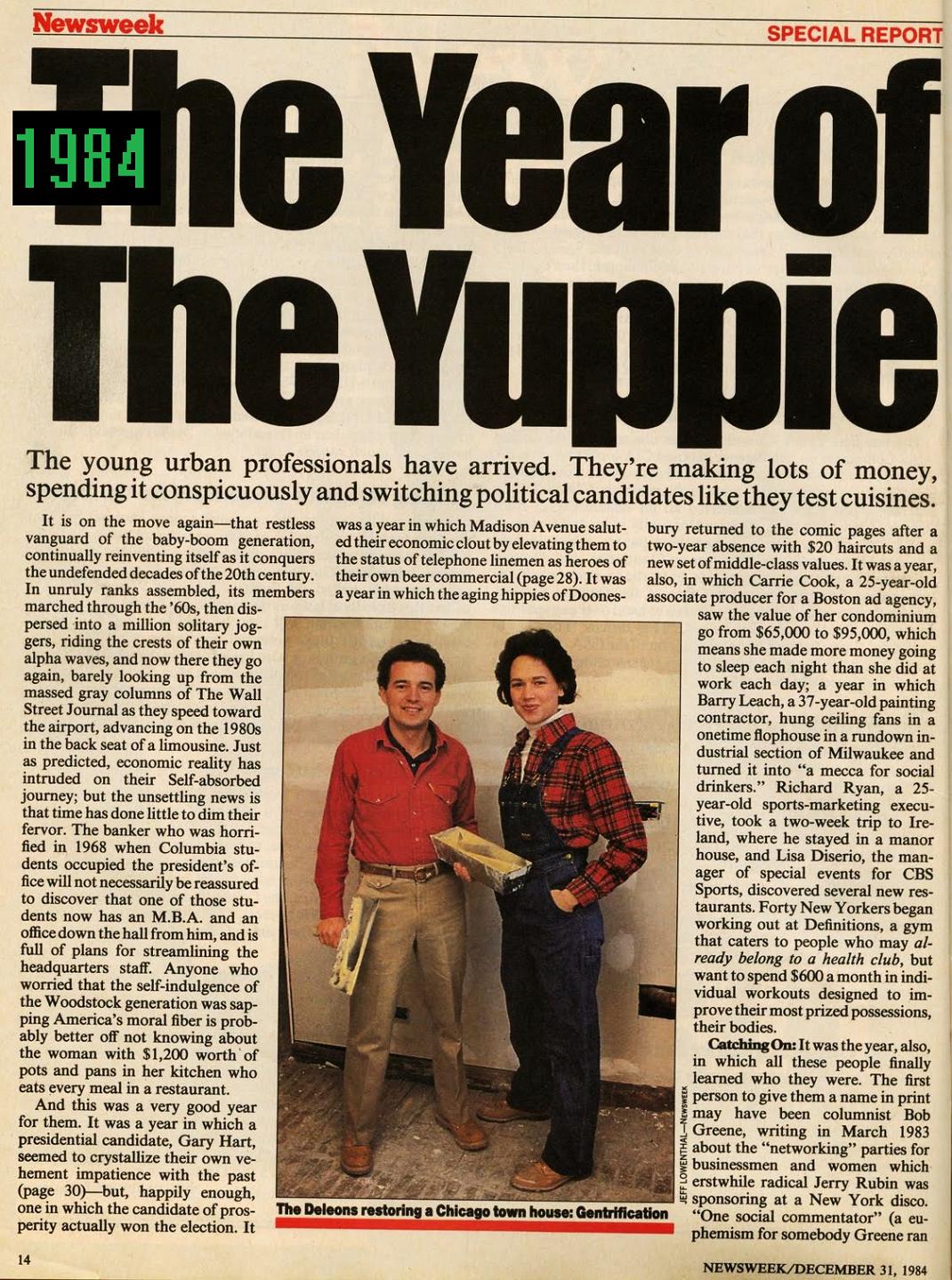
The American 'Newsweek' magazine , in its December 31st issue, declared 1984 "The Year Of The Yuppie".  With $600  a month workouts available at the new Definitions Gym in New York (most of us lesser mortals never worked out in those days), continuing "gentrification" of quaint neighbourhoods, property values soaring, Presidential candidate Gary Hart, and the ex-flophouse in Milwaukee which became a "mecca for social drinkers" (complete with ceiling fans) what wasn't there to love?

The yuppie was still pretty dowdy in 1983, if the humorous American Yuppie Handbook and an American mug I have from the same time are anything to go by (they wanted pasta machines, Rolex watches, Sony Walkmans and a VCR), but within a few years the image had altered to that of Wall Street - "Greed Is Good".

The infamous yuppies of the mid-to-late 1980s were apparently ruthless individuals, their lives dominated by the love of money and THINGS. They quaffed champagne. They snorted cocaine. They wanted it all. And they wanted it now.

The word spread to England in the mid-1980s, and was applied to similar types, waving their wads about, who took advantage of the financial knock-on effects of the American Reaganite ethos and the prevailing, highly similar attitudes of the Thatcher governments. They bulled. They beared. They sported the new revamped and highly trendy Filofaxes and the brand new miracle, the handheld brick cell phone ("Yuppie toys!" we called 'em). They drank bottled water. They worked out. They were fit for business. Fit for life.

Of course, not all yuppies were champagne swilling, cocaine snorting, horribly greedy gits with absolutely no redeeming qualities whatsoever, but "yuppie" became a buzz word for those who were all or some of these things. The yuppies of the mid-to-late 1980s were horribly grandiose, high tec, greedy, without care. That was the popular view.

And that, as far as I'm aware, is a history of the yuppie word, how it was originally applied and how its usage altered with the changing political regimes and attitudes in America and England as the 1980s progressed.

There was a point, circa 1985, 1986 and 1987 in my home city where I could almost smell the money around about me. The night clubs went neon. The pubs went posh or themed. Glittering new office blocks rose left, right and centre. The supermarkets were full of "posh" (and strange) foods that we'd think nothing of eating now. The smell of wonga hung heavy. But, unfortunately, I never had much. Ah, well, as a care worker at least I could take the moral high ground.

But I couldn't help finding yuppies fascinating.

Read more of our material on them by clicking the "yuppies" label below.

22 April 2013

1984 - Some Things They Said... And An Act Of God At York Minster?

Ah, 1984... Ronald Reagan won his second term in office as President of the USA; Margaret Thatcher had won her second General Election with a landslide in 1983 and in 1984 she and Arthur Scargill went to war against each other as the miners' strike bit hard; the Grand Hotel bombing nearly ended Mrs T's career. And her life; Boy George was insulted by Princess Margaret; Torvill and Dean thrilled us on the ice skating rink; the Apple Mac arrived - "Hello" - as did Trivial Pursuit; bulldog clips were the latest hair craze; break dancing was the main dance craze; Band Aid had a very worthwhile chart hit; and Prince William gained a baby brother - Henry, or Harry, as he was known.

Here's a few quotes from 1984 listed in the Sunday Express 1984 - The Pictures Of The Year magazine...

"The world is swimming in coal." - Ian MacGregor, chairman of the National Coal Board.

"I've even tried to start a rumour that I'm really not that old, that they mixed up the babies in the hospital." - President Ronald Reagan.

"I have a very high success criterion. Monetary values come into it, because I like to live well and I have to earn a lot." - Mark Thatcher accused of exploiting his mother's position.

"Most psychiatrists or analysts are a waste of time." - Boy George.

"Very few overseas visitors are quite sure where Birmingham is." - Michael Montague, chairman of the English Tourist Board.

"It seems silly that more people should see me in 'Jewel In The Crown' than in all my years in theatre." - Dame Peggy Ashcroft.

"If there are to be any explosions in our country, they should take place on the floor of the House of Commons and nowhere else." - Bernard Weatherill, Speaker of the House of Commons.

"If you put things firmly they say you are headmistressy, but they never call a man headmastery." - Margaret Thatcher.

"I know I am going to be President" - Senator Gary Hart.

"No redundancy payment in the world can match the value of a job passed on to the next generation." - Arthur Scargill.

"What is proposed is a monstrous carbuncle on the face of a much-loved and elegant friend." - Prince Charles on the National Gallery extension

"When they address themselves to aesthetic judgements, people fall back on what I regard as very offensive language." - Peter Ahrends, architect of the proposed (and then cancelled) National Gallery extension.

"I won't be photographed with that over-made-up tart." - Princess Margaret on meeting Boy George.

"If men could have babies, they would only ever have one." - Diana, Princess of Wales.

"I just signed legislation that will outlaw Russia forever. We begin bombing in five minutes." - President Reagan during rehearsals for a radio broadcast.

"By all means have a bath or shower as long as you don't forget the object of the exercise is to use less water." - Water Authorities Association.

"The Labour delegates drink gin and tonic. The Conservatives drink beer. Actually the National Union of Students is best for us - they drink lots of Pernod." - Blackpool hotel manager.

"If industrial workers are taking industrial action when they are not working, one wonders what they are doing when they are working" - The Duke of Edinburgh.

"I ended up like some old fag-ash Lil being carted off to the nick." - Angela Wilson, first person to be prosecuted for smoking on the tube.

"This is our last chance for change - because if this doesn't happen we are for the birds." - Bishop Desmond Tutu, winner of the 1984 Nobel Peace Prize.

Some of the above statements seem sane and good, others amusing, others more than slightly bonkers. But that was the '80s!

One of the most memorable quotes listed in the magazine came from Professor David Jenkins, Bishop-elect of Durham, in May:

"I wouldn't put it past God to arrange a Virgin Birth if he wanted. But I don't think he did."

Say what?!! But surely a Bishop-elect of the Church of England must believe?!

But an event some found much odder was soon to come...

The Daily Telegraph 1984 magazine reported:

The previous week had seen the installation at York Minster of the controversial new Bishop of Durham, Professor David Jenkins, who had seemed to many to question fundamental Christian beliefs in his televised remarks about the Virgin Birth and the Resurrection.

Suddenly, out of a clear and calm Sunday sky in July, a bolt of lightning struck the 700-year-old cathedral, starting a spectacular fire that destroyed its 15th-century south transept. Was it an act of God? "I am not," said the Archbishop of Canterbury, "going to put myself in the position of stating where and when there has been divine intervention."

York Minster ablaze in 1984.

10 January 2013

1981: Marching For Nuclear Disarmament...

From the Sunday Mirror, 25/10/1981: 

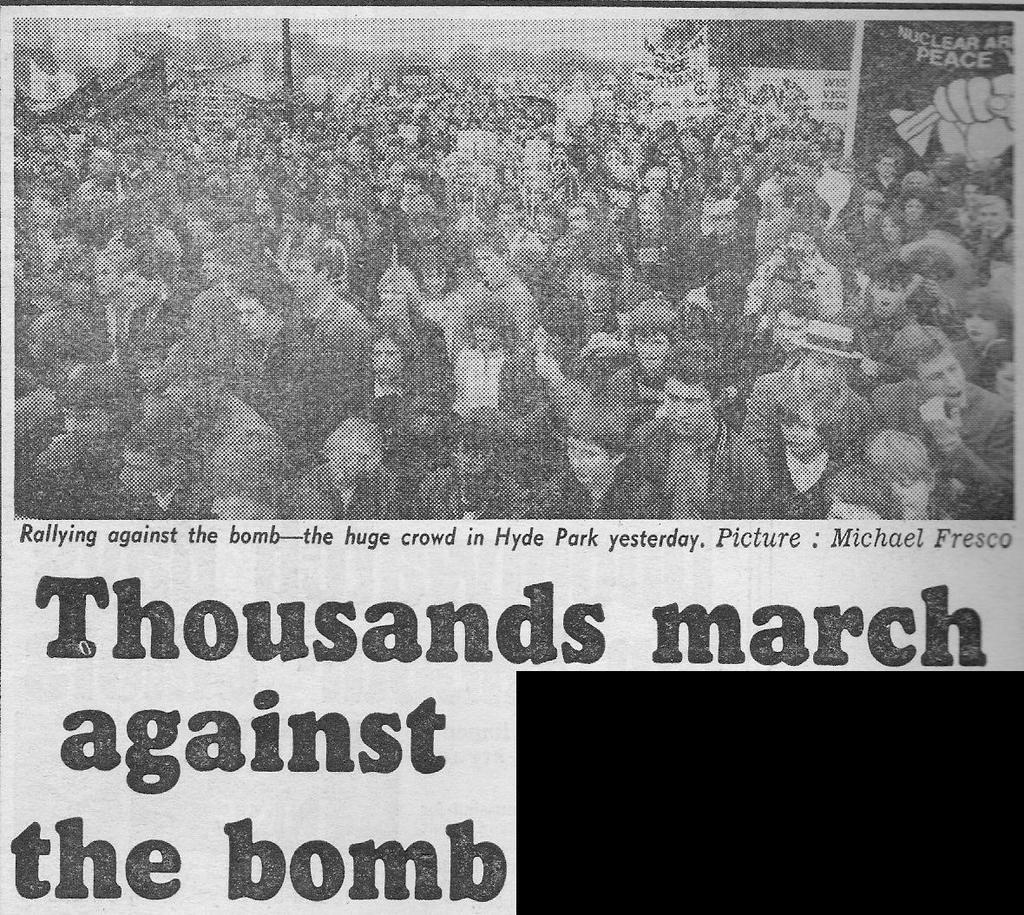
Thousands of ban-the-bomb marchers staged a massive demonstration through the streets of central London yesterday. 

The march, from Charing Cross to Hyde Park, was headed by Labour leader Michael Foot and veteran anti-nuclear campaigner Canon Collins. The 150,000 demonstrators shouted slogans like "Give us jobs, not bombs" and "Fall out with Thatcher".

Police adopted a low-key softly-softly approach and the protest passed off peacefully.

The march, organised by the Campaign for Nuclear Disarmament, ended with a mass rally in Hyde Park.

Mr Foot described the rally as "the greatest and most historic meeting" ever seen in Hyde Park.
"Only by disarmament can we properly defend our people in this nuclear world." 

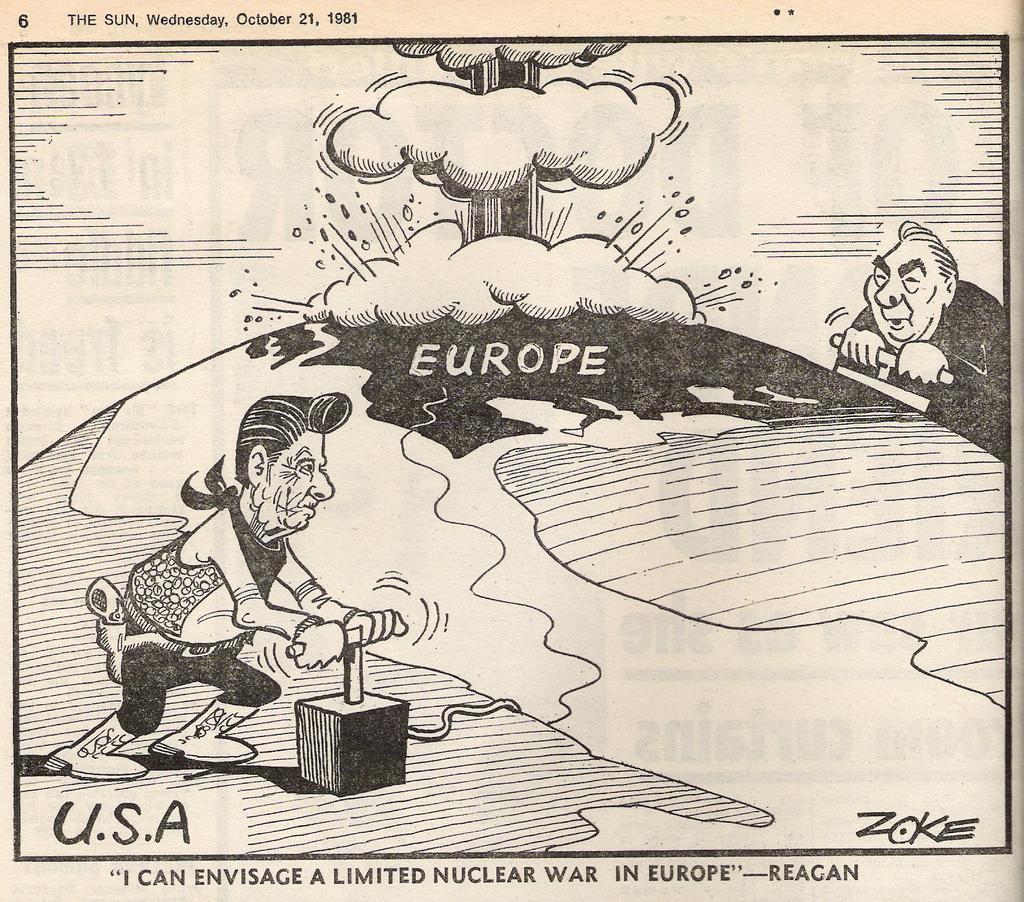
1981 - "I can envisage a limited nuclear war in Europe" - President Reagan came out with some corkers - but 1985 would mark the beginning of a new era, which would include the end of the Cold War, as new Soviet President Mikhail Gorbachev arrived.

When I was a kid in the 1970s, I was terrified of the prospect of nuclear war. I was far from being alone. I even remember Gail of Coronation Street voicing similar fears in 1978! 1979 was particularly grim as the SALT II treaty failed because of Russia invading Afghanistan. As the 1980s arrived, things seemed darker than ever on the Nuke Threat front, but by that time I had decided that I could not spend my young life petrified with fear and was getting on with living. The rapid thawing of the Cold War ice after Gorbachev took office in 1985 surprised and delighted me and the formal ending of the Cold War in December 1989 was simply incredible. 


30 May 2012

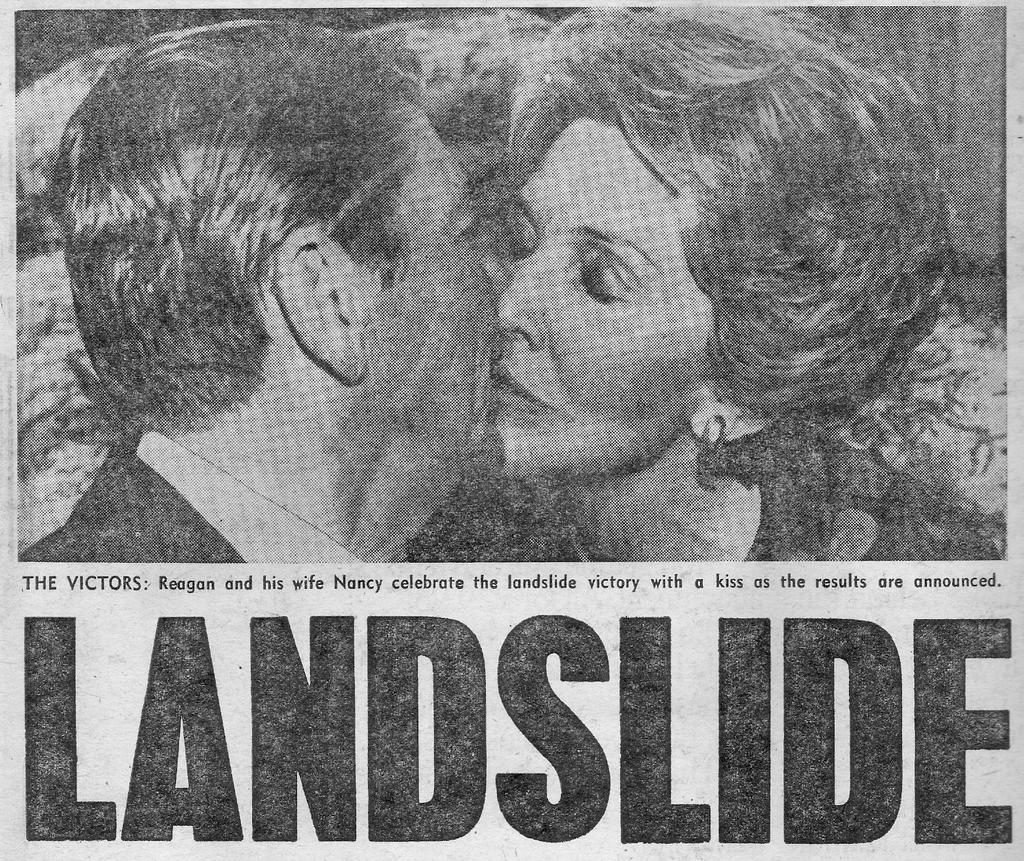
November 4 1980: America Elects Ronald Reagan President

This was the election which set the 1980s on their course to becoming what we all remember them being..

From the Daily Mirror, 5/11/1980:

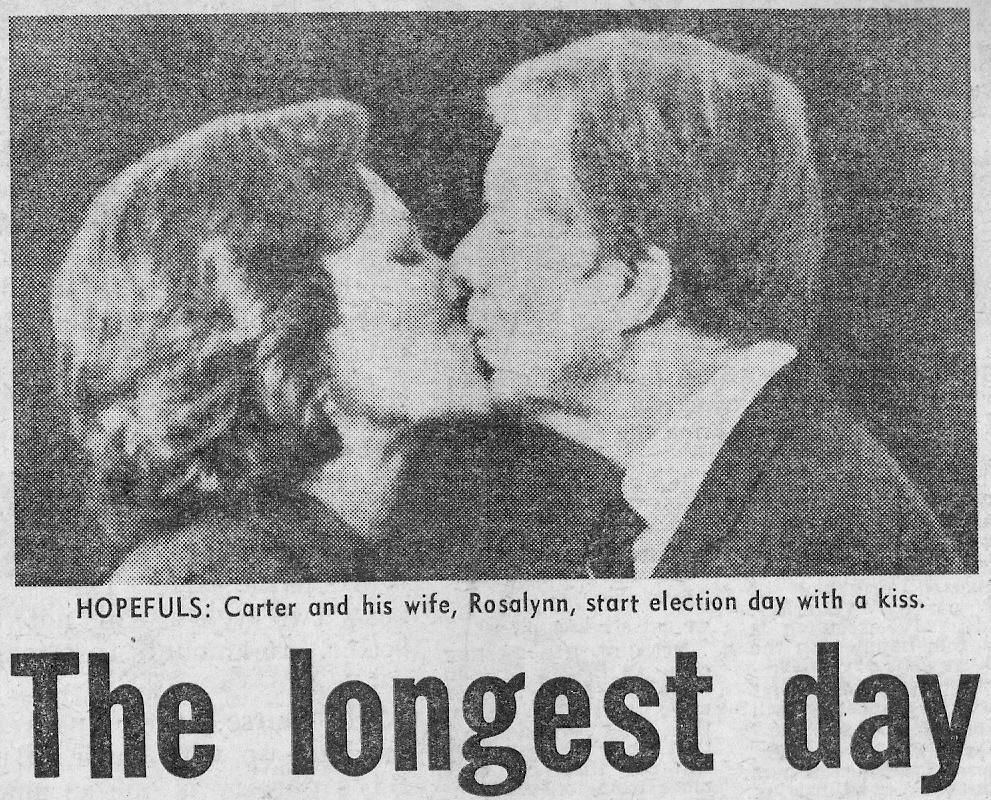
Heavy polling was reported last night in America's presidential election as President Carter sweated out what was probably his longest day.

The size of the voting was likely to benefit Carter. But the latest opinion polls showed him still trailing Republican candidate Ronald Reagan.

One last minute poll showed Reagan five points ahead - enough to give him a comfortable victory - while the President's own pollster put Carter at least one point behind.

The Democrat was pinning his hopes on a last-minute swing resulting from hopes for the release of the hostages in Iran.

Carter was close to tears and exhaustion after casting his own vote at his home town of Plains, Georgia. His voice cracked and his eyes watered as he told a crowd: "I am ready to abide by your judgement. I have tried to honour my commitment to you."

He was cheered by news of the heavy polling which meant that many Democrats who were expected to stay at home were voting after all.

Reagan was looking slightly worried as he voted near his California ranch.

"Let's just say I've got my fingers crossed," he said.

From the Daily Mirror, 6/11/1980:

Former cowboy actor Ronald Reagan was riding high with his top aides last night after his sensational Presidential election victory...

The staggering lurch to the right was reflected in the elections for Congress.

Liberal Congressmen were thrown out in seat after seat in the wake of the electoral massacre of President Jimmy Carter...

Reagan stayed at his California ranch yesterday, preparing his Whitehouse takeover on January 20th.

This is just before his 70th birthday, making him the oldest man ever to win the Presidency.

It gives his Vice-President, 56-year-old former CIA chief George Bush, the chance of succeeding to the top job if Reagan fails to last the four-year course because of death or illness.

Reagan will arrive in Washington soon to meet the beaten Carter, who has promised to do his best to ease him into the job.

Victory for the Republicans came after 12 years of trying to get the Presidency.

He told ecstatic supporters at a victory rally yesterday: "I give you my sacred oath I will do my utmost to justify your faith."


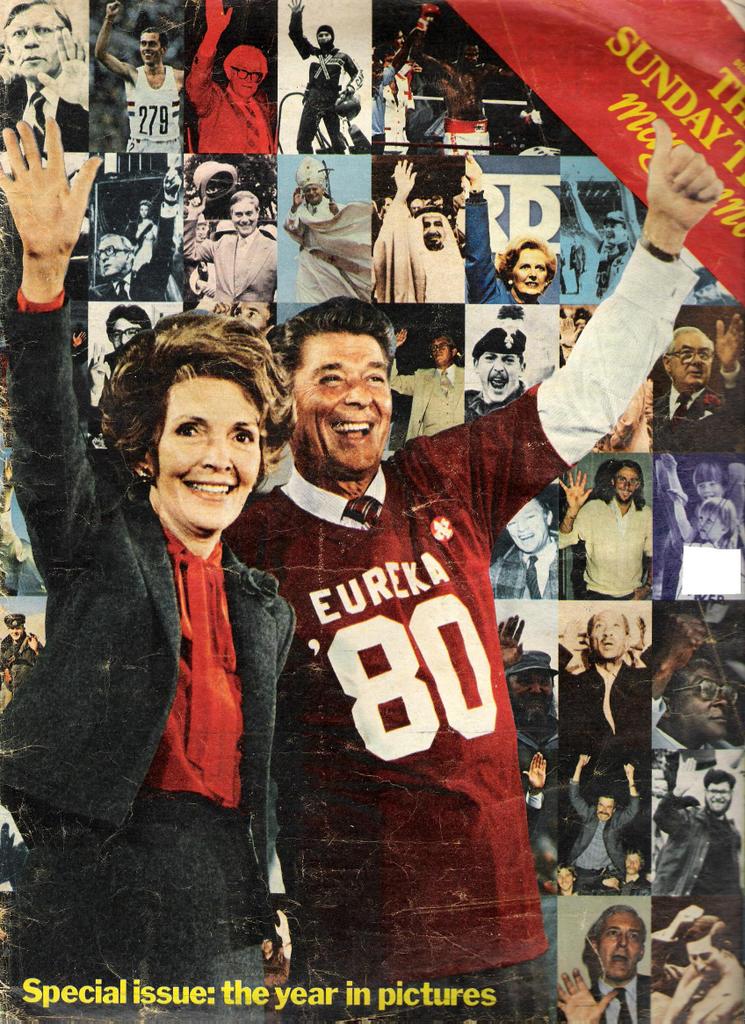
EUREKA '80! The Sunday Times Magazine - the year in pictures, December, 1980.

02 February 2010

1983: President Ronald Reagan Invites Us To Visit America...

Pages from a 1983 magazine advertising feature on America. The pictures on the right features the Twin Towers, the Statue of Liberty and a stretch of desert, whilst on the left, US President Ronald Reagan, elected in November 1980, issues an invitation:

THE WHITE HOUSE

WASHINGTON

On behalf of the American people, I am very proud to invite you to visit the United States.

Our nation's beauty, unique heritage, and hospitality are yours to see and enjoy. I hope you will take advantage of the opportunity to make new friends and participate in social and cultural exchanges with our people.

Remember that America's doors will be open to you during your travels. We will be delighted to provide you with an exciting and educational experience.

Ronald Reagan

Hertz car rental and the Amtrak U.S.A. Rail Pass offered opportunities to see America once you arrived there.

More on President Reagan here.

28 June 2009

Thatcher And Reagan - Into The '80s...

The Sun, February 25, 1981:

It promises to be the political love-in of the year.

Premier Margaret Thatcher flies to the United States today for cruicial two-day talks with President Reagan.

She is determined to be the first European leader to be on first name terms with the new President.

And yesterday, in a radio broadcast that was heard in America, Mrs Thatcher made her first throw.

She is, she explained, the same kind of girl as he is boy... a grocer's daughter who has plenty in common with the former movie star.

She said that they think and talk alike about state spending cuts, beating inflation, chopping bureaucracy and cutting taxes.

Last night President Reagan said he wanted to discuss Russian leader Leonid Brezhnev's offer of a peace summit.

But Mrs Thatcher will warn him to tread carefully.

She believes that Russia could best improve relations by withdrawing troops from Afghanistan.

Margaret Thatcher and Ronald Reagan: she, UK Prime Minister; he, President of the USA.


And what pals they seemed. OK, there were one or two dodgy moments, but there is no doubt that from 1981-1988 Thatcher and Reagan bestrode the world stage like Godzilla and King Kong. Well, okay, maybe not quite like that, but, united, they seemed absolutely colossal!

I always recall how shocked my mother was when she heard about Reagan's election in November 1980: "But he's an actor! He was in cowboy films! He can't be President - that's ridiculous!"

The American political scene was not something my very English mother ever understood.

And it must be admitted that left wing UK newspapers like the Daily Mirror made fun of Mr Reagan's acting background...

Daily Mirror, February 27, 1981 - The Co-Stars! Below, the article inside the paper...

Guards of honour, silver trumpets, military bands and red carpets welcomed Premier Margaret Thatcher when she arrived at the White House yesterday yesterday for her talks with Ronald Reagan.

The hundreds of guests invited to the ceremony on the lawn outside the President's office were handed free Union Jacks to make the event even more colourful.

All that was missing was a credit line saying it was a production by Warner Brothers - the film company for whom the President used to make B movies in Hollywood.

Mrs Thatcher played her part perfectly.

Wearing black - an unusual choice - and a pillbox hat, she said exactly what her host wanted her to say.

"We in Britain stand with you," she declared. "America's successes will be our successes, your problems will be our problems. When you look for friends, we will be there."

There was perhaps a hint of Britain's own economic problems when she said that weaker spirits might be tempted to give way to gloom.

Then, raising her voice and turning toward the President, she said: "Others, like you, will be stirred by the challenge."

The new Washington establishment, headed by Vice-President George Bush and Secretary of State Alexander Haig, were all there to demonstrate that with Mrs Thatcher and Reagan in power the special relationship between the two countries now has a new special meaning.

Mrs Thatcher spent two hours with the President in his oval office - 45 minutes without their officials present.

They spoke particularly about Soviet President Brezhnev's proposal for a summit, the international economic situation and the growing crisis in El Salvador.

NATO was discussed, but the neutron bomb was hardly mentioned.

In the first volume of her autobiography, The Path To Power, Margaret Thatcher recalled how she first heard of Ronald Reagan's political endeavours in the late 1960s:

Denis had returned home one evening in the late 1960s full of praise for a remarkable speech Ronald Reagan had just delivered at the Institute of Directors. I read the text myself and quickly saw what Denis meant.

She met him in 1975 and 1978, and later wrote in The Path To Power:

In the early years Ronald Reagan had been dismissed by much of the American political elite, though not by the American electorate, as a right wing maverick who could not be taken seriously. (I had heard that before somewhere.) Now he was seen by many thoughtful Republicans as their best ticket back to the White House. Whatever Ronald Reagan had gained in experience, he had not done so at the expense of his beliefs. I found them stronger than ever. When he left my study I reflected on how different things might look if such a man was President of the United States. But in November 1978 such a prospect seemed a long way off.

What a difference 1980 made!

04 March 2009

1984: Egg Hits Margaret Thatcher

From the Daily Mirror, June 24, 1984:

Premier Margaret Thatcher was hit in the face by an egg yesterday.

Butter, ice cream and a tomato, also thrown by demonstrators, missed her.

The barrage came as Mrs Thatcher left a Tory meeting at which she had condemned the miners' strike and picket-line violence.

She was jeered by miners' wives outside the meeting - at Porthcawl, in Wales - but the missiles came from farmers and their wives.

The Dyfed Farmers' Action Group later claimed responsibility, saying it had hurled three dozen eggs and four pounds of butter in protest at Common Market agricultural policies.

A group spokesman said: "We threw only New Zealand butter because we didn't want to waste good British butter."

At the meeting, Thatcher described the miners' strike as:

... a "tragedy" for miners, the coal industry and the country.

Mrs Thatcher said: "The violence which recently disfigured the television screen has left us grievously anxious."

She praised the police for their "courage, fairness, patience and restraint."

"Our duty is not discharged simply by condemning violence. Our duty demands and the national interest requires that we see that violence does not pay and is seen not to."

Bus, train and ferry services in London and the South-East will be disrupted by walk-outs in support of the miners on Wednesday.

Stepping into the 1980s was rather like stepping into an exhilarating minefield. It was the decade of fast-moving fads and clonking new technology; the decade when many working class folk got some dosh or joined in the credit boom; it was the decade when some folk got poorer; it was a decade unlike any other.

But Margaret Thatcher was not destined to reign long, it seemed, in the early 1980s. As unemployment leapt whilst the government concentrated on bringing down inflation, Mrs T became very unpopular. By 1982 she was the most unpopular Prime Minister of the 20th Century. But then came the Falklands War and the Iron Lady came into her own. A strong leader, that's what many felt was needed at that point, and she was certainly that. And, on the back of the so-called "Falklands Factor", she called an early election in 1983 and was returned to Downing Street for a second term with a landslide victory.

And then the Miners' Strike reared up, Arthur Scargill and a way of life against the Iron Lady. The Strike was long and bloody and at the end of it Thatcher had triumphed.

At that time a new breed of person was appearing - the yuppie. The acronym (young urban professional) had first appeared in America in 1980, and caught light as it was applied to those taking advantage of the new political regime after the inauguration of Ronald Reagan in 1981 (he was elected in November 1980). And where America led, we followed.

The UK was changing. The world, it seemed, was changing. The mid-to-late 1980s were either a hopeless or hedonistic time, depending on your vantage point. Or a time to protest.

Did you love or hate Thatcher? Whatever you did, you couldn't ignore her and political arguments raged in pubs up and down the land. And whether you argued for or against the Thatcher government, the scoring of points was an exhilarating experience. I argued fiercely against and had some of the best pub nights out in my life!


Nobody argues like that now. And if people shook themselves out of their state of smug complacency they might just see that rather more interest in the modern day political scene, and the calling to account of our modern day political parties, wouldn't come amiss. But it's so much easier to blame the '80s for everything and do nothing!