Some people believe that pop music in the 1980s lost touch with politics and reality in general. The fire went out, and pop stars ceased to reflect what was happening in the world - drifting off into a rosy never-never land. Even in the 1980s this complaint was sometimes heard. But I disagreed then and I disagree now.
It is not true to say that the last time in the 1980s the pop charts reflected social/political realities was with the Specials’ Ghost Town in 1981. Anti-Tory as I was, and much as I loved that song, I could see that not everybody was having it grim. Far from it. And as for the “boom town” they sang about, when was that? It certainly hadn’t been in the 1970s.
Billy Bragg, the Smiths, Depeche Mode, Suzanne Vega, amongst others, highlighted political and social concerns in the 1980s, and those swanky “never never land” pop stars, like Duran Duran, reflected the fact that there was then a boom going on. Not everybody benefited, but in the mid-to-late 1980s it was real, it was happening.
I liked both sides of the 1980s pop coin. My youthful, idealistic nature had led me to take up a poorly paid job as a social services residential care assistant, but I loved to pose about in the evenings at my local Nite Spot to the likes of Pet Shop Boys.
But the Pet Shop Boys lyrics were rooted in mid-to-late '80s reality - witty, jaded, often poking fun at the plush world of yuppiedom.
'80s music did reflect '80s realities. As with any pop decade, there are plenty of exceptions, but any serious examination of '80s pop will reveal the social trends of the decade shining through in its music.
I was a great fan of modern folk hero Billy Bragg, but some of my favourite '80s music allowed you to pose whilst also having topical lyrics.
One of the greatest purveyors of what has been described elsewhere as '80s “sophisti-pop” was a band called the Blow Monkeys, which formed in 1981 and took its name from the Australian slang for someone who plays the didgeridoo. One Bruce Robert Howard (known as “Dr Robert”, a nickname from his boarding school days) was the band’s singer/songwriter, with Tony Kiley on drums, Neville Henry on saxophone and Mick Anker on bass. In 1984, the band started recording with RCA records.
The Blow Monkeys found success with their second album Animal Magic in 1986.
Dr Robert was vehemently left-wing and anti-Thatcher and this often came across in his lyrics. The single (Celebrate) The Day After You was banned by the BBC until after the 1987 General Election because of its perceived anti-Conservative lyrics!
The Blow Monkeys allowed me to pose to their music whilst also making me cheer with anti-Thatcher/anti-establishment lyrics. Was irony present? Sure, but the music brought together two sides of mid-to-late '80s life for many teenagers and twenty-somethings - political angst and the powerful desire to pose on the dance floor!
Why did I like to pose on the dance floor and wear “poser” (chain store bought) '80s gear? I put it down to my dog-rough '70s childhood. We were so poor it hurt and so much back then seemed to be about gobbing off - from the football stadium style chanting of glam rock to Punk. For some of us down in the depths the whole thing was just too grim. We didn’t need gobby music to add grit and vigour (what some might call “meaning, darling!”) to our lives. We were too busy worrying over little things - like heat and food.
The “get out there and pose” mid-to-late '80s made a terrific change. I never threw my principles out of the window, but I did love the swank thing. Even today, I’m partial to shoulder pads, colourful jackets and pushed-up sleeves.
Trouble is, if I wore them nowadays I’d get laughed out of town!
 It'll get you in the end, it's God's revenge - the "Sun", 1985.
Back to the Blow Monkeys: one of my all-time favourite pop songs is their 1986 hit Digging Your Scene. Luxurious. Polished. Over the top sophisti- pop. In 1986, I often heard the song drifting from open-topped yuppie cars and posh wine bars when I visited London.
The song had charted in March, but was around a lot in the summer. It was perfect warm, sunny weather music…
But listen to some of the lyrics…
“What in the world is this feeling,
To catch a breath and leave me reeling
It’ll get you in the end it’s God’s revenge
Oh I know I should come clean
But I prefer to deceive
Every day I walk alone
And I pray that God won’t see me
I know it’s wrong, I know it’s wrong
Tell me why is it I’m digging your scene
I know I’ll die…”
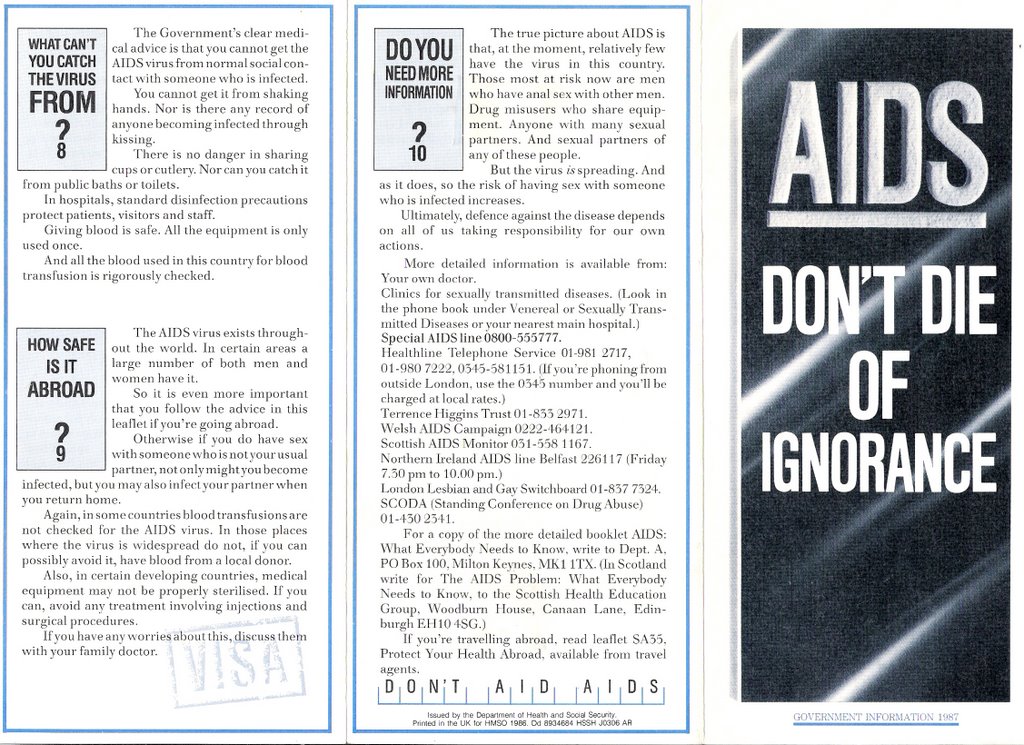
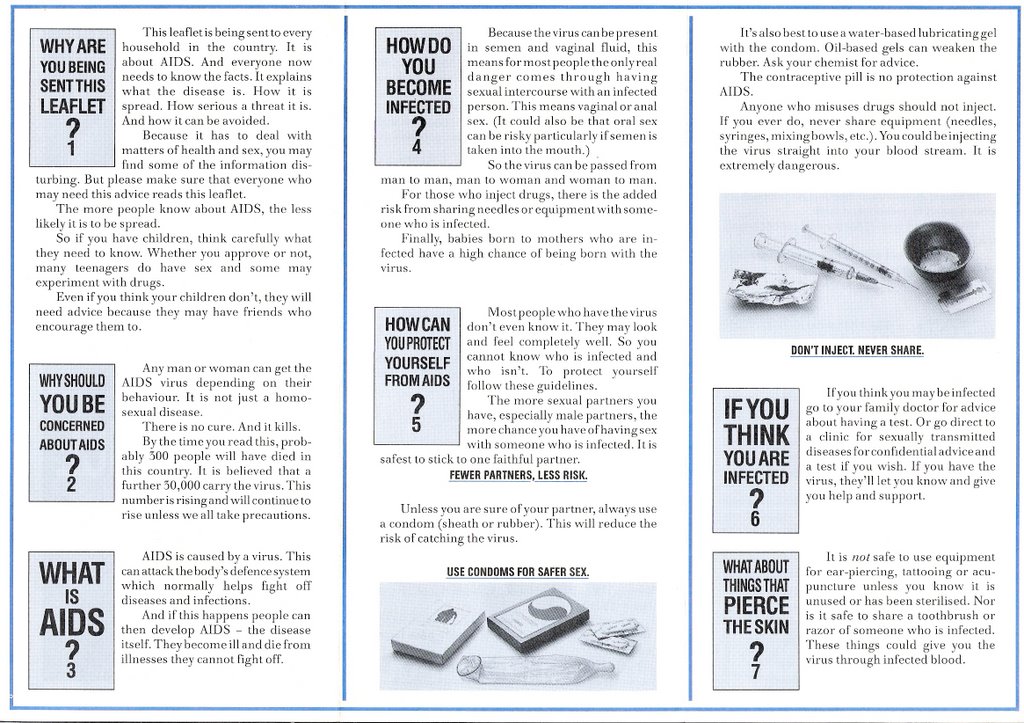
The song is about AIDS. And yet many people I knew were playing it as “feel good” music, totally unaware of the meaning of the lyrics. And how do you dance to it? I defy you not to pose!
Like the owls in Twin Peaks, this was not what it seemed!
Recently interviewed by the BBC, Dr Robert said:
“'Digging Your Scene' was me tipping my hat to the club scene, and then specifically the gay scene within the club scene that… in the early '80s, that were to me the most exciting thing that was happening at that point in my life. 'Cos I'd kind of broken up with my first wife and I was in-between, and I was kind of enjoying myself. And it was a great scene for me to be involved in. Although I wasn't gay. You know, 50% of the people in there weren't. it was just a really refreshing kind of attitude there. And the song was written basically about AIDS and the way that it was beginning to kind of happen to people that I knew within that scene.”
Digging Your Scene was one of the earliest songs about AIDS - the subject was also alluded to in Bronski Beat’s 1985 single Hit That Perfect Beat (“Touch and kiss a stranger if all else fails - hiding from the danger that’s been sent from hell.”).
The Blow Monkeys had their biggest singles chart success with It Doesn’t Have To Be This Way which charted in January 1987 and peaked at No. 5 (“When you walk out the door, you’re gonna ask for more, from society…”).
The 1980s continue to be a controversial topic of conversation and are often regarded as the “Greed Decade”. Fair enough in some ways. But I can see why the '80s happened - the '70s and early '80s had been hard times indeed. The change of political ethos and sudden influx of money (and new technology bursting into our lives) turned heads. A lot of the posturing and posing was like an over-the-top pantomime.
Some people had it extremely good, some people had it extremely rough, but there is no denying that for a great number of us in the middle life got better. My family and I were as poor as church mice, but still our diets and general lot in life improved tremendously during the 1980s. We weren’t rampantly materialistic, couldn’t afford to be, but changes such as the modernisation of the council estate where my parents lived, which included the removal of the long-condemned (and crumbling) 1950s prefab kitchens attached to the back of each house, a brand new brick-built kitchen, and the installation of central heating, meant far more comfort. And this occurred in 1987 - the peak and start of the meltdown of the 1980s greed era!
There is plenty to criticise about the 1980s. I wouldn't dream of saying otherwise. But the decade is not the root of all evil and I wish that some of the political activism of those days would re-ignite. Some of the acts carried out by the modern day government would have caused a furore in the 80s, but nowadays are allowed to pass virtually unchallenged.
Devolution, for instance, has created dreadful inequalities within the UK.
But people seem too busy rewriting the 1970s as absolutely lovely and the 1980s as greed personified, basically playing “heroes and villains” with past decades, to pay attention to NOW.
It’s a huge shame.


 From this 1985 Sun front page, we learn that a vicar had just declared AIDS "the wrath of God"- against gay men (the paper was happy to describe it as "the gay plague") - and Unemploy... sorry, I mean Employment Minister Alan Clark was trying to qualify for a part in Love Thy Neighbour. Crass git.



 Posts
Posts