Total Pageviews

Pages

Showing posts with label 1982 - news. Show all posts

06 July 2014

1982: Coronation Street Demolished!

Much changed in the 1980s. Contemplating the decade on New Year's Eve 1989, I found it hard to visualise the way life had been in 1980. But Coronation Street demolished?! Surely even the 1980s wouldn't have gone that far?!!!

Well, they certainly did, folks, in 1982 - the year of the Falklands War, deelyboppers, a strange man sitting on the Queen's bed, and the first appearance of body popping on Top Of The Pops. In the photograph above we see the Rovers Return, then home to Annie Walker, and Number 1, then home to Albert Tatlock and the Barlow family, coming down.

Mrs Walker would of course have flared her nostrils at the spectacle and probably developed a migraine. Mr Tatlock, no doubt, would have resorted to a good old grumble (no diversion from the norm there then), but what was happening? WHY was the Street being demolished? Well, if you launch a search of this blog you'll find the answer - complete with some newspaper coverage from the time!

In the meantime, we'd just like to say: "Eee, Mrs Walker, this beer's a bit dusty, ent it?"

10 June 2014

Rik Mayall


He really was one of the pioneers of the 1980s alternative comedy scene. The young Mayall and Ade Edmundson started performing at the Comedy Store in mid-1980. Nigel Planer and Peter Richardson joined at the same time. They all went on to found the Comic Strip in October '80, with Comedy Store compere Alexei Sayle. An advertisement for female performers was answered by Dawn French and Jennifer Saunders. When Channel 4 debuted in November 1982, the Comic Strip team hit the TV screens, and in the run-up to the launch of Channel 4 the BBC was prompted to start preparing something alternative itself - The Young Ones.

Magical times.

RIP, Rik.


15 June 2012

The New £1 Coin - And Other 1980s Brass In Pocket Innovations

Since the design, production and issuing of the first new decimal coins in the 1960s, and full decimalisation in 1971, not much had changed in the world of UK coins.

And then, in the early-to-mid 1980s, several changes occurred.

In 1980, the old sixpence ceased to be legal tender.

We gained the very first twenty pence coins in 1982.

Then, in 1983, we gained the very first pound coins.

And then, in 1984, the half penny ceased to be. It had been an unpopular coin for years, many people thought it not worth the bother. But still, some mourned its passing. One tabloid newspaper even published a full history of the half penny - going back centuries into the pre-decimal era.


The £1 coin, which would prove to be the death of the £1 note, was unveiled in 1982, although it would not become legal tender until 1983, and a fascinating "Public Opinion Special" in the Daily Mirror on March 10, 1982, revealed a mixed bag of opinion regarding the new coin - and what it should be called...

From the Mirror:

When Britain's new £1 coin was unveiled on February 10, we asked readers to send us their ideas for a name for the new coin. The response ranged from the sublime to the ridiculous. Many reflected their dismay with the continuing drop in the value of the pound. Here is a selection of some of the many letters we received.

What's wrong with continuing to call it a pound? But if you REALLY want to know what I think about it, it's unprintable!

It's going to be a terrible nuisance. We already have to deal with bulky coins which don't fit into wallets.

I've already broken the clasps on two good ones and my husband is wearing away more trouser pockets than I care to count - Mrs O.F., Solihull, West Midlands.

The name that springs to mind is Joker. Looking like gold and calling itself a pound is a joke for a start, isn't it? - A.T., Redhill, Surrey.

A Monarch would be my choice. It has the flavour of sovereign about it but it is more original - Mrs G.R., Surrey.

We should follow the French example and call ours the Brit - R.P., Waltham Abbey, Essex.

I shall call the new quid a Thatcher. It will remind me that it was minted during the office of the worst Prime Minister this country has ever known - J.F., Northolt, Middlesex.

The new coin should be a tribute to the Princess of Wales.

An anagram of her name works out as Adina. It's attractive and easy to say. What could be more suitable than that! - Mrs B.S., Wilmslow, Cheshire.

Let's call it a Di! - Mrs E.K., Brackley, Northants.

Why not call it a "mite"? Judging by the size of it, you "mite" be able to find it among your small change and you just "mite" be able to buy something with it. Then again, you "mite" not! - T.C., Cleveland.

It should be called a Tory because, like the Tories, it's worthless! - B.C., Omagh, County Tyrone.

It should be called an Eliza, because you will be able to "Doolittle" with it! - W.S., Harlow, Essex.

Of course, despite all the little grey cells being exercised above, we called the new pound coin a pound. Or a quid. Just as we had the old notes.

Also in the 1980s world of loose change, we dropped the "New" from "New Pence" on the original decimal coins designed back in the 1960s.

Well, they weren't that new any more.

In 1986 the very first £2 coin was produced - to commemorate the Common Wealth Games, held that year in Edinburgh. This was purely a commemorative coin - not produced for mass circulation, as was the second £2 coin, struck in 1989, to celebrate the tercentenary of the English Bill Of Rights. Scotland had its own 1989 £2 coin to celebrate the tercentenary of its Claim Of Right.

09 June 2012

Computers 1982

From Clive Sinclair with love... this year saw the arrival of the ZX Spectrum - remembered as the "dear old Speccy" today, but the thrill of the new in '82.


From ZX Computing - an article about the launch of the ZX Spectrum.

Complete with rubber keys...

Personal Computer Magazine - apparently the biggest selling micro magazine in the UK way back then.

Tempted by an Apple? Microcomputers at Laskys in 1982.


Your Computer, February 1982 - with info on the ZX 81 Rubik's Cube master...


The Cube twisting key tapping way to success...

Fancy a "real" computer from Texas Instruments?

Or "broader horizons" with the BBC Microcomputer System?
-
This is a 1982 double page spread for Atari video games, from the News of the World Sunday magazine, dated Nov 7th. Note the little girl's windmill deelyboppers! For more about deelyboppers, see here.
-
We didn't have any computers or gadgets like these in our house at Christmas 1982 - the computer bug had not bitten my family. But this was our final Christmas untouched by computer technology. How about you?

22 April 2012

The ZX Spectrum - 30th Anniversary...

 
 Advertisement from Personal Computer World, November 1982.

It is thirty years since the ZX Spectrum was released. It had a massive impact, helping to bring personal computing into our lives to a tremendous agree, and is still fondly remembered by many. 

And me? Nah, mate, back in 1982 I thought that computers were for boffins and the ZX Spectrum would just be a fad confined to brainy wallies!

Just how wrong can a geezer be?

 Happy birthday, Speccy!

Below is the blurb from the ad pictured at the top of the post.

Sinclair ZX Spectrum 16K or 48K RAM... full-size moving-key keyboard colour and sound... high-resolution graphics... From only £125! 

First there was the world-beating Sinclair ZX80. The first personal computer for under £100. Then the ZX81. With up to 16K RAM available, and the ZX Printer. Giving more power and more flexibility. Together, they've sold over 500,000 so far, to make Sinclair world leaders in personal computing. 

And the ZX81 remains the ideal low-cost introduction to computing. 

Now there's the ZX Spectrum! With up to 48K of RAM. A full-size moving key keyboard. Vivid colour and sound. High resolution graphics. And a low price that's unrivalled. Professional power - personal computer price! 

The ZX Spectrum incorporates all the proven features of the ZX81. But its new 16K BASIC ROM dramatically increases your computing power. You have access to a range of 8 colours for foreground, background and border, together with a sound generator and high-resolution graphics. You have the facility to support separate data files. You have a choice of storage capacities (governed by the amount of RAM). 16K of RAM (which you can uprate later to 48K of RAM) or a massive 48K of RAM. Yet the price of the Spectrum 16K is an amazing £125! Even the popular 48K version costs only £175! 

You may decide to begin with the 16K version. If so, you can still return it later for an upgrade. The cost? Around £60. 

Ready to use today, easy to expand tomorrow .

Your ZX Spectrum comes with a mains adaptor and all the necessary leads to connect to most cassette recorders and TVs (colour or black and white). 

Employing Sinclair BASIC (now used in over 500,000 computers worldwide) the ZX Spectrum comes complete with two manuals which together represent a detailed course in BASIC programming. Whether you're a beginner or a competent programmer, you'll find them both of immense help. 

Depending on your computer, you'll quickly be moving into the colourful world of ZX Spectrum professional-level computing. There's no need to stop there. The ZX Printer - available now - is fully compatible with the ZX Spectrum. 

And later this year there will be Microdrives for massive amounts of extra on-line storage, plus an RS232/network interface board.

1982 was also the year of the Falklands War, the year that the Queen woke up to find a strange man in her bedroom, Prince William was born, deelyboppers arrived, body-popping was first demonstrated on Top Of The Pops (see a newspaper article from 1983 here), Channel 4 was launched, CB radio, legalised in November 1981, was a huge craze, Madness sang "Welcome To The House Of Fun", and a young woman solved the Rubik's Cube whilst free falling from a plane...

14 April 2012

Compact Discs

The Sun, July 1 1982:

Records are about to shrink to less than half-size. New Compact Discs will be on sale before the end of the year.

The mini-records, less than five inches across, can be held in the palm of one hand.

They will have a permanent clear protective coating, which means they won't scratch or wear out. And they will sound better than ordinary albums.

A spokesman for Sony, who are producing the discs, says: "The sound is produced by an optical laser, and is of superior quality."

There's just one snag - the price. Not only are the discs themselves more expensive than today's records, they also need special new equipment to play them on.

But Sony says: "We hope within two years to have prices down to the same as ordinary albums."

A 1983 newspaper advertisement.

The article states that compact discs were due to arrive in England before the end of 1982. Some sources now state that they didn't actually arrive until March 1983.

The discs and players certainly did not come down in price that quickly. Asked if he/she owned a compact disc player in the mid-to-late 1980s, the average geezer/geezette would almost certainly reply:

"You wot? Wot do you think I am - made of money?"

The price was highly prohibitive, and CDs didn't outsell vinyl and cassettes for some years.

08 April 2012

1982: Emmerdale Farm's 10th Anniversary

The Press Pack logo for the tenth anniversary.

From our sister blog, The Beckindale Bugle:

October 1982 saw a very special anniversary for Emmerdale Farm. The show completed its first decade on-screen, having first been shown as a lunchtime soap on 16 October 1972.

To celebrate, Yorkshire Television screened a special programme - A Decade Down On The Farm, featuring the show's creator, Kevin Laffan, and the remaining original cast members, Sheila Mercier (Annie Sugden), Toke Townley (Sam Pearson), Frazer Hines (Joe Sugden), Frederick Pyne (Matt Skilbeck), Ronald Magill (Amos Brearly) and Arthur Pentelow (Henry Wilks) reflecting on ten years of the programme.

The show was presented by Yorkshire Television presenter Richard Whiteley (who, from November 1982, would become nationally famous as presenter of Channel Four's Countdown).

Kevin Laffan was interviewed by Richard Whiteley at Lindley Farm, then the exterior location for Emmerdale Farm:

Richard: "Kevin, I suppose at the time when it was suggested, everyone just said: 'What's this going to be - just a TV version of The Archers'?"

Kevin: "Yes, they did - but, of course, it isn't - nothing like it."

Richard: "In what way is it different?"

Kevin: "Well, we're not aimed at giving information to farmers to start with. We are simply concerned with showing a family living its life on a farm."

Richard: "And is the idea we should envy this family living on the farm?"

Kevin: "Yes, the idea... when we first talked about the serial, the idea was that we would create a situation where we would have a programme that people living in cities, engaged in the routine business of earning a living, would be able to see the kind of life that they would perhaps want to escape to."

Location filming for episode 759 in 1982.

Filming in Esholt (Beckindale) in 1982 - Pat Merrick (Helen Weir) and her son, Jackie (Ian Sharrock) chat at the bus stop.

Richard interviewed Sheila Mercier, standing at the gate of Lindley farmhouse:

"Now the viewer totally identifies you with living in this house here and leaning on this gate here, looking over the farmyard. It's not your house, but I wonder after ten years do you sometimes think you do live here, and it is your house?"

Sheila: "Yes, very often, I look around - I think 'It's all mine'. Yes, I would like to live here."

Richard: "Would you like to be a farmer's wife?"

Sheila: "In many ways I would, yes. I love the country life and I love animals, and I talk to all the calves when they're little."

Richard: "In the series, you spend all your time in the kitchen, you're always cooking or making cups of tea or washing up. What sort of a life is that?"

Sheila: "Well, I must've made thousands of cups of tea, and goodness knows how many breakfasts, and lunches and suppers. It just seems to go on forever!"

Richard: "And all the family [actors] that sit round the table for these gorgeous meals you make, you regard them all as your family, do you?"

Sheila: "Oh, yes, of course I do. They have become my second family. It's a long time we've been here."

Richard discussed Sam Pearson with Toke Townley:

Richard: "You [Sam] stick up for all the old values in life."

Toke: "That right - that's true, he does."

Richard: "You [Sam] don't particularly like the pace of modern day life?"

Toke: "No. I think particularly he doesn't like the way people go on from his point of view, he was brought up so differently. And he does incline also to dislike the modern machinery up to a point, you know, saying horses always did it better."

Richard interviewed Frederick Pyne (Matt Skilbeck):

Richard: "Now, in the last ten years you've had one or two dramas in your life, you've lost one wife, you've lost your twins, and in fact, in a way, you've lost your second wife, haven't you?" [The role of Dolly Skilbeck was recast in 1980].

Frederick: "Mmm, well I've been very lucky really, I've been married twice but I've had three women!"

Richard: "You're smiling now, but it's quite well known that you don't smile a great deal - you're not a great smiler in the series."

Frederick: "No, well they won't let me, you see, they always make me miserable. I'm supposed to be a dour Dales farmer. I don't think they all go around like that really all the time, but then you don't smile a lot if you lose half your family every other year, do you?"

An extract from Richard Whiteley's interview with Ronald Magill (Amos Brearly):

Richard: "After ten years of playing the landlord of The Woolpack, I suppose you feel like the landlord of The Woolpack, don't you?"

Ronald: "I suppose I do. Funnily enough, I feel a landlord more off-duty than on, because I spend so much of my time with my friends in the Licensed Victuallers' Association and they do accept me as one of them."

Richard: "Would you make a good landlord, do you think, in real life?"

Ronald (smiling): "Oh, I don't think so - it's too much like hard work!"

And so on to the Press Pack...

The cover of the 10th Anniversary Celebration Press Pack showing: Frazer Hines (Joe Sugden since the first episode), Arthur Pentelow (Henry Wilks since the first episode), the Reverend Donald Hinton (Hugh Manning, who debuted in 1977), Frederick Pyne (Matt Skilbeck since episode one), Clive Hornby (Jack Sugden since 1980), Sheila Mercier (Annie Sugden since the first episode), Stan Richards (who debuted as a temporary character called Seth Armstrong in 1978, and became a central character over a period of time, finally becoming a Woolpack regular in 1980), Jane Hutcheson (Sandie Merrick since 1980), Ronald Magill (Amos Brearly since episode one), Toke Townley (Sam Pearson since episode one), Helen Weir (Pat Merrick since 1980), Richard Thorp (Alan Turner since 1982), Jean Rogers (Dolly Skilbeck since 1980) and Ian Sharrock (Jackie Merrick since 1980).

Cheers! Key members of the 1982 Emmerdale Farm cast toast the show's first decade.

Included in the 10th Anniversary Press Pack was a notepad, each page featuring a charming drawing of some of the central Emmerdale Farm characters - Matt, Annie, Henry, Amos, Sam, Joe, Jack, Donald, Dolly and Nell the faithful sheepdog!

From the Press Pack:

Yorkshire Television, together with author Kevin Laffan, created "Emmerdale Farm", the story of the Sugden family and their friends and neighbours in the Yorkshire Dales village of Beckindale.

Says Kevin Laffan: "I was approached by YTV with a simple brief for a three-month serial - 'write 26 episodes about a Yorkshire farm' ".

It was an original and conscious decision to make the series quiet and gentle-paced, reflecting the lifestyle and the seasons of the countryside. There would be emotional stresses and conflicts among the characters but very few watch-next-week, cliff-hanging dramas. The accent was to be firmly on people and their relationships set against the splendid back-drop of some of the most beautiful countryside in England - the Yorkshire Dales...

And an early decision was also taken to record FIFTY per cent of the story on location - unheard of in the history of producing such long-running television series...

Beckindale's "Woolpack", as in any village, is the hub of community life. This is where gossip abounds, listened to with careful interest by landlord and local Hotten Courier correspondent Amos Brearly.

People love a traditional pint and a chinwag - who's doing what, when and why? - but there is little maliciousness in Emmerdale's talk. The folk of Beckindale belong to a now rare community where, though there may be occasional differences, they care about each other.

And they have cared for TEN years.

Making it into the papers - the Sunday Mirror, 10 October, 1982, notes the impending Emmerdale anniversary.

The TV Times honoured the show with a special 10th Anniversary souvenir magazine.

27 October 2009

Keith Chegwin And Maggie Philbin

As health workers pelted Mrs Thatcher's car with eggs, Keith Chegwin ("Cheggers") and Maggie Philbin, the Posh and Becks of 1982, prepared for their wedding...

From the Daily Mirror, 3/9/1982:

For millions of youngsters, it will be the marriage of the year when their TV favourites Keith Chegwin and Maggie Philbin wed tomorrow.

The former "Swap Shop" assistants had only one worry about the great day... the smartness of the parish church in Little Stretton, Leicestershire, where Maggie grew up and was determined to marry.

But the villagers rallied round. "They have been fantastic," said Maggie.

"The church garden has been weeded, the grass cut, and even the old stone floor scrubbed."

Sweet!

I remember Keith on Multi-Coloured Swap Shop and Saturday Superstore. And then there was Cheggers Plays Pop - which ran all the way from 1978 to 1986...

Meanwhile...

Of the egg chuckers, who pelted the PM's car when she visited Aberdeen University medical school, Mrs T said: "It's a pity they have nothing better to do."

Like Keith Chegwin and Maggie Philbin?

From the Sunday People, 5/9/1982:

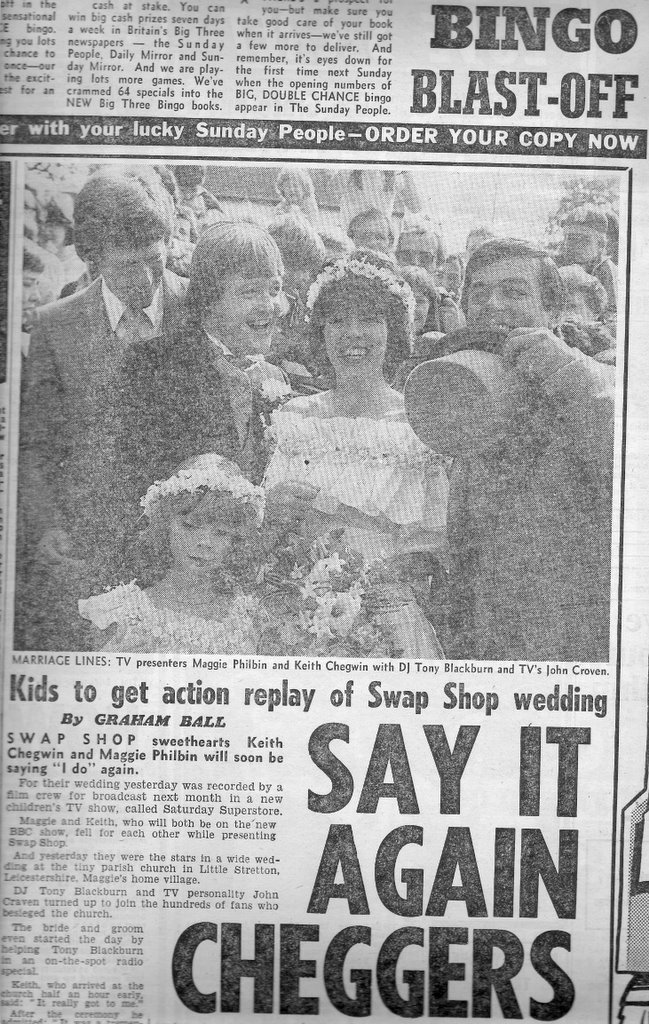
"Swap Shop" sweethearts Keith Chegwin and Maggie Philbin will soon be saying "I do" again.

For their wedding yesterday was recorded by a film crew for broadcast next month in a new children's TV show called "Saturday Superstore".

Maggie and Keith, who will both be on the new BBC show, fell for each other while presenting "Swap Shop".

And yesterday they were the stars in a white wedding at the tiny parish church in Little Stretton, Leicestershire, Maggie's home village.

DJ Tony Blackburn and TV personality John Craven turned up to join the hundreds of fans who beseiged the church.

The bride and groom even started the day by helping Tony Blackburn in an on-the-spot radio special.

Keith, who arrived at the church half an hour early, said: "It really got to me."

After the ceremony he admitted: "It was a tremendous emotional experience. I was so nervous that I even fluffed my lines towards the end."

Maggie, who turned up in a Rolls ten minutes late, said: "It was all right until I got into the car, then it really hit me. And I felt the tears coming when I entered the church and saw Keith standing there."

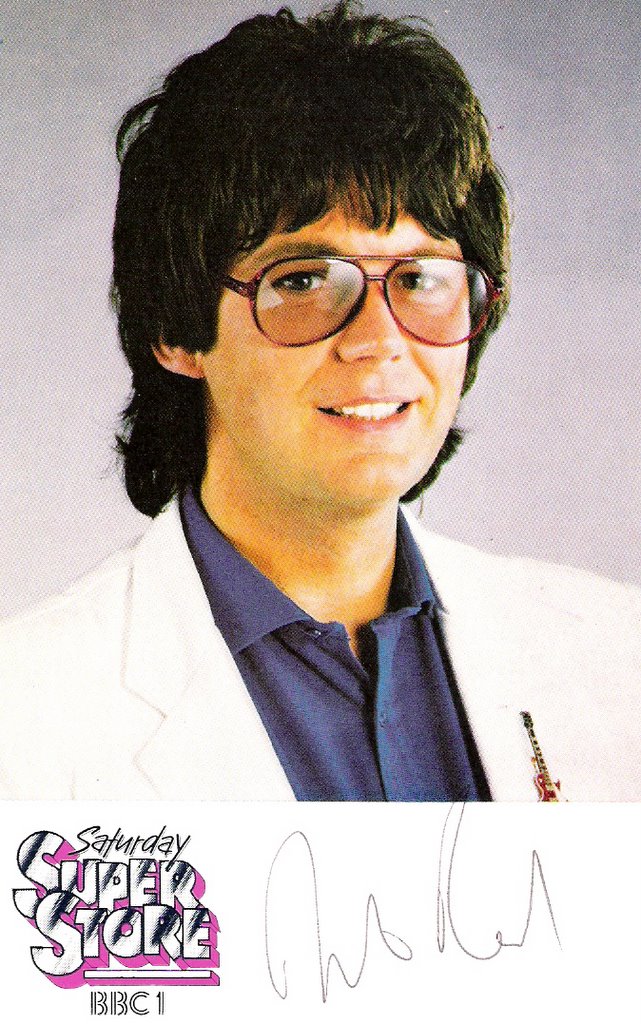
Mike Reid of Saturday Superstore - the start of a glittering new BBC Saturday morning children's telly era in 1982.


06 August 2009

Albert Tatlock (Jack Howarth) - On The Honours List!

From the Daily Mirror, December 31, 1982:

Grumpy old Albert Tatlock of Coronation Street makes a special guest appearance in the Honours List.

He receives an M.B.E. in the person of actor Jack Howarth, 86.

Jack, a great fan of the Queen and Mrs Thatcher, has played the part of cadging, cantankerous Albert for 22 years and appeared in the first episode.

In real life he has a heart of gold. He is vice-president of the Stars Organisation for Spastics and a tireless fund raiser.

Of his acting role, he says: "I'll never retire. The Street will go on forever."

A deserved honour for Jack Howarth in my opinion, one of the Street's original greats. But it's interesting to note that the article states:

Jack... has played the part of cadging, cantankerous Albert for 22 years and appeared in the first episode.

But, in the very early episodes, Albert was portrayed as being quite a jolly bloke, and Elsie Tanner commented on what a lovely old gentleman he was!

Of course, it wasn't long before The Rovers regulars were hearing little gems of heartwarming patter from Mr Tatlock - like these:

"Bloomin' 'eck! You young folk don't know you're born!"

"I fought for you in't first lot!"

"I'll 'ave a rum if you're payin'."


Jack Howarth died in 1984 and Albert died too.

Sadly missed.


14 April 2009

1982: Invasion Of The Deelybobbers/Deelyboppers/Beeny Boppers/Bonce Boppers/Space Boppers...


June 1982 - Deelyboppers, or Bonce Boppers, or Deelybobbers, or Space Boppers, or... [insert own name for this exciting early 1980s headgear] ran rampant in New York and were about to arrive here...
-
From the Rock column by Robin Eggar, Daily Mirror, 29/6/1982:
-
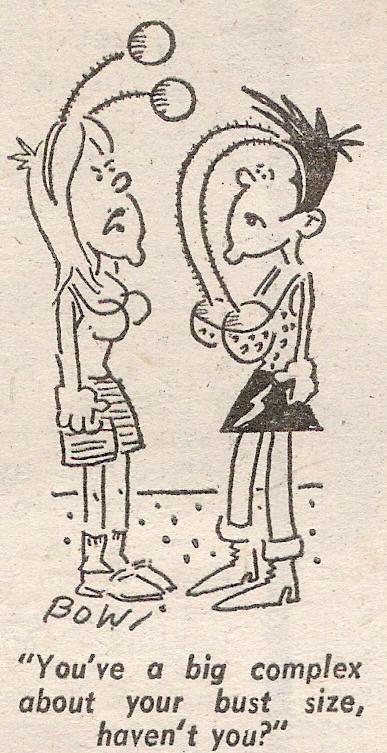
The young lady with the strange growths on her head is not an alien. She's just sporting the trendiest fashion accessory in New York - The Bonce Bopper.
.
New Yorkers have suddenly started to sprout spring-mounted bobbles, hearts, stars and windmills.
.
If you want to be one of the first bobble-headers in Britain, I've just had 25 sets flown in.
.
To win one, tell me who first recorded the Rolling Stones' current hit "Going To A Go Go" in 1966. The first 25 answers drawn from the bag on Monday, July 5, will receive a bonce bopper.
*
Sadly, Going To A Go Go really wasn't much of a hit - stalling at No. 26, but deelybobbers/deelyboppers/bonce boppers etc, etc, were a wow!
-
The Sun, 23 July, 1982 - the "Bonce Bouncers" are here!

We've had head-hunters and head-bangers. Now it's the turn of the bonce boppers.

In fact, it's the latest craze to bounce into Britain from America. And it's going to everyone's head.

So, hang up your hoola-hoop, scrap your skateboard and get a head start by wearing a bopper on your bonce.

It's a headband supporting two spiral wire antenna topped with hearts, bobbing balls or windmills.

When we took to the streets with luscious Linda Lusardi wearing a pair of boppers, headstrong young men came rushing up to look at her...


Page three lovely Linda gets bopping...

In August 1982, an article entitled Parting The Forest Of Headbanger Antennae appeared in my local rag (or newspaper!):
-
It is the latest craze and it has really gone to people's heads...

What is it? Well, here we encounter a slight problem. What are those things protruding from the heads of everyone under 13 years (not to mention a few people over 13 years)?

-
The answer is not easy. There seem to be as many names for these glittering balls, hearts, stars, feathers and windmills, as there are designs.
-
"What do you call those headbands with things on?" I asked a girl in one Cambridge fashion shop.
-
"I don't know," she mused... "Headbands with things on, I suppose."
-
Round the corner, the street trader who was undercutting the shop by 39p, displayed no such hesitation.
-
"Beeny (or should it be beany?) Boppers," he said.
-
Along the street another itinerant salesman had a sign saying "Bouncers," or was it "Boncers"?
-
In Green Street, Cambridge, a shop named Games and Puzzles calls them Headbanger Antennae. They are also known as Space Boppers and Bonce Boppers.
-
"The kids seem to make up their own names," said Games and Puzzles proprietor Mr Lester Saunders.
-
Whatever they are called, they are the biggest thing since the Rubik Cube. Since the start of the school holidays they have proliferated in Cambridge to almost epidemic proportions.
.
Let's quickly recap on what we learned in the main
1982 blurb:

The oddball headgear was registered in the USA, its homeland, as "Deely-bobbers" (according to 20th Century Words by John Ayto) in 1982, with claim of usage of the name since 1981.

The name (deely-bobbers, I believe) had previously been applied to a children's toy - a type of inter-connecting building block.

Did you remember all that? If so, pop on your deely-bobbers or deelyboppers (or whatever you like to call them), and reward yourself with a quick boogie to your Kids From Fame LP - you deserve it!

Did we like looking like space aliens? But of course! I remember wearing a lovely pair of deelyboppers (as I referred to them) just before Christmas 1982 at my firm's Christmas "do".

What a night! My mother discovered me at one o' clock the next morning, tinsel round neck, deelyboppers bobbing, standing underneath a lamp post and serenading the family home: "Save your love my darling, save your love..."

She's never let me forget it.

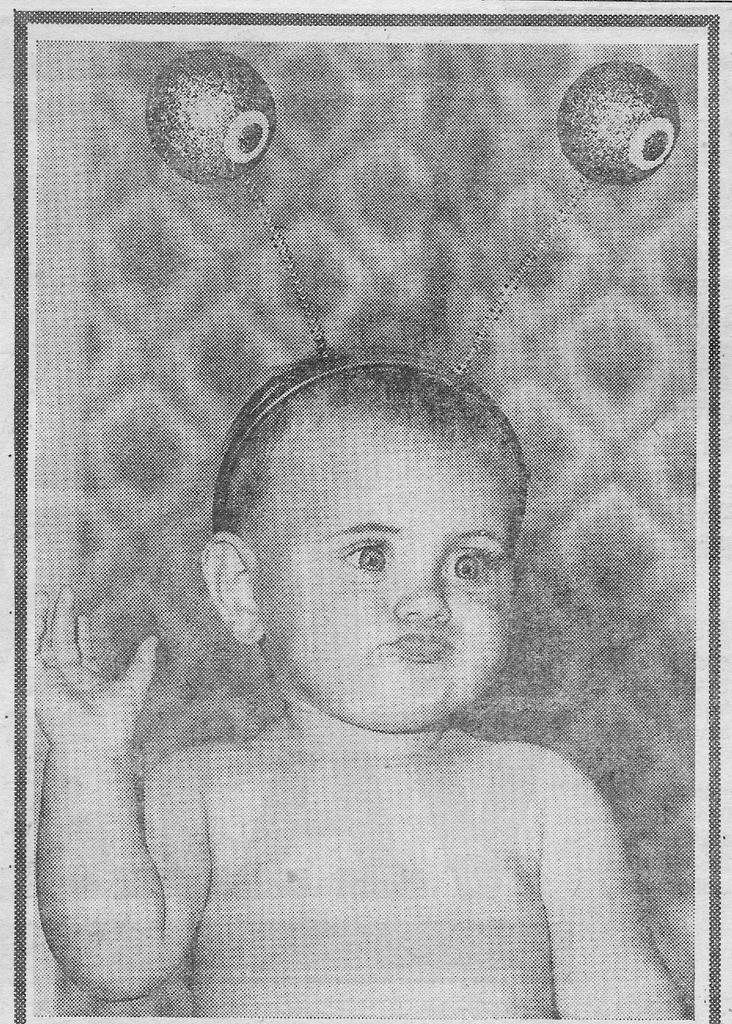
The little cherub above, pictured in the "Daily Mirror" in August 1982, won a baby of the year show. Was she wearing the headgear at the time?

An unusual way of wearing deelyboppers - the "Sun", September 1982.

See a 1982 Atari magazine advertisement featuring deelyboppers - here.

07 April 2009

The F-Plan Diet

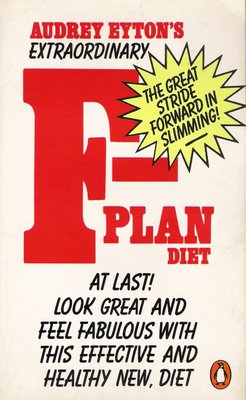
1982 saw the arrival of Audrey Eyton's revolutionary F-Plan Diet...
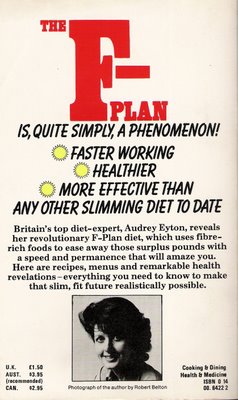
According to the book:

Audrey Eyton is the woman who can justly claim to have invented that now popular feature of every magazine stall - the slimming magazine. When she and her husband founded "Slimming Magazine" twelve years ago it was the first publication in the world to specialize in the subject. The magazine was started as a "cottage industry", on practically no capital, because no one else believed there was enough to write on the subject regularly. How wrong they were! The magazine was an instant success and has continued to be the dominating bestseller despite the many rival magazines which have followed.

For many years Audrey Eyton edited the magazine herself, and later became Editorial Director. During their years of ownership (the company was sold in 1980) she and her partner also started Ragdale Hall Health Farm and developed one of Britain's largest chains of slimming clubs. Mrs Eyton continues to work as a consultant to the company.

During her many years of specialization in this subject, Mrs Eyton has worked with most of the world's leading nutrional, medical and psychological experts. No writer has a greater knowledge and understanding of the subject. She has become an expert in her own right.

Great. So what was the F-Plan Diet, then? To quote from the book's introduction:

Over the past years, many claims have been made suggesting that the inclusion of some particular food in a slimming diet would specifically help overweight people to shed weight more quickly and effectively. Grapefruit was a classic example. Grapefruit diets were popular for years. More recently, in an American bestseller, pineapple was invested with those magical weight-shedding properties. Sadly, all these claims in the past were based on fiction rather than fact - certainly not on any established medical fact...

Now, for the first time in the history of medical science, a substance has been isolated about which it is possible to say: "If you base your slimming diet on this food you should shed weight more quickly and easily than on a diet based on the same quantity of any other foods."

The substance is dietary fibre. This is what the F-Plan is all about. The F-Plan diet shows you how to cut your calorie intake and at the same time increase your intake of dietary fibre from the unrefined cereal foods and the fruit and vegetables which provide it.

A high fibre diet was the answer to many weary slimmers' prayers, it seemed. Not only could it help you slim, but it could also prolong your life and help prevent some diseases - the book contained much information about the health benefits of a high fibre diet.

So, how did it work? Back to the book...

... if you follow a high-fibre diet you will find that you feel more satisfied on fewer calories. And more of the calories that go into your mouth will, to put it bluntly, go straight through and down the lavatory.

The F-Plan Diet didn't touch me at first. I barely registered its existence. My family was what might be described as lower working class. To us, eating was something to be savoured and enjoyed (a wonderful, but terribly expensive treat by our standards was Findus crispy pancakes), and diets were faddy, silly and expensive. Like the "eat more brown rice and lentils" nonsense of the hippies in the 60s, diets were absolutely pathetic, full stop.

But the fibre thing did have an impact on me in time. Fibre-related jokes were in common usage by the mid-1980s - like this one: "Do you feel the bottom has dropped out of your world? Eat wholemeal bread and the world will drop out of your bottom!"

"Har, har, har - tha's a laugh, innit?!" I said. But was it really just a joke? Was there anything in this fibre lark? I began to wonder...

In my district, a restaurant specialising in baked potatoes had opened in 1981, pre-dating the F-Plan by a year, and in the mid-to-late '80s the place was packed. There was fibre in them thar skins, ya see!

Before the mid-80s, baked potatoes had been a simple matter of marge and cheese to me - occasionally with a few beans on top. But not any more. The spud cafe had exotic (or so it seemed to me!) fillings like chopped ham and cheese with chives. Having just popped in for a "quick cuppa and a bite to eat", I became hooked on the spuds. The place was a magnet for me by 1986. And I experimented with spuds at home.

Open my cupboard in the mid-to late '80s and you'd find its contents positively bristling with fibre - bran flakes, wholemeal bread, wholemeal rice, wholemeal pasta...

Open the cupboard under the sink and your feet would be submerged in an avalanche of baking potatoes.

As a kid in the 1970s and a teenager in the early-to-mid 1980s, I ate nothing wholemeal. Nobody in my family - or indeed neighbourhood did. But from the mid-1980s on, I became FIBRE MAN!

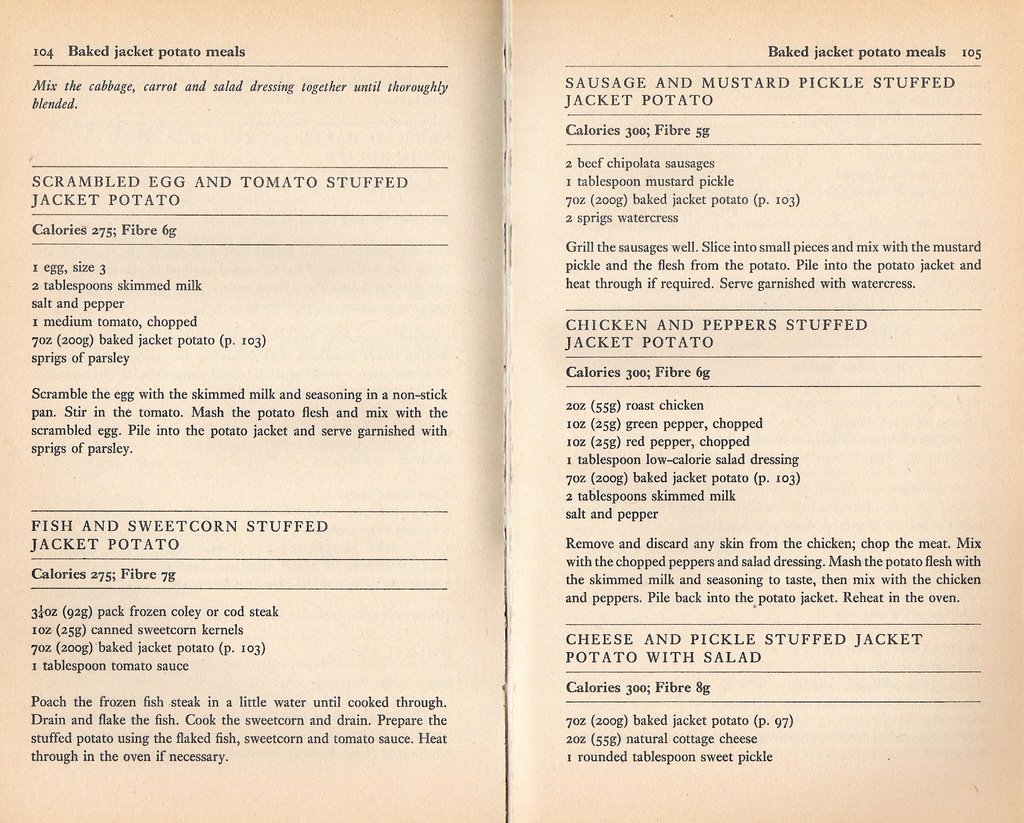
The F-Plan Diet is a great piece of work. Below are a couple of recipes for fancy baked potato fillings featured in it. Click on image for closer view.

Ah, nostalgia!
For more on changing eating habits for the un-monied classes in the 1980s, see here.

23 September 2008

Michael Fagan: The "Prowler" At Buckingham Palace...

On the 9th of July 1982 an intruder entered the Queen's bedroom at Buckingham Palace.

From the Daily Mirror, 12/7/1982:

An intruder at Buckingham Palace got into the Queen's bedroom, it was revealed last night.The man sat on the Queen's bed for ten minutes and she engaged him in conversation. Eventually she found an excuse to fetch a footman, on duty in the corridor outside, and the prowler was detained.

Early this morning Buckingham Palace would only say: "It is entirely a police matter."

But the apparent ease with which a stranger managed to reach the Queen's side - she unprotected and he undetected - casts grave doubts about the efficiency of security at the Palace.


The drama happened early in the morning and the Queen remained calm.

She was eventually able to get help when the man asked for a cigarette.

The Queen said there were none in the bedroom and offered to have some brought.

Once the intruder's confidence had been gained, the Queen opened her bedroom door and beckoned a footman outside in the corridor.

The footman pretended to bring the cigarettes, opened the bedroom door and detained the intruder.

Prince Phillip, it is reported, was in a separate bedroom at the time of the incident.

Lapses in security at Buckingham Palace during the past year have caused grave concern for the Queen's safety.

Action to improve security is already under way.

On Saturday a barbed-wire barricade was put up as part of the new safety measures. The wire tops iron spikes already protecting the palace walls.

The palace has been invaded by strangers several times in the last year.

Three West German tourists camped in the grounds for twelve hours, thinking they were in a public park.

A man claiming he was hopelessly in love with Princess Anne was found wandering in the grounds.

Last month a member of the Royal Household reported seeing an intruder at the palace shortly after American President Ronald Reagan arrived.

A top-level police enquiry into security has been ordered by Metropolitan Police Commissioner Sir David NcNee...

24/9/1982:

Yesterday, in just about the craziest case since the trial of the Knave of Hearts in Alice in Wonderland, a court of law solemnly declared open house at the Queen’s residence.

The Sun declared that the decision to clear Michael Fagan of the charge of burgling Buckingham Palace was “BONKERS!”


… Michael Fagan, the prowler who had a bedside chat with the Queen, was sensationally cleared yesterday of burgling Buckingham Palace.

An Old Bailey jury took just 22 minutes to acquit 32-year-old Fagan.

He had told them that “a little voice in my head” had ordered him to break into the Palace twice this year.

Fagan added that he did it to prove that the Queen’s security was lax.

He said: “I wanted to show that the Queen was not too safe… I could have been a rapist or something.”

The jury of seven men and five women cleared him of trespassing at the Palace, and stealing half a bottle of Californian wine belonging to Prince Charles.

Fagan - whose break-ins earned him the nickname “Spiderman” among Palace staff - beamed with delight at the verdict.

But last night he was still behind bars at London’s Brixton Prison facing two other charges - of taking a car and of assault.

Fagan’s wife Christine and mother Ivy were in the public gallery to hear of Fagan’s two break-ins - on July 7 and July 9 this year.

He appeared in the dock in the crowded Number One Court wearing a red pullover, navy slacks and white open-necked shirt.

Fagan, of Copenhagen Street, Islington, North London, was flanked by three prison officers and replied “Not Guilty” when the charges were read out.

Fagan told how he first got into the Palace on June 7 - after disturbing housemaid Sarah Carter. He said: “I went round there with the children and heard security was a bit lax. So I decided to show that someone could get in.

“I disturbed a young lady and then walked around the place…”

At this point Recorder James Miskin, QC, urged him not to talk so quickly as he had to write the evidence down. Said Fagan: “OK - did you get it?”

Fagan, who started most of his sentences with “yeah”, said he was surprised he was not captured right away after disturbing the housemaid.

He added: “I could have been a rapist or something.

“I stayed there about half-an-hour without being captured. I even had time to have a drink because I was thirsty.”

Fagan said during his roaming he noticed names on various doors.

“Princess Anne was on one room and Captain Mark Phillips on another. I decided not to disturb them,” he said with a laugh.

He said he opened another door with “Prince Phillip” on it, adding: “But they were out seeing President Reagan.”

Fagan described how he went into a post room and drank from a bottle of Californian wine he found there.

The court heard the wine - and a pair of baby bootees - had been sent to Prince Charles and Princess Diana before the birth of their son.

Fagan slumped forward and rested his arms on the edge of the witness box as his counsel, Mr Richard Slowe, quizzed him about his activities.

He said: “I was in the room for half-an-hour waiting to get pinched.

“In my opinion I have done the Queen a favour. I proved her security was not one up.”

Mrs Barbara Mills, prosecuting, suggested to Fagan that the wine had not been his to drink. He replied: “It was not my palace to get in, was it?”

He went on: “There was no tap… I was thirsty. I had done a good day’s work for the Queen showing the security was bad.”

Earlier Miss Carter told how she came face-to-face with Fagan.

She told the jury she was sitting on her bed after 11.00pm when she heard a noise.

“Turning towards the window I saw some fingers on the outside of the frame. They were a few inches up from the sill itself.
“I saw a fleeting glimpse of a man’s face. Then I ran out of the room into the corridor shutting the door behind me.”

She told two other housemaids in nearby rooms about what she had seen and added:

“As I talked to them I heard a small noise in my room. But I decided against opening the door.”

The three girls then alerted a duty police officer.


Det Sgt Geoffrey Braithwaite admitted that at first he did not believe the girl’s story because of the climb involved.

Mrs Mills told the court it was 55ft from the Palace courtyard to Miss Carter’s window.

But later pigeon repellent - from window ledges - was found on a carpet and a full scale alarm raised.

But, despite a big search with the help of police dogs, no trace of the intruder was found.

Then, on July 9, Fagan made his second visit to the Palace and was finally arrested.

Fagan was cornered in a pantry near the Queen’s bedroom by footman Paul Whybrew.

Mr Whybrew, who has been at the Palace for six years, said in a statement that Fagan kept insisting that he wanted to talk to the Queen… “My queen.”

He added: “I tried to keep him calm and he said he was all right.

“He said it was urgent and tried to pass me but I got in his way. I also noticed his breath smelled of alcohol.

“I laughed and tried to be casual and friendly and said: ‘How did you get here?’ He replied: ‘I just want to talk to her.’

To stall for time, Mr Whybrew told him: “All right but let her get dressed first.”

Mr Whybrew said Fagan appeared to be “not coherent or rational. He seemed very tense.”

The footman asked him if he would like a drink and Fagan replied: “Yes please, I would like a scotch.”

Fagan was given a glass of Scotch - and then PC Cedric Robert arrived in the pantry.

PC Robert said Fagan “appeared scruffy and was wearing a grubby grey sweatshirt and jeans. He was barefoot.”

As they grabbed his arms to lead him away, Fagan said: “I want to see the Queen - let me go back to talk to her.”

On his way through the Palace, Fagan became very abusive and said his name was Rudolph Hess, the Nazi war leader…

Of the charges laid against Mr Fagan, the Sun informed us:

Fagan was accused of “burglary contrary to Section 9 (1)B of the Theft Act 1968, the particulars being that between the sixth day of June and the ninth day of June, 1982, he entered Buckingham Palace and stole therein a quantity of wine.”

He was NOT charged with entering the Queen’s bedroom - which happened during his second Palace escapade - because, says the Director of Public Prosecutions, no criminal offence was committed.